
You’ll want to start by thinking like a designer—prioritizing flow, proportion, and tactile balance so the room feels intentional, airy, and lived-in. Pull sofas off the wall, keep clear pathways, cluster seating within an intimate diameter, and layer textures and rugs to anchor zones while keeping surfaces low and uncluttered. There’s a lot to tweak that changes everything, and a few simple shifts will give you the framework to transform the whole space.
Pull the Sofa a Few Inches From the Wall
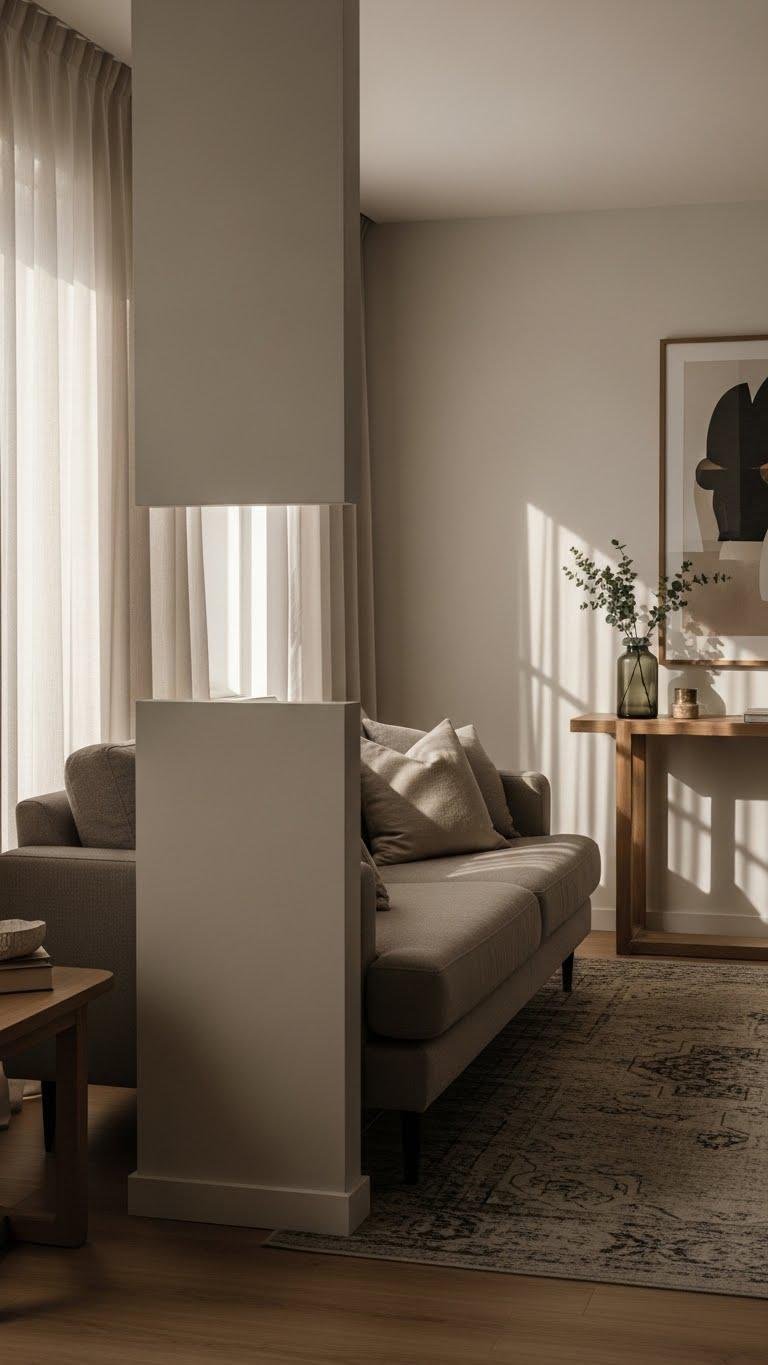
Pull your sofa a few inches away from the wall to immediately improve flow and depth in the room; that small gap creates breathing space for air, light, and conversation. You’ll use negative space deliberately, crafting an intimate focal zone.
Measure for consistent airflow clearance behind the sofa, balance proportions with a low console or rug, and let the arrangement feel open and liberated.
Limit Seating Group Diameter to About 8 Feet
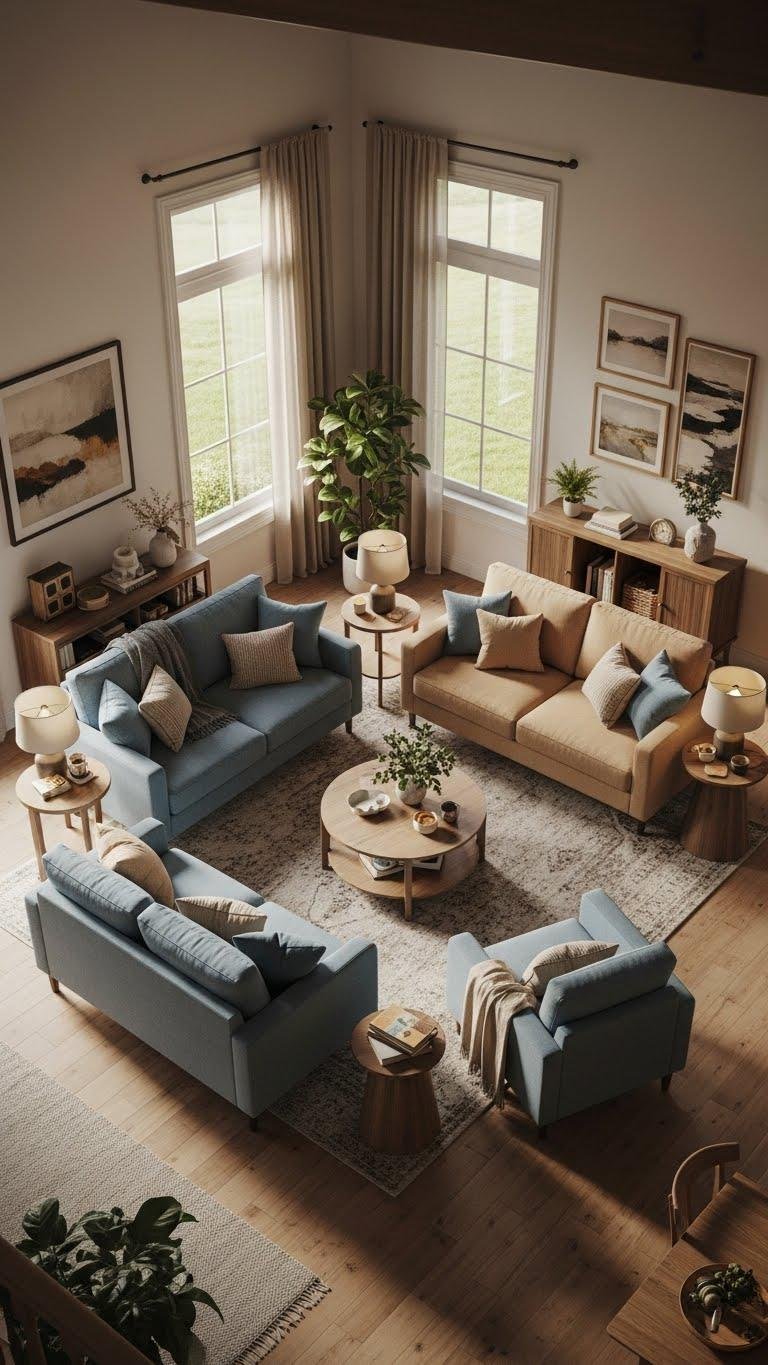
Often you’ll find conversations flow best when seating is arranged within an intimate, roughly 8-foot diameter — a span that keeps people close enough to speak without leaning while still allowing room for side tables and knee space.
You’ll set a clear conversation radius that feels deliberate; arrange pieces to foster an intimate grouping, maintain balance, and preserve visual openness so the room feels free and curated.
Place Chairs on Each Side of the Sofa Facing Inward
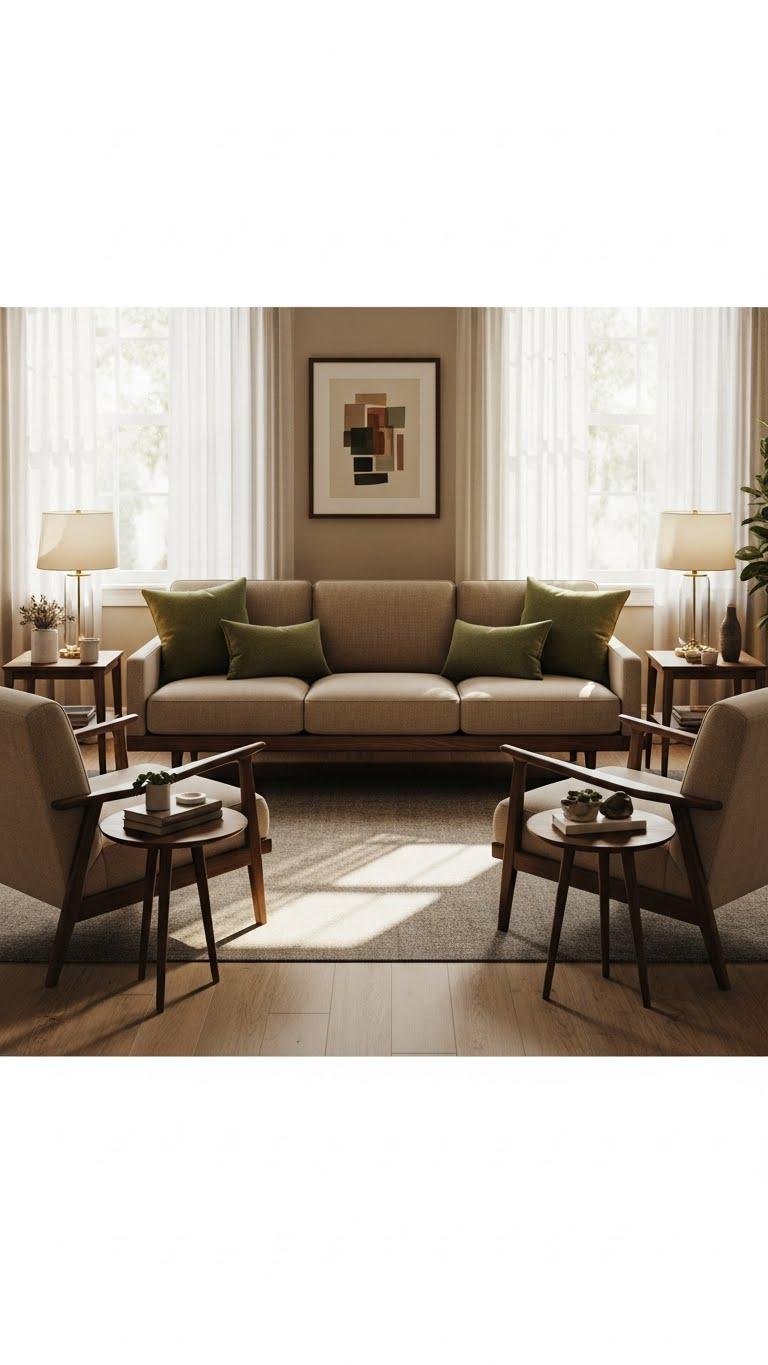
Place a chair on each side of the sofa, facing inward, to create a balanced, conversational anchor that frames the seating group and guides sightlines toward the room’s focal point. You’ll cultivate intimate conversation nooks and achieve focal symmetry while keeping movement free. Choose proportionate silhouettes, leave clear pathways, and add low-profile side tables so people can relax, chat, and roam without restraint.
Match Seat and Back Heights Between Sofa and Accent Chairs

Frequently, matching the seat and back heights between your sofa and accent chairs makes the whole arrangement feel intentional and harmonious; you’ll get visual cohesion without sacrificing the individuality of each piece. Check scale proportions and seat depth to guarantee comfort and balance.
Pair a low-back sofa with similarly scaled chairs or elevate cushion depth slightly for contrast, keeping sightlines clean and the room airy.
Maintain 3–10 Feet Between Seats for Comfortable Conversation
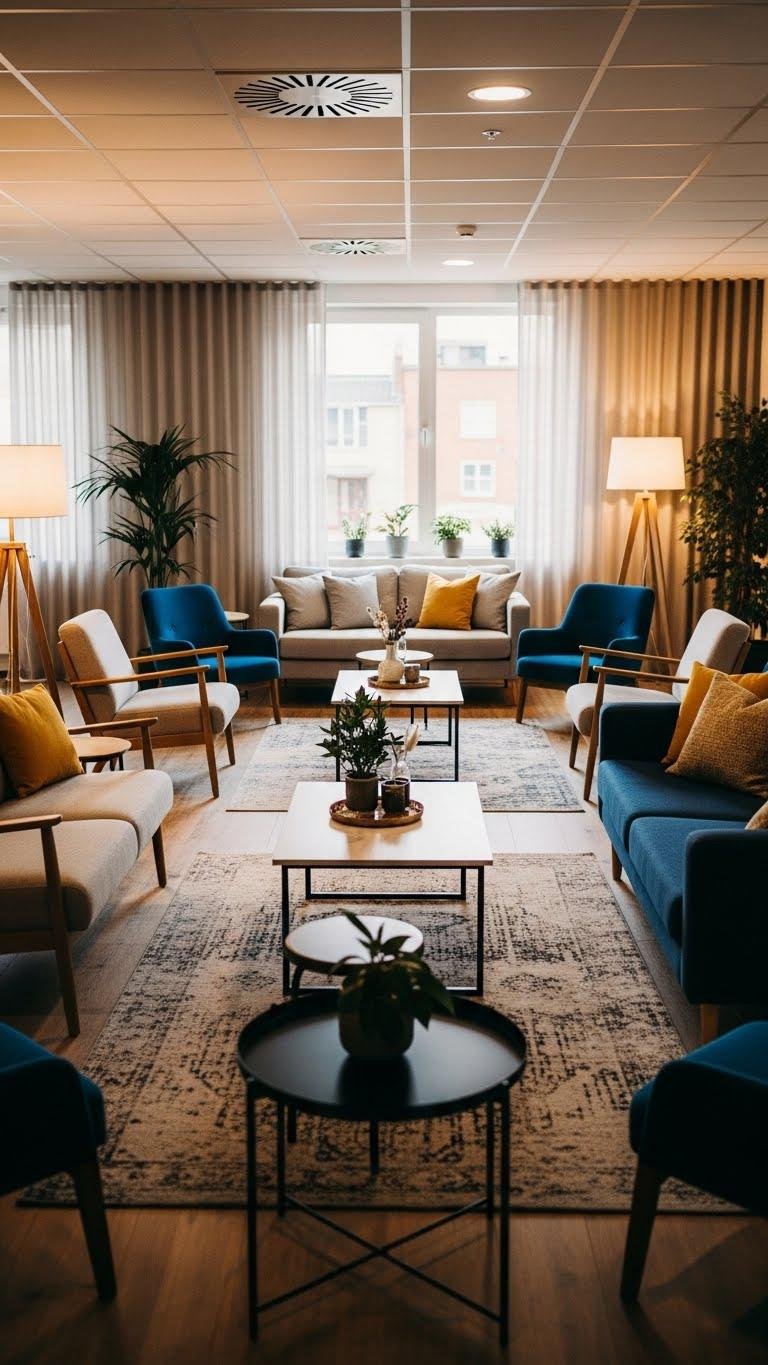
Keep seats about 3–10 feet apart so conversations feel intimate without forcing people to lean in or shout; closer distances (around 3–4 feet) suit small groups and casual chats, while 6–10 feet works for larger gatherings or rooms with multiple seating zones.
You’ll balance conversation distance and intimate spacing by angling chairs, adding a central table, and leaving clear sightlines for relaxed, free-flowing interaction.
Use Solid, Neutral Upholstery for Main Furniture
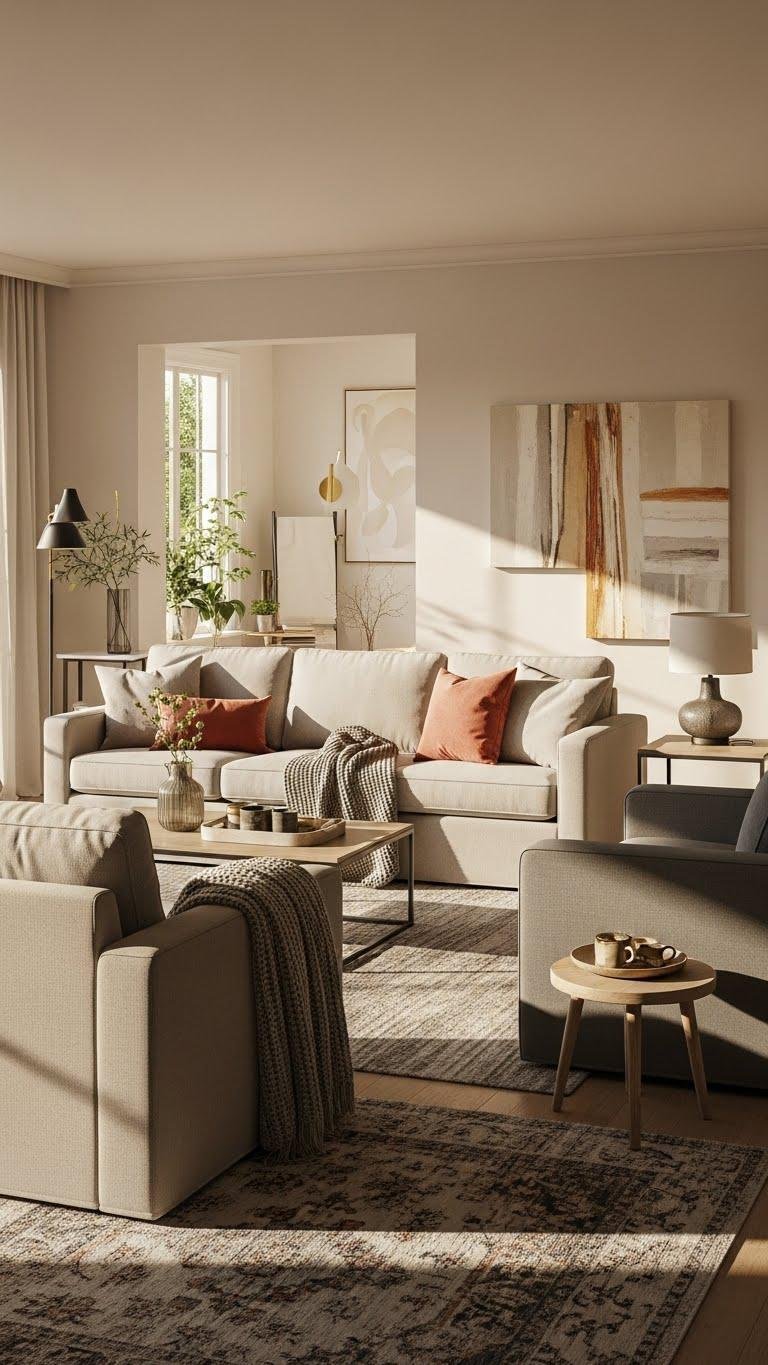
Because your main sofas and armchairs set the tone for the whole room, choose solid, neutral upholstery that provides a calm, adaptable backdrop for color and texture accents.
You’ll prefer durable fabrics that withstand daily life while staying refined. Opt for tailored slipcovers or streamlined finishes to keep lines crisp.
This lets you swap pillows, art, and throws freely for seasonal shifts.
Layer Plush Area Rugs for Warmth and Scale
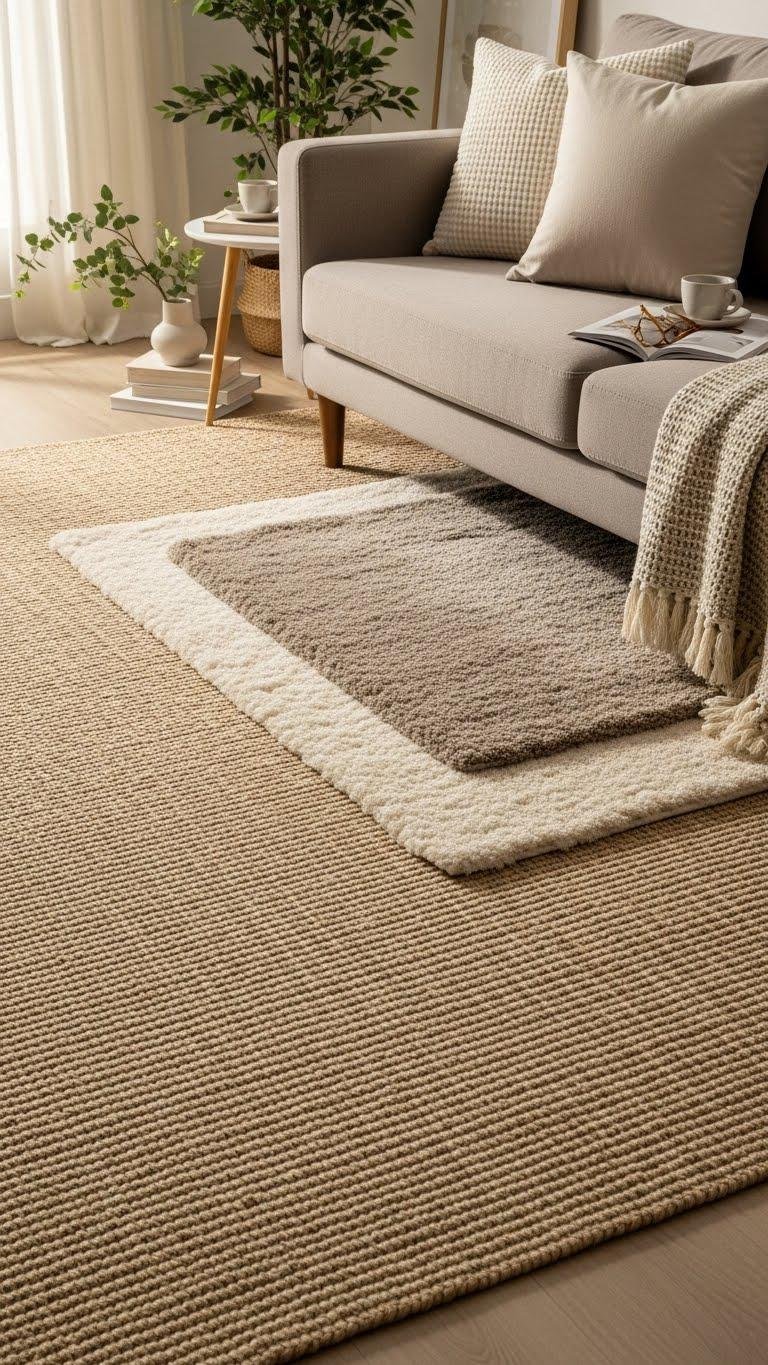
Once you’ve anchored the room with neutral, streamlined seating, bring softness and scale down to the floor by layering plush area rugs.
You’ll combine layered textures—think low-pile jute foundations topped with sumptuous shag or wool—so rug anchoring feels intentional.
Place larger base rugs under all legs, smaller plush layers centered beneath seating, and let tactile contrast define comfort without clutter.
Mix Light and Dark Elements for Depth

While layering neutrals keeps things serene, mixing light and dark elements gives your living room instant depth and visual interest. Balance sunlit upholstery with deeper wood tones and a charcoal side table so spaces breathe. Use ambient lighting to soften contrasts and highlight textured, patterned textiles. You’ll create a liberated, composed room where contrasts feel intentional, layered, and effortlessly alive.
Add Black Accents for Visual Weight and Contrast
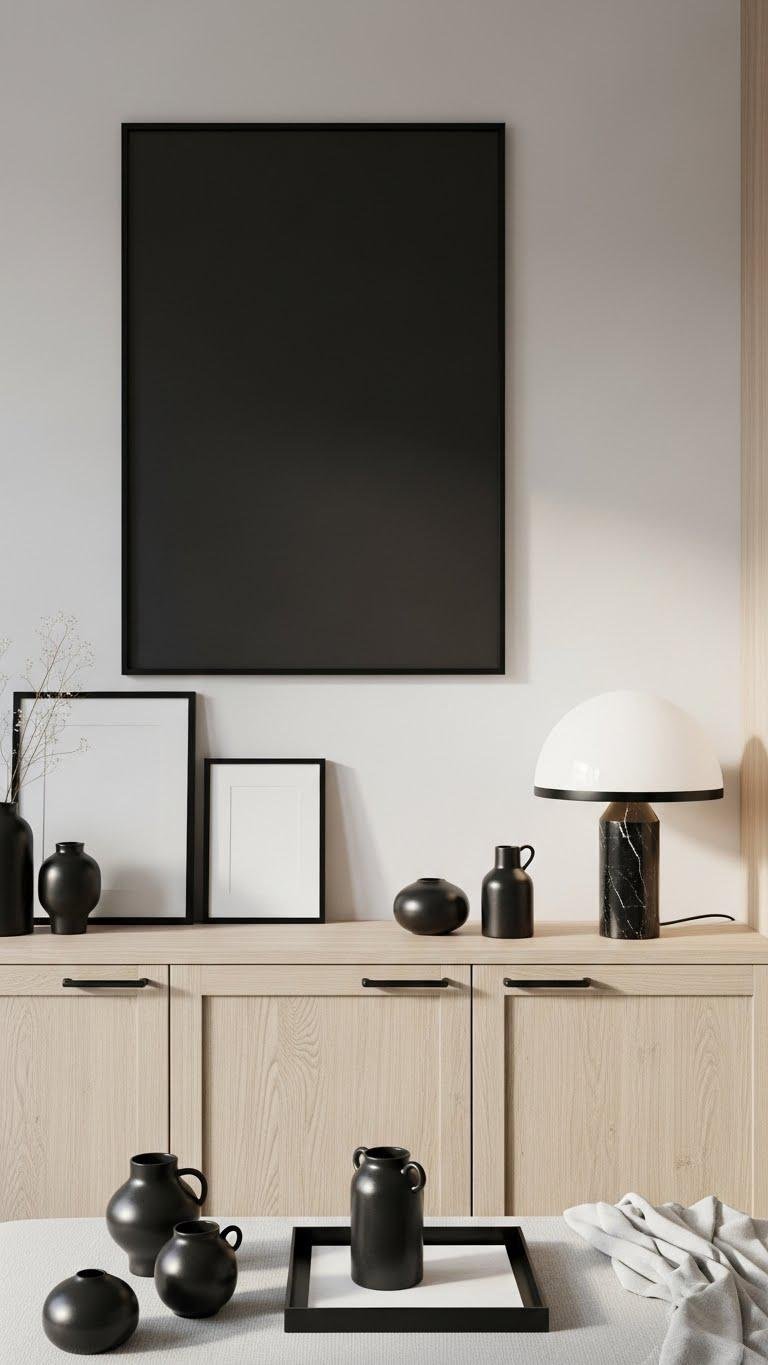
Having balanced light and dark elements, you can introduce black accents to anchor the room and sharpen its composition. Use matte hardware on cabinets, slim black frames, and a statement black artwork to create focal points without heaviness.
Scatter small black objects—vases, lamps, tray edges—to guide the eye and lend visual weight, letting freedom in your palette breathe around those grounded, decisive details.
Use Two Compatible Colors for Pillows and Throws
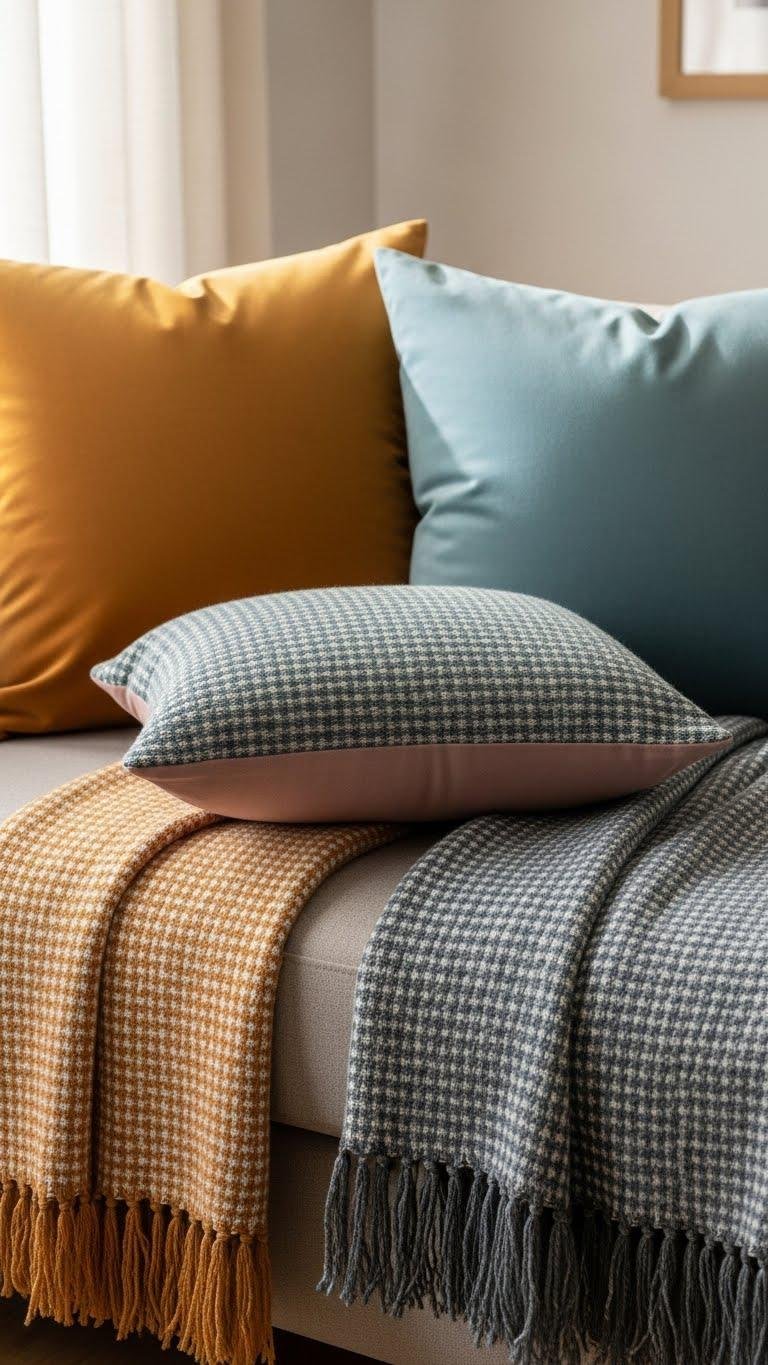
Pick two complementary colors for pillows and throws to create harmony without cluttering the palette. You’ll pair a dominant hue with a secondary tone, using seasonal color blocking to shift mood across months. Mix solids and a patterned texture contrast for depth, keeping scale balanced so each piece breathes. This lets you change looks freely while maintaining a cohesive, designer-led aesthetic.
Balance Hard and Soft Surfaces Throughout the Room
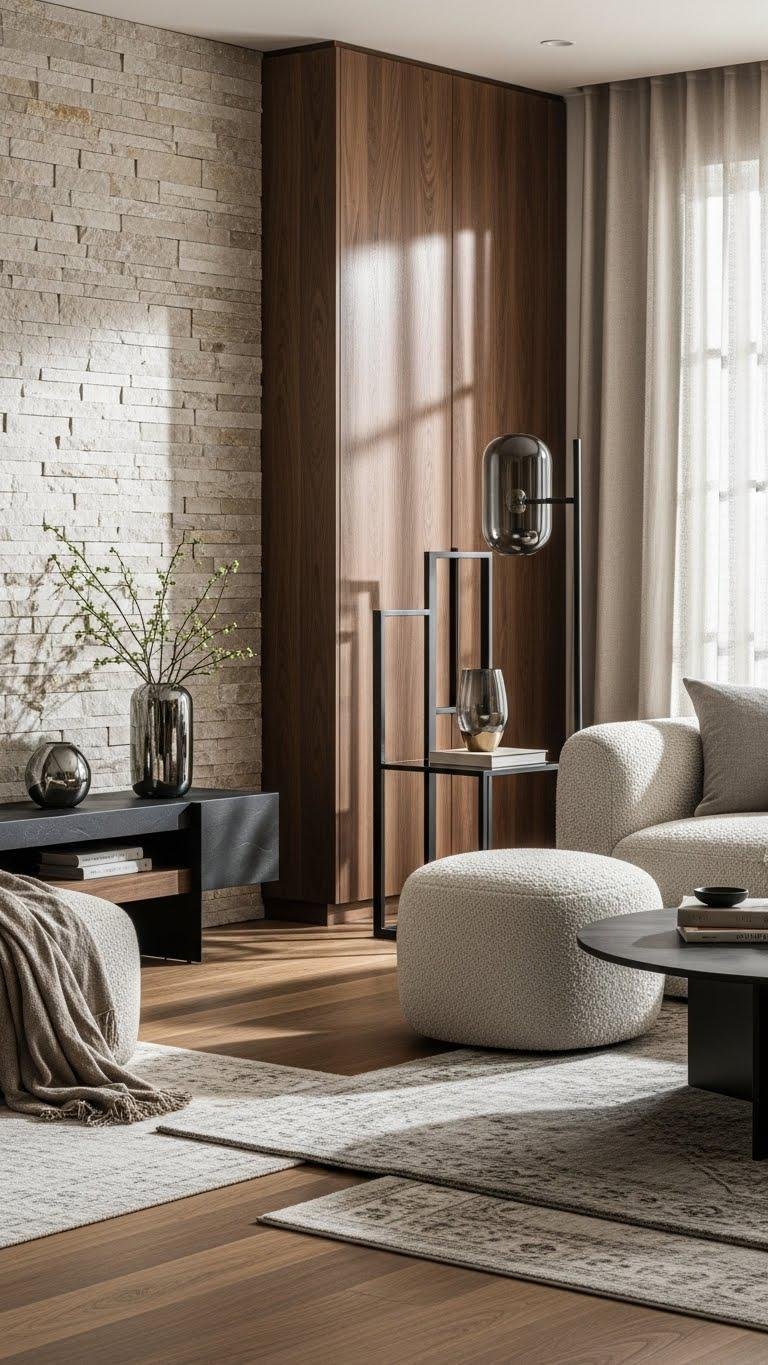
Because you live in and move through the room, think about how hard and soft surfaces meet and influence comfort, acoustics, and visual weight—mix solid materials like wood, metal, and stone with textiles that absorb sound and add warmth. You’ll balance tactile contrasts by pairing smooth, reflective accents with matte, cushioned pieces, placing rugs and drapery to anchor polished surfaces and soften echoes.
Include a Variety of Textures: Leather, Wool, Metal, Glass
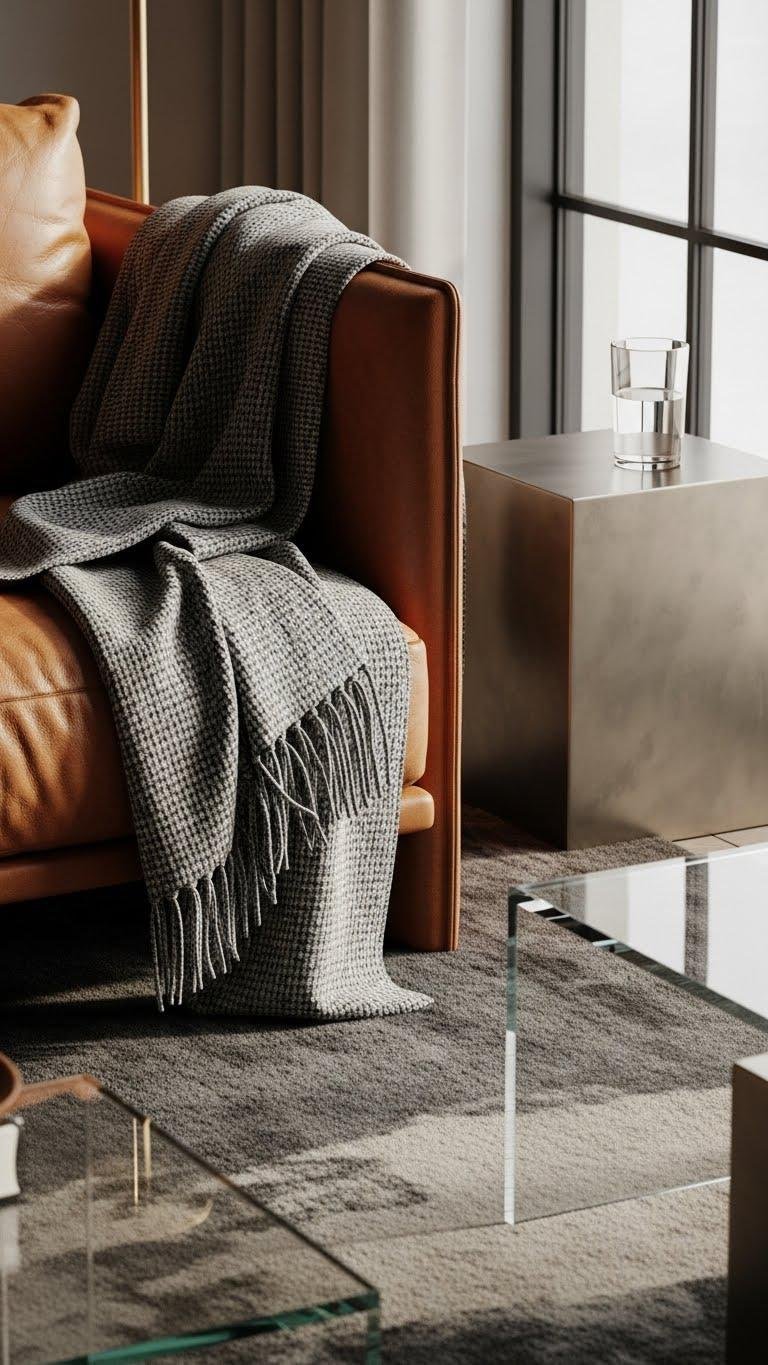
When you layer leather, wool, metal, and glass thoughtfully, each material brings a distinct tactile and visual role—leather lends warmth and patina, wool absorbs sound and invites touch, metal introduces crisp edges and shine, and glass reflects light and opens sightlines. You’ll create tactile pairings that guide movement, use reflective contrasts for depth, and mix finishes so the room feels liberated, composed, and lived-in.
Arrange Sofa and Chairs Across From Each Other for Dialogue
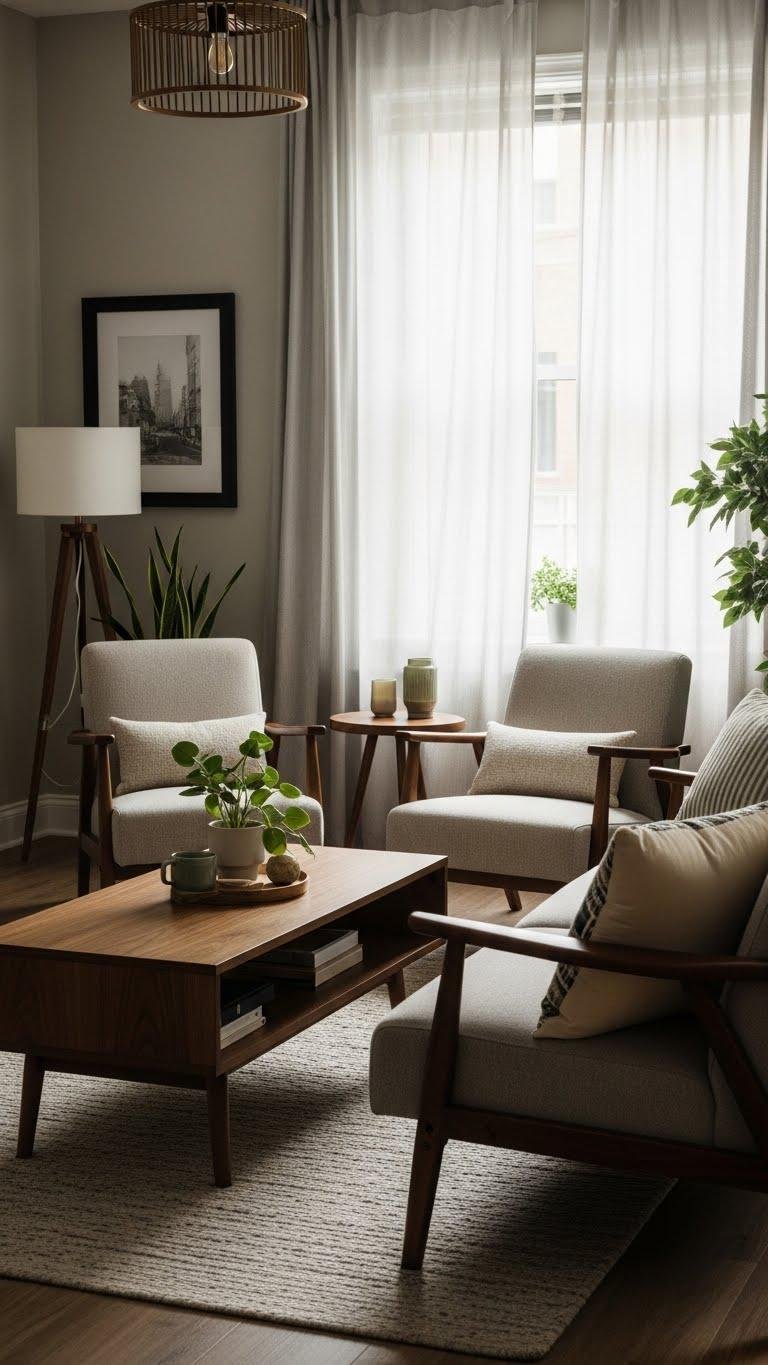
While arranging seating opposite one another, aim to create a clear conversational axis that feels both intimate and balanced. Position your sofa and chairs so conversation focalpoints sit within a comfortable distance; place chairs slightly angled toward the sofa. Prioritize eye level alignment to keep exchanges natural, adjust seat heights and throw pillows, and leave enough negative space so conversations flow freely and visually.
Keep the Coffee Table Low and Free of Tall Objects

You’ve set up a comfortable conversation axis with seating; now keep the coffee table low and unobstructed so faces and sightlines stay the focus. Choose low profile decor—shallow trays, small books, a single sculptural bowl—so the room breathes. Keep clutter minimal and schedule simple tabletop maintenance: quick dusting, neat coasters, and rotating accents to preserve openness and effortless freedom.
Use Upholstered Ottomans as Flexible Seating or Footrests
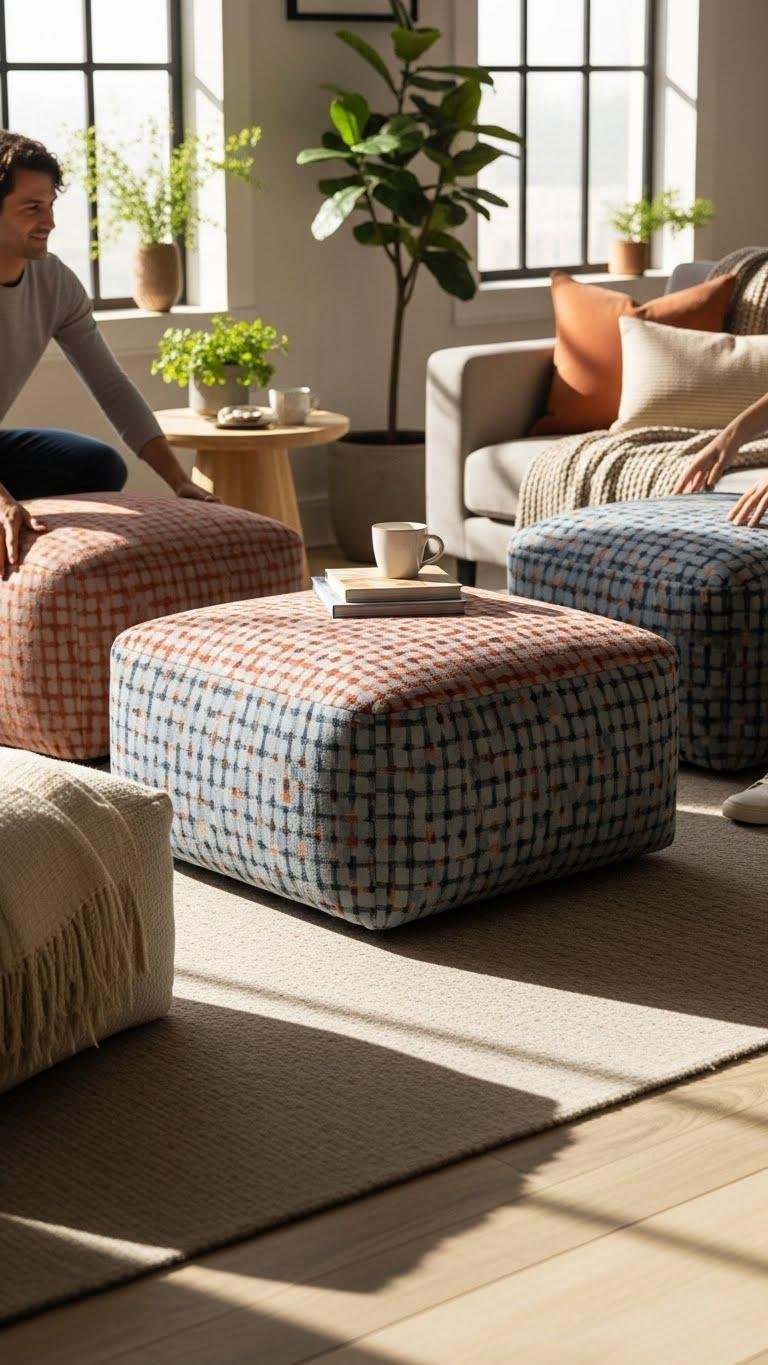
Pull in an upholstered ottoman to anchor seating or kick back as an improvised footrest—its low profile and cushioned surface make it one of the most versatile pieces in a living room.
You’ll appreciate portable ottomans for easy rearranging during gatherings, and patterned ottomans to inject personality. Choose scale, durable fabric, and rounded corners so you can move freely and lounge confidently.
Vary Vertical Planes to Create Visual Interest
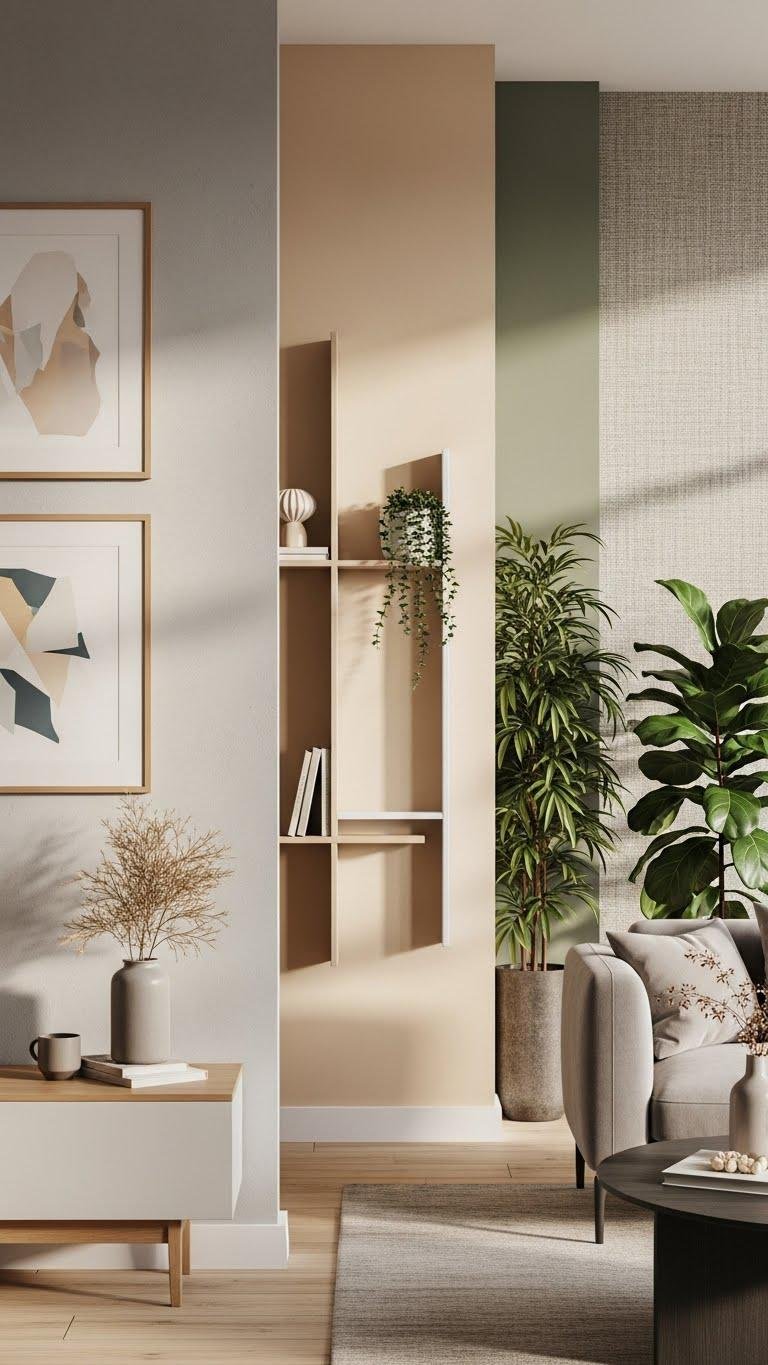
When you vary vertical planes in your living room, you add depth and a layered rhythm that keeps the eye moving across the space.
Mix floor to ceiling art with slim shelving, tall plants and a textured wallcovering to balance scale.
You’ll create freedom in composition: alternate heights, repeat materials sparingly, and let negative space breathe so each vertical element reads clearly.
Cluster Pendant Lights to Draw the Eye Upward
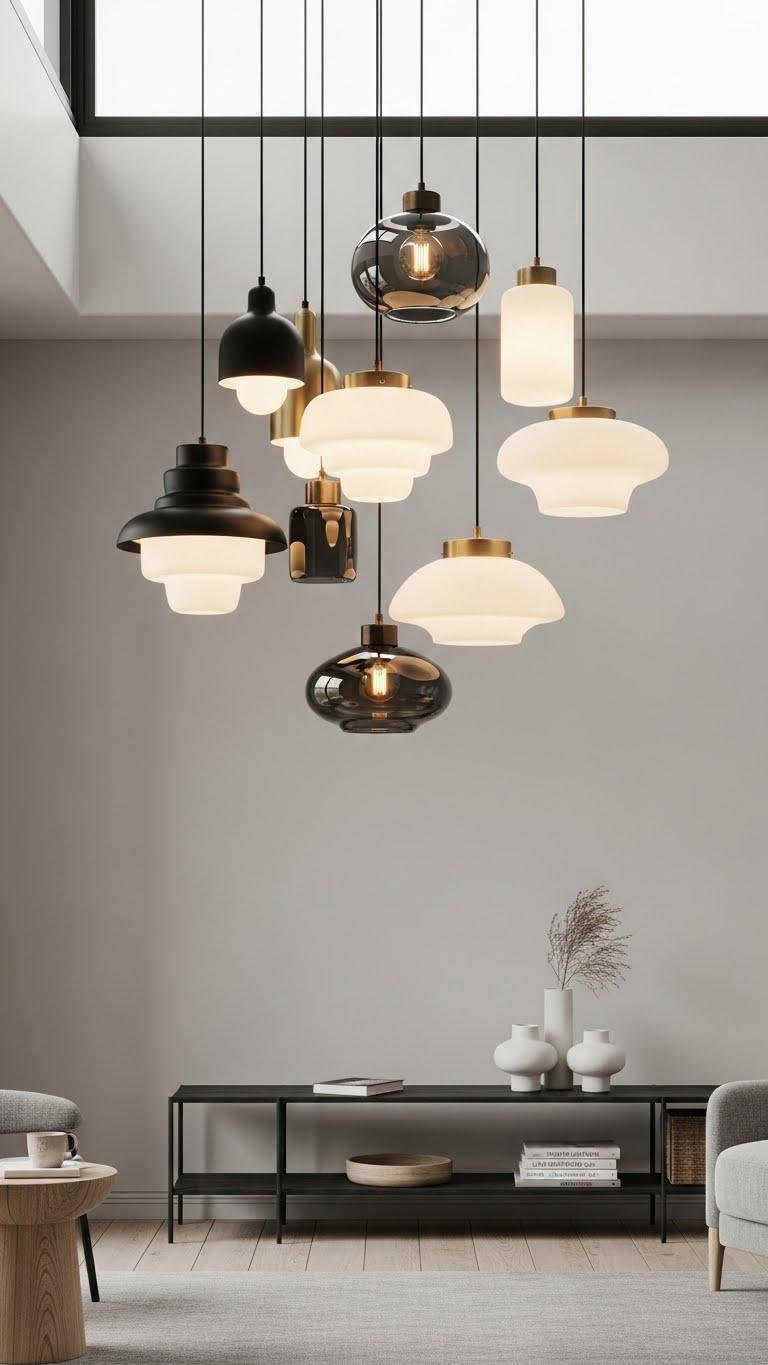
Cluster a few pendant lights at varying heights to instantly lift the room’s focal plane and encourage the eye to travel upward. You’ll create a deliberate vertical focus with layered pendants that balance scale and rhythm. Choose mixed finishes and differing translucencies, anchor them over seating or a low console, and adjust heights to cultivate movement, airiness, and a liberated, sculptural atmosphere.
Incorporate One or Two Pieces With Atypical Silhouettes
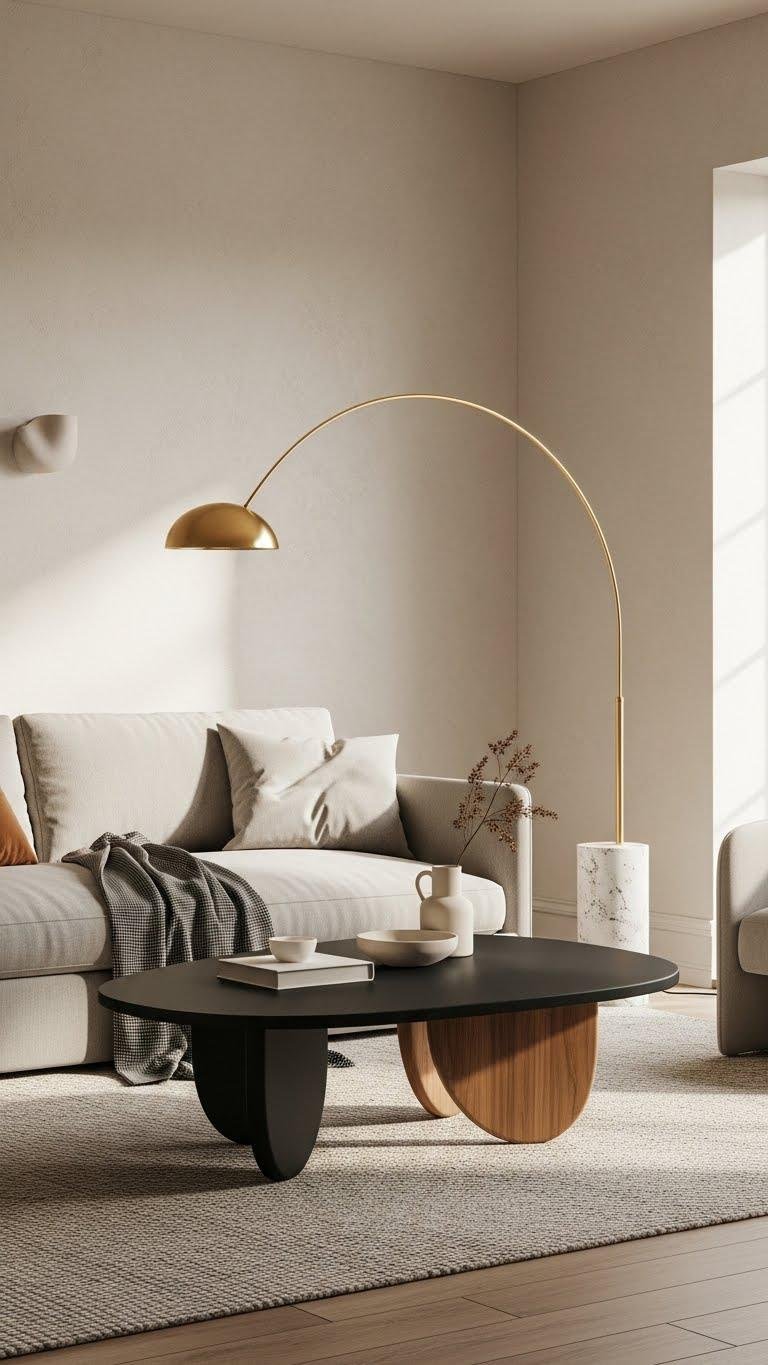
Introduce one or two pieces with atypical silhouettes to break predictability and give the room a memorable signature. Choose a sculptural coffee table as an anchor and pair it with an arched floor lamp to create contrast and flow.
You’ll balance bold shapes with restrained textiles and open sightlines, letting each statement piece breathe while preserving a liberated, calm atmosphere.
Blend Old and New Pieces for Character
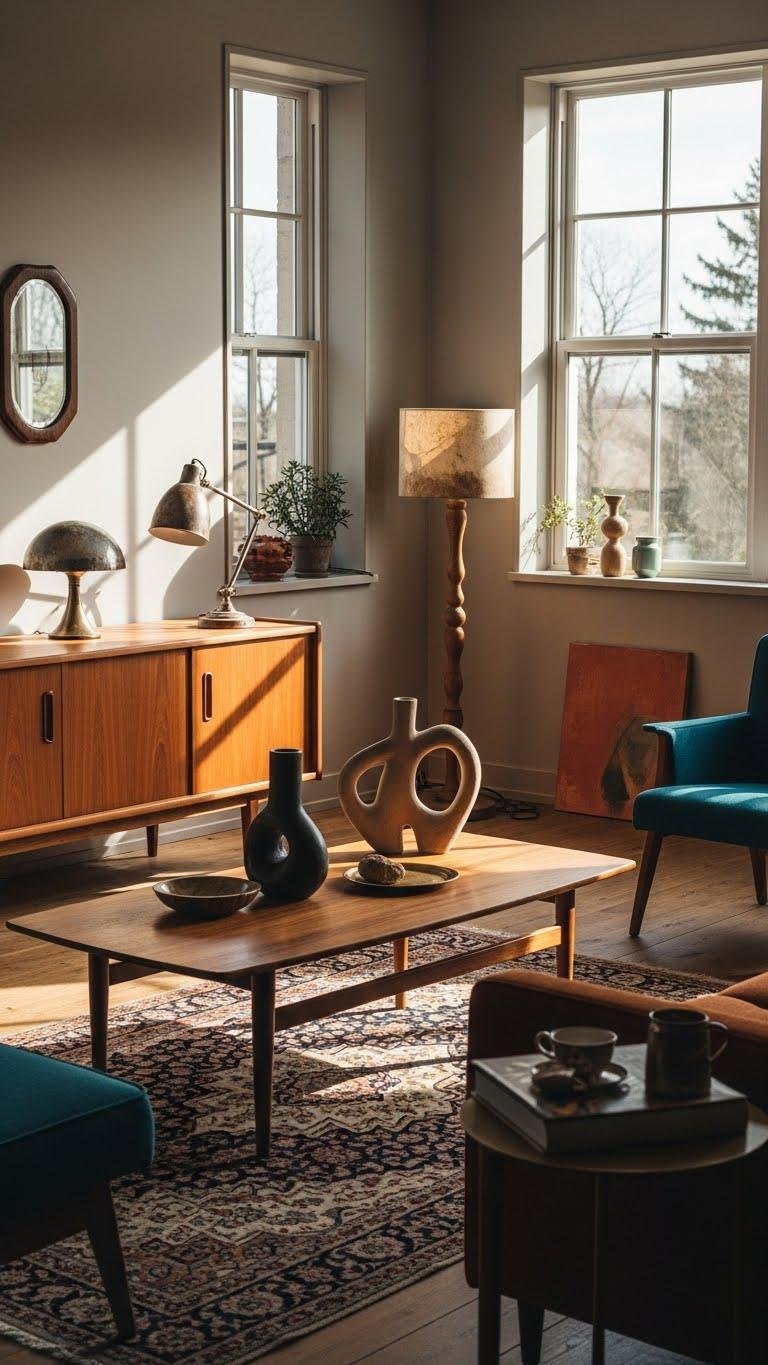
After letting one or two sculptural pieces command the room, layer in vintage or heirloom items to give the space warmth and history. You’ll balance clean, vintage modern lines with patinaed surfaces, mixing textures and eras deliberately. Choose pieces that sing together — a refurbished table, heirloom upcycling lamps, or a worn rug — so the room feels curated, lived-in, and free.
Ensure Proper Leg Room Around Seating
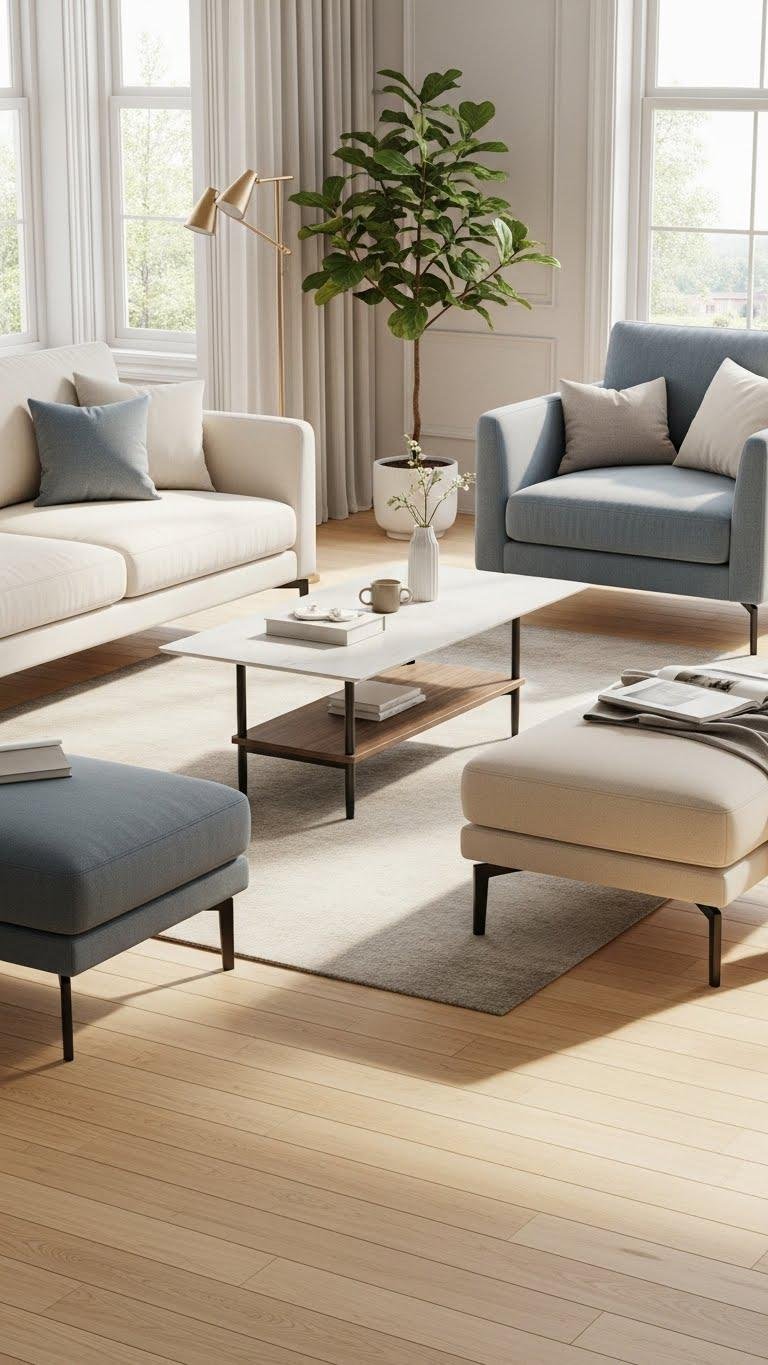
Allow at least 18–24 inches of clear space between seating and coffee tables or adjacent furniture so people can stretch their legs, pass plates, and move without brushing knees. You’ll create clear pathways that feel liberating; position sofas, chairs, and adjustable ottomans to preserve flow. Measure, refine, and resist clutter so each seating moment feels spacious, intentional, and effortlessly elegant.
Adjust Furniture Spacing for Optimal TV Viewing
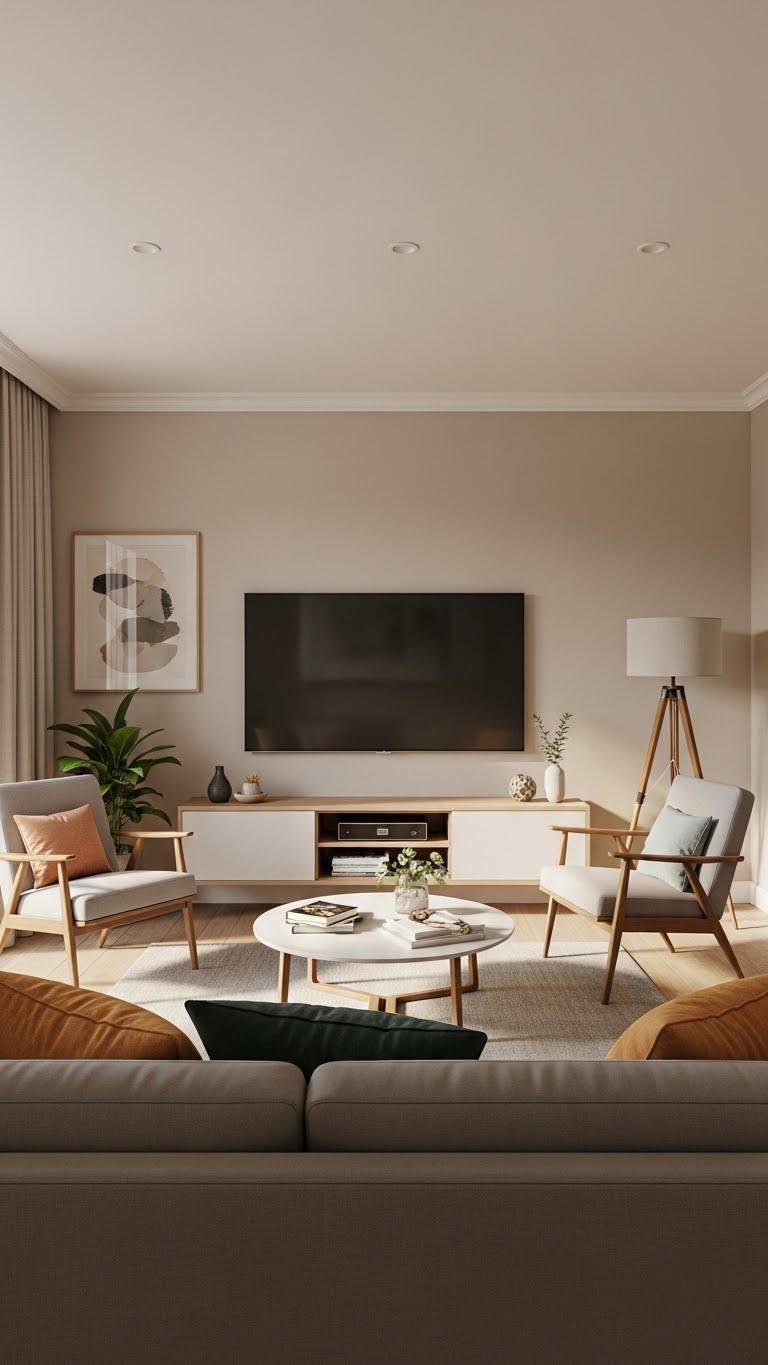
Think about how you sit and what you watch: positioning your sofa and chairs at the right distance from the TV not only eases eye strain but also balances room aesthetics and sightlines.
Measure screen height to align the center with your eye level, arrange seating to maintain a comfortable viewing angle, and leave flexible circulation space so you can move freely and adapt layouts easily.
Source Curated Accessories Affordably for Polish
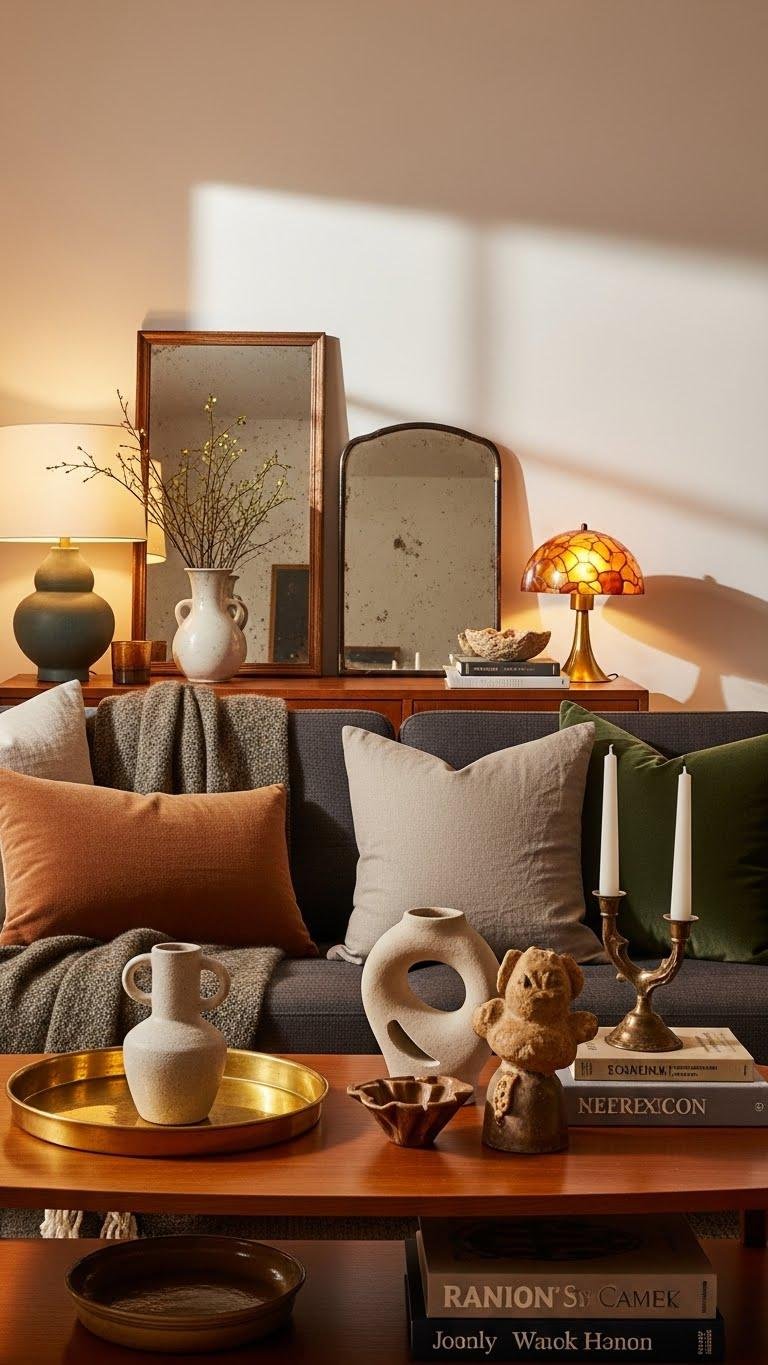
Once your seating and sightlines are set, finishing touches—lighting, textiles, art and small decor—will pull the room together without breaking the bank.
Hunt flea markets and online marketplaces so you can mix thrifted trays, sculptural vases and found objects for cohesive texture.
Add vintage mirrors to amplify light and character.
Edit tightly; choose pieces that feel intentional and let the space breathe.
Style Shelves and Mantels With Layered Objects
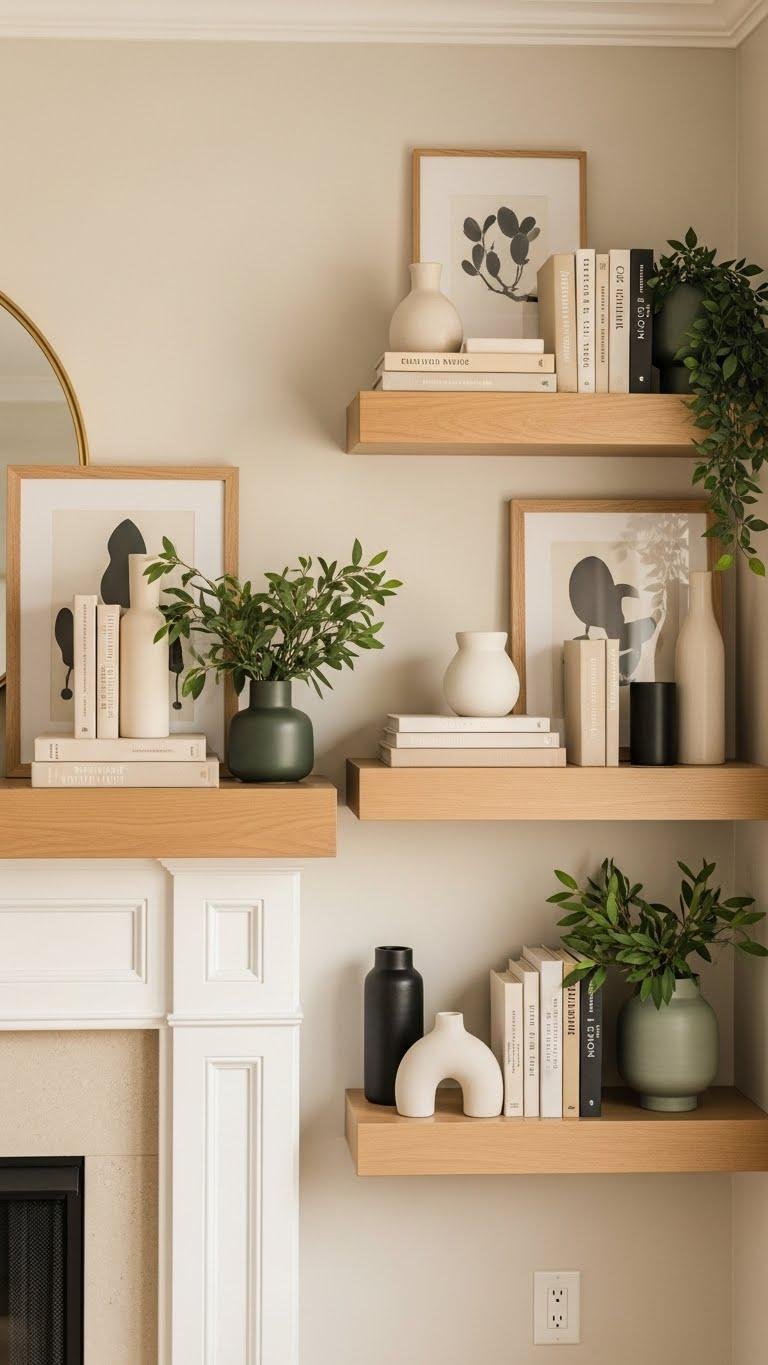
For layered shelves and mantels, start by arranging objects in small groupings that vary in height, scale and texture so your eye moves across the vignette instead of stopping flatly.
You’ll build layered vignettes by mixing books, art, pottery and greenery; lean pieces for depth, repeat materials for cohesion, and aim for relaxed mantel symmetry that feels intentional, open and effortlessly yours.
Fluff and Arrange Pillows for Proportion and Comfort
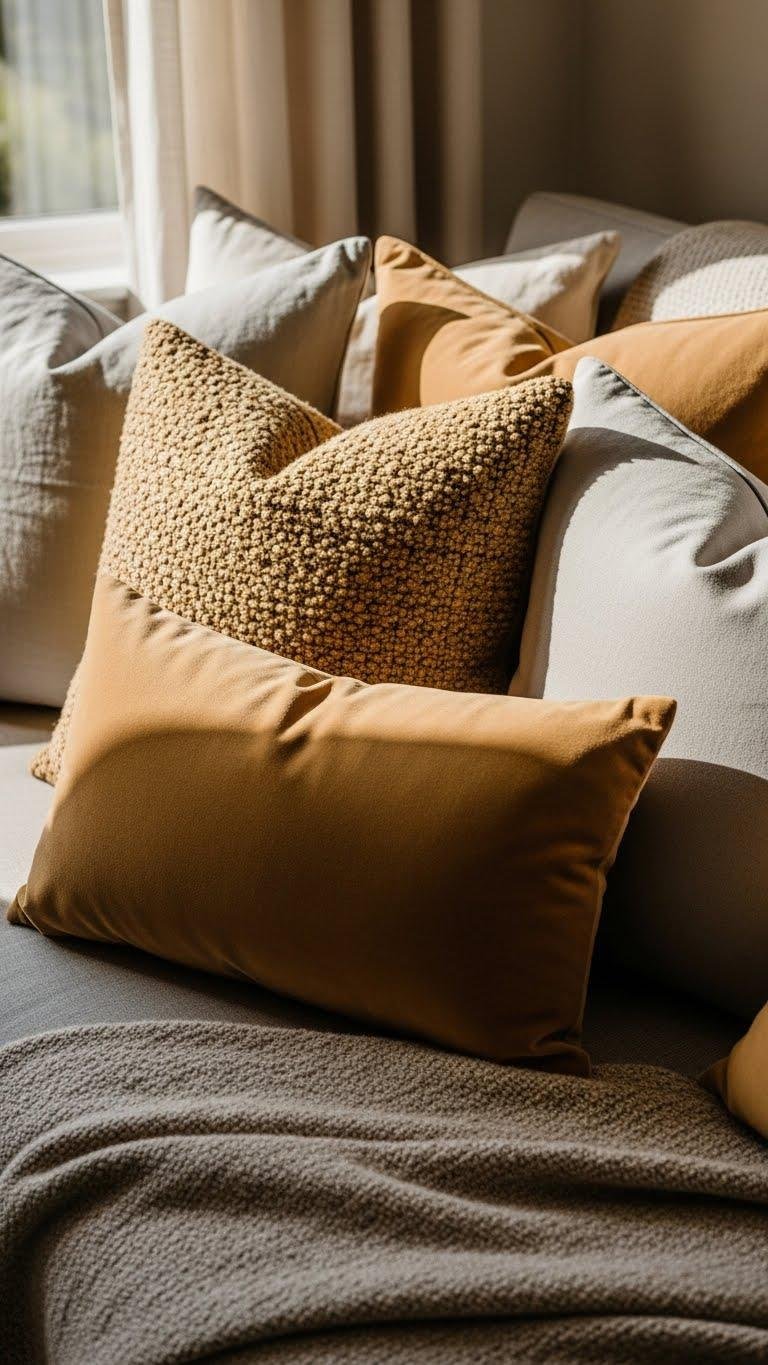
Although pillows might seem like small details, properly fluffing and arranging them makes a sofa look intentional and feel inviting.
You’ll plump feather inserts daily, rotate cushions so fill settles evenly, and layer sizes to maintain proportion.
Mix contrasting textures—linen, boucle, velvet—for depth, but keep arrangements purposeful.
Aim for comfort first, then aesthetic freedom: relaxed, curated, and effortlessly livable.
Use Asymmetry (Or Mix With Symmetry) to Achieve Balance
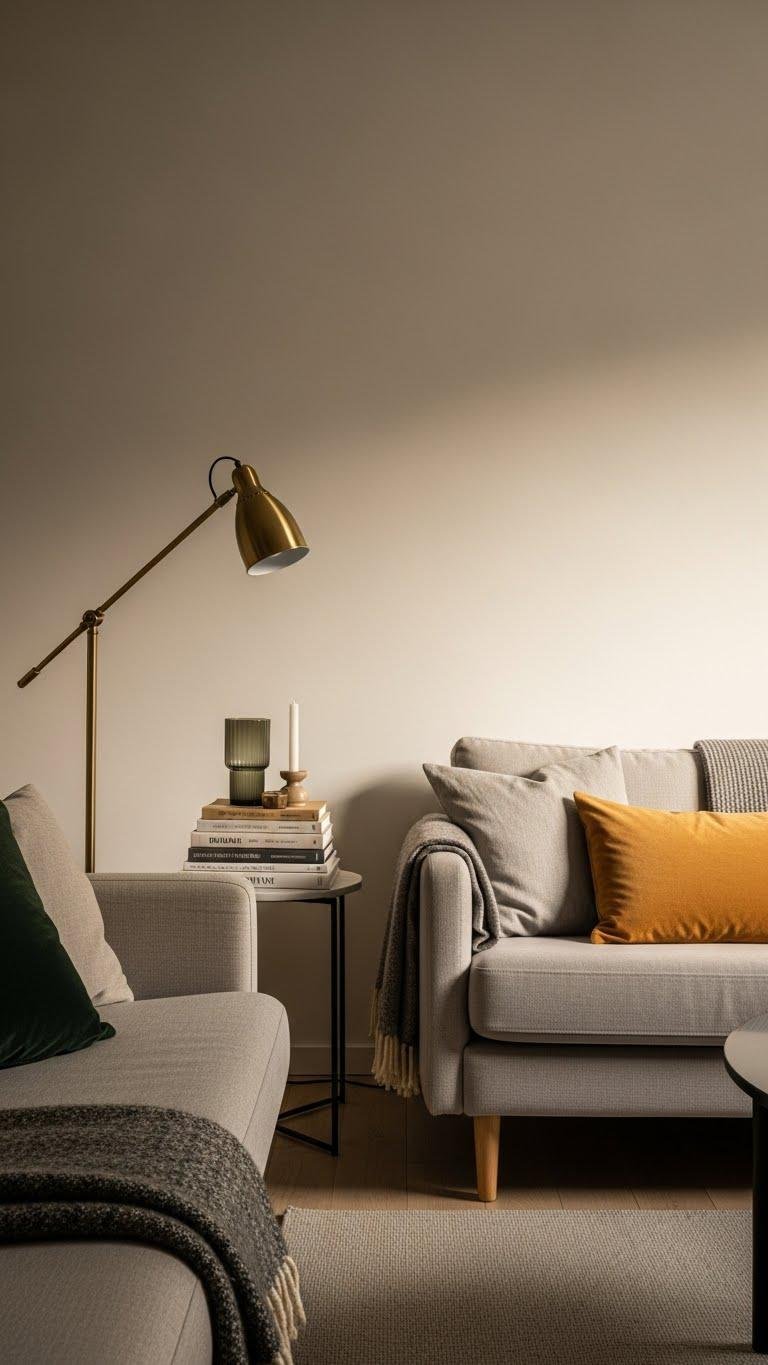
When you balance one side of a sofa with a taller lamp and a stack of books while keeping the opposite side low and layered with cushions, the room feels intentional rather than forced.
You’ll cultivate intentional imbalance by grouping objects of varied heights, textures, and negative space. Use asymmetrical focalpoints to guide sightlines, alternate scale, and let freedom inform calm, considered arrangements.
Contrast Neutrals Like White Walls With Warm Materials
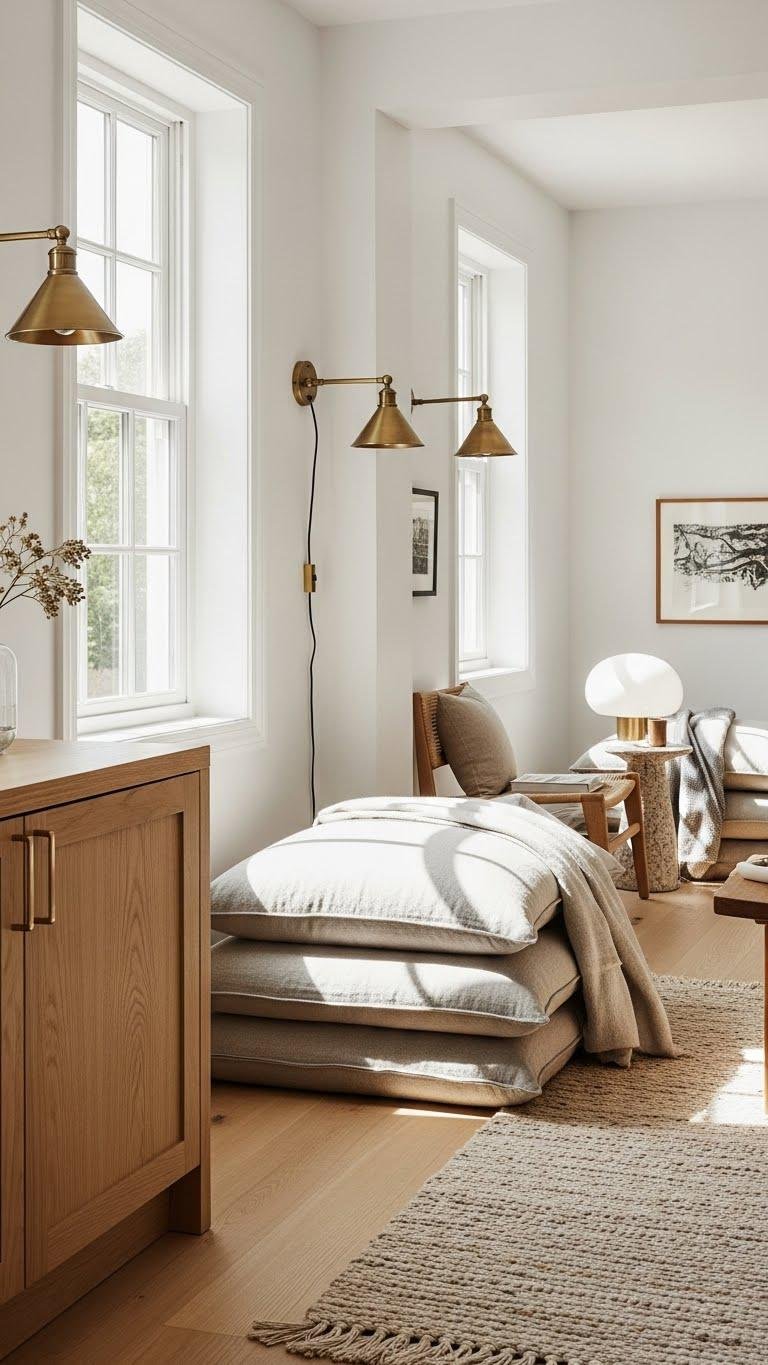
If you pair crisp white walls with warm, tactile materials—think honeyed oak, brushed brass, and handwoven wool—you’ll create a room that feels both fresh and inviting. Balance airy white with warm brass accents, textured linen cushions, and a woven rug to add depth. Let natural light and varied finishes guide placement so the space stays open, intentional, and liberating.
Avoid Overcrowding: Leave Enough Negative Space

You’ve already balanced crisp white walls and warm materials to create a serene, tactile room—now let the space breathe. Keep furniture purposeful, choose a few sculptural pieces, and resist filling every surface.
Negative space highlights form, improves flow, and gives you literal breathing room. Edit decor ruthlessly, allow clear sightlines, and arrange seating to invite movement and calm without clutter.