
You’ll create a calm, expensive-feeling home by editing with restraint and choosing materials that age well. Start with a soft neutral palette, layer linen and wool, and pick sculptural furniture with low profiles and tapered wooden legs. Favor matte plaster, handcrafted ceramics, and dimmable lighting to keep surfaces serene. These 23 minimalist ideas will help you balance negative space and tactile warmth—here’s how to make each choice feel purposeful and lasting.
Choose Curved, Sculptural Furniture
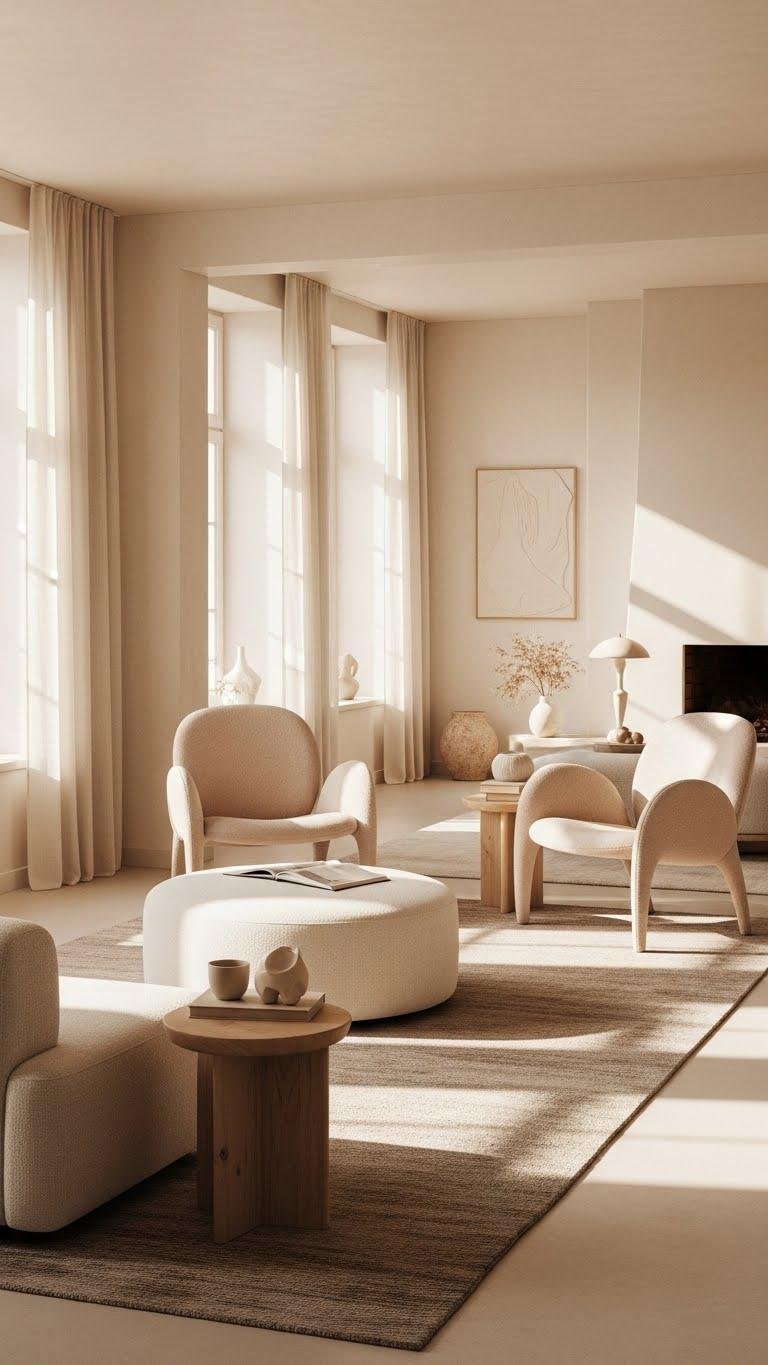
Soft neutrals give you a quiet backdrop that lets shape speak loudest, so bring in curved, sculptural furniture to introduce movement and warmth. Choose pieces with organic silhouettes that invite touch and ease. A rounded ottoman anchors seating without clutter, while sculptural chairs create soft focal points. You’ll feel freer in a space defined by gentle curves and purposeful simplicity.
Prioritize Natural Wood Elements
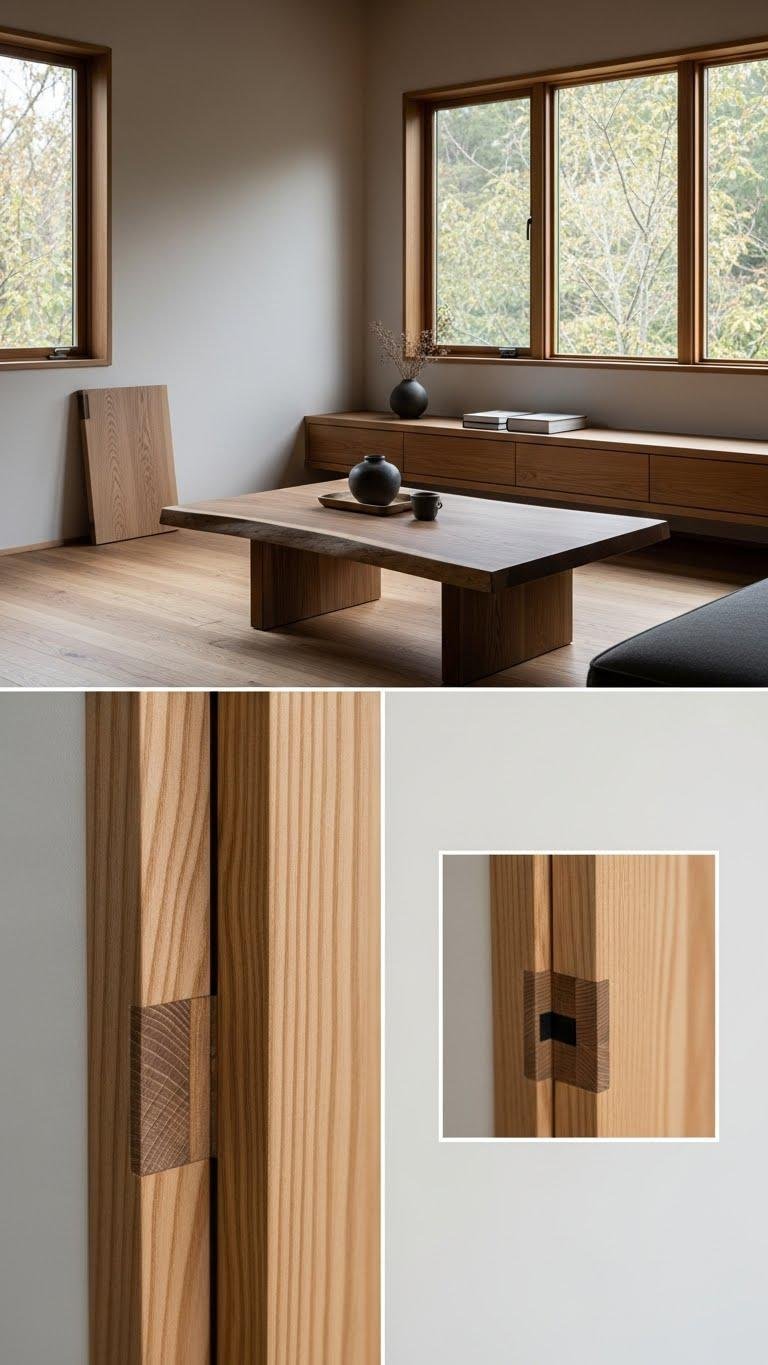
Because natural wood brings warmth and tactile richness, prioritize it as the backbone of your minimalist palette: choose visible grain, warm tones, and simple joinery to introduce organic character without visual clutter.
Lean into timber joinery, unfinished slabs, clear wood graining, and occasional end grain details. Let clean lines and honest surfaces free the space, anchoring calm, elevated simplicity that feels spacious and unfettered.
Layer Textures With Linen and Wool
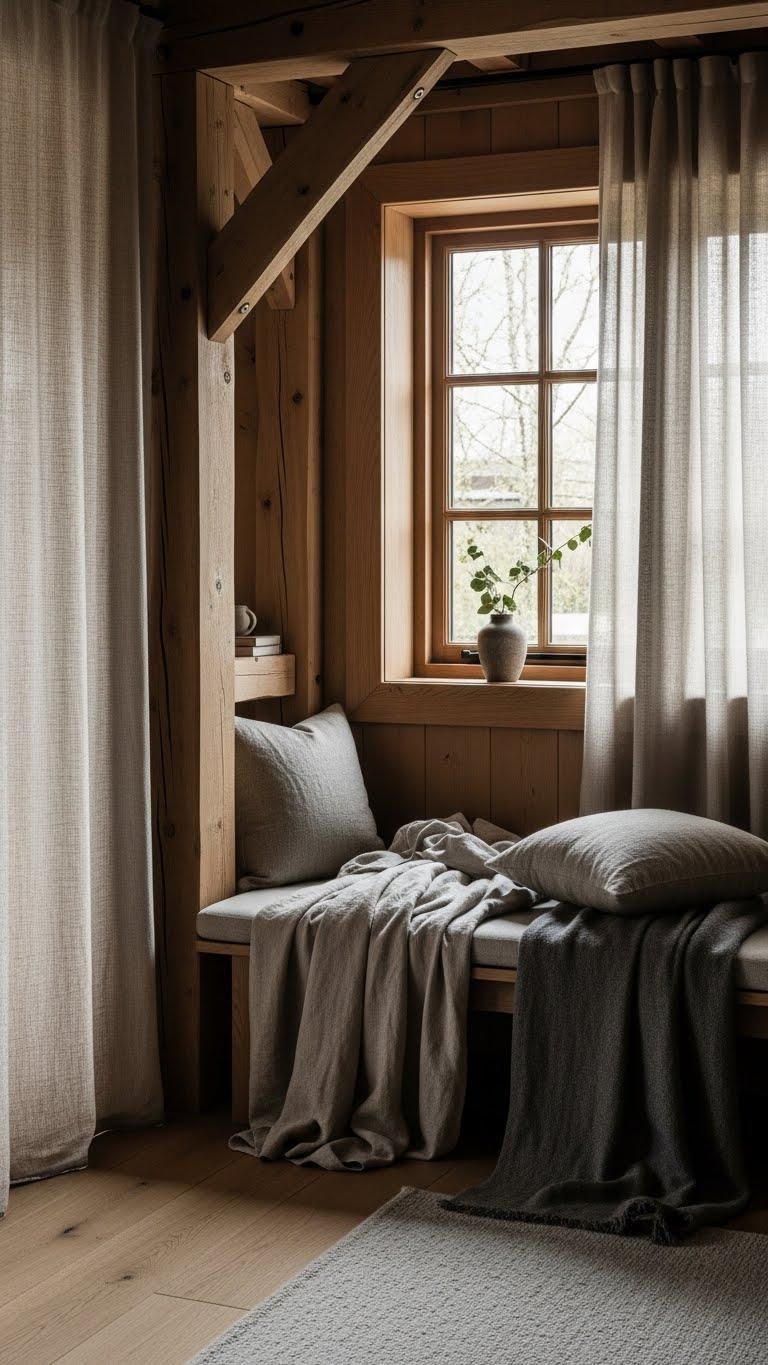
After letting warm timber define the room’s structure, bring in linen and wool to add tactile contrast and quiet comfort. You’ll use linen layering for airy throws and curtains, keeping forms simple and breathable. Introduce wool accents through cushions and a low-sheen throw to ground the palette and invite touch. You’ll balance textures sparingly, preserving openness while celebrating calm, unforced luxury.
Opt for Low-Profile, Clean-Lined Sofas
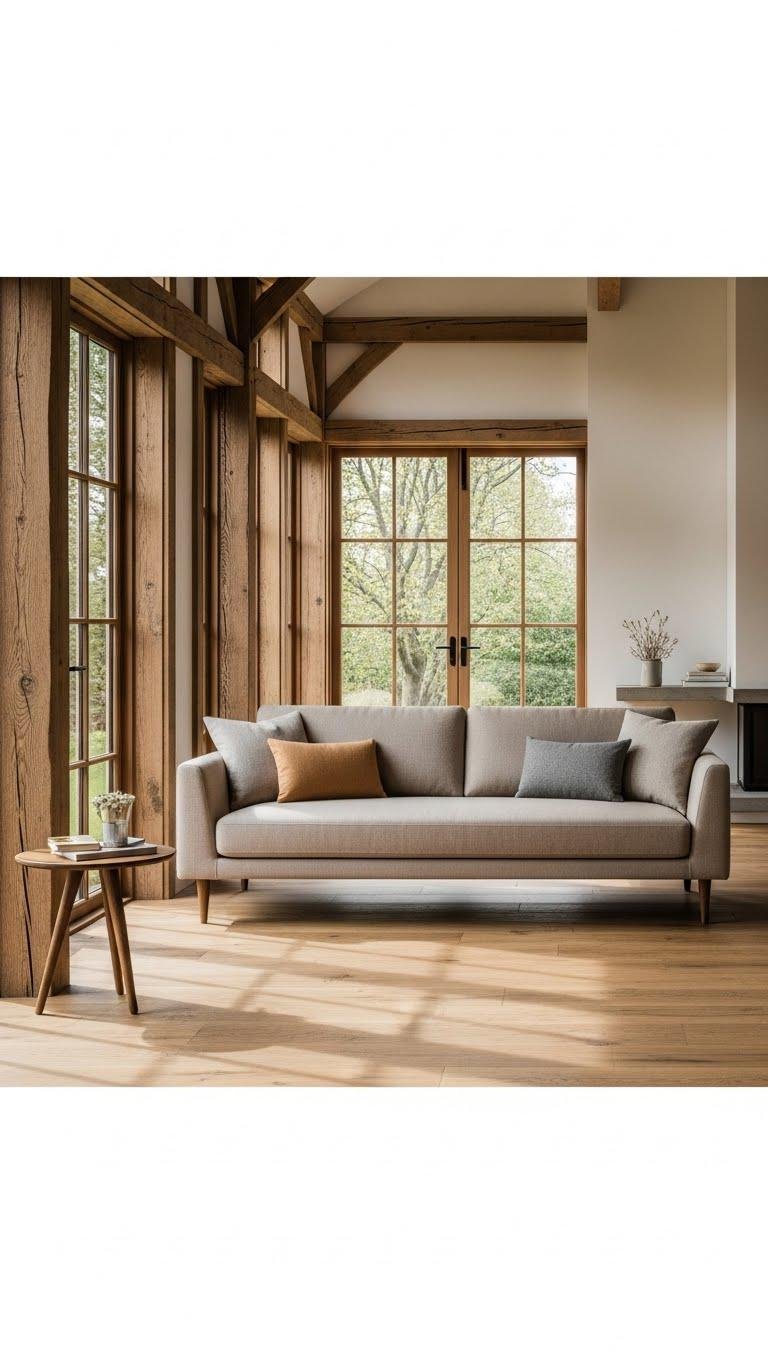
Anchoring the room with a low-profile, clean-lined sofa keeps sightlines open and emphasizes the timber architecture you’ve already introduced.
Choose low rise silhouettes in neutral upholstery to maintain calm, then add structure with tapered legs for an airy, refined look. You’ll favor pieces that feel deliberate, uncluttered, and liberating — seating that supports movement, light, and effortless living.
Use Statement Ceramic Accents
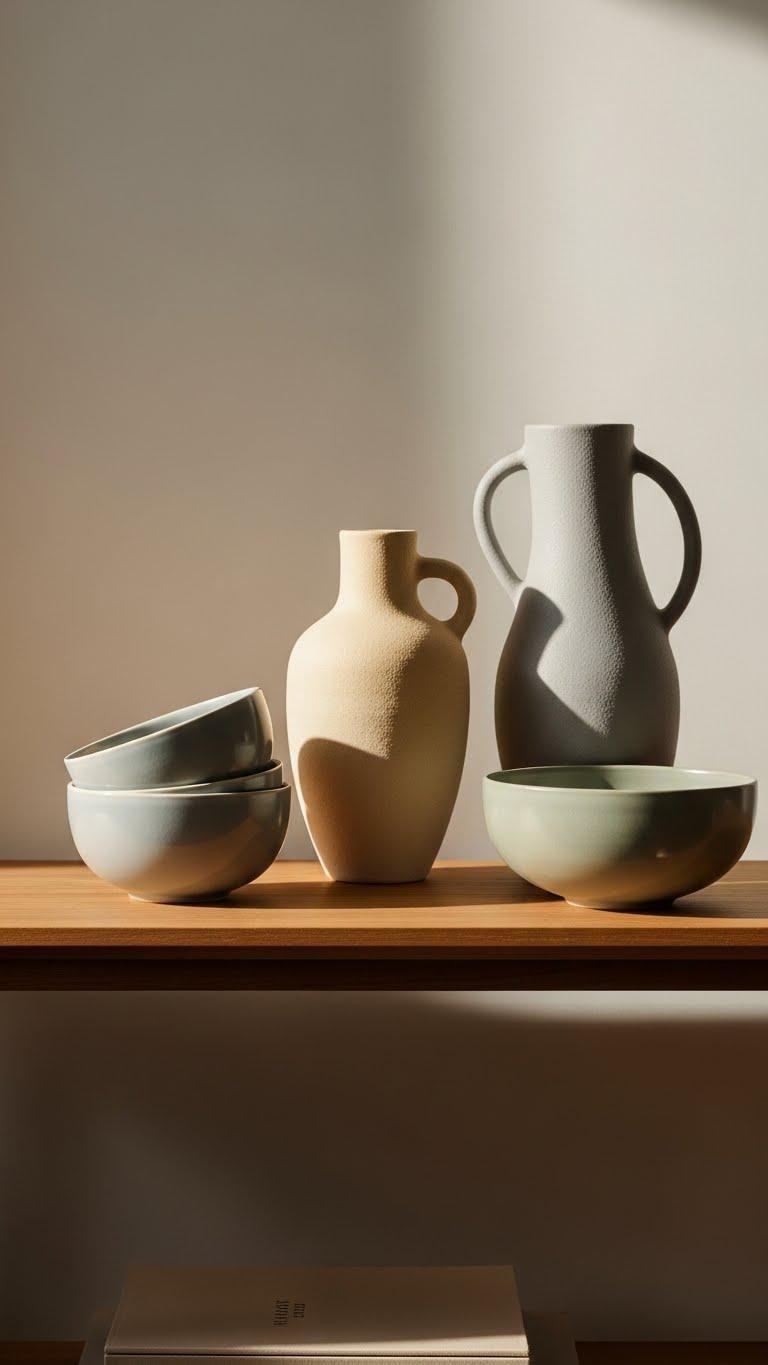
Introduce a few statement ceramic pieces to punctuate your minimalist scheme without crowding it. Choose one or two handmade vases with sculptural lines and a couple of glazed bowls in muted tones. Let their forms breathe on open shelves or a console, creating intentional pauses. You’ll feel free, curated, and calm — small investments that elevate the whole space.
Keep Surfaces Clear and Purposeful
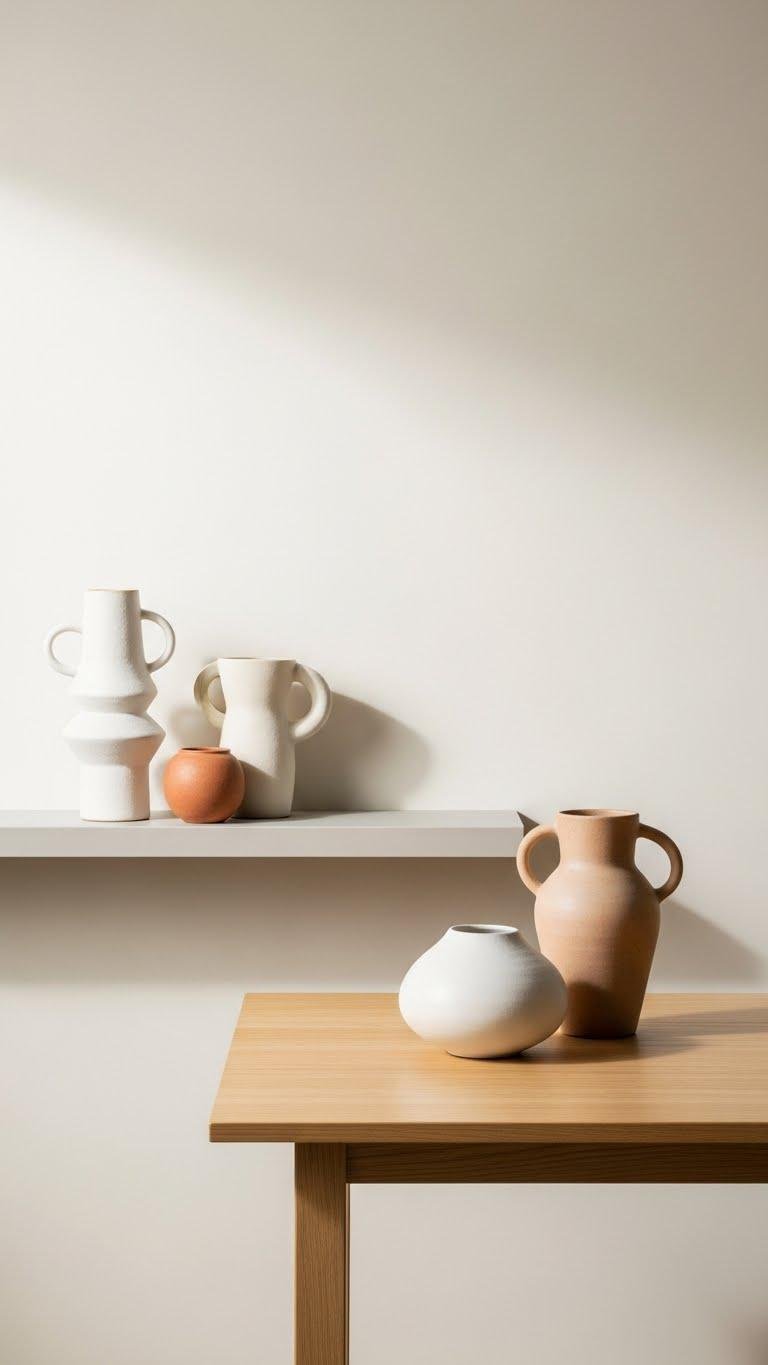
Now that you’ve chosen a few sculptural ceramics, let them live against intentionally spare surfaces so each piece can read clearly. You’ll cultivate single item minimalism by limiting clutter, keeping only essentials that serve form or function.
Treat each shelf and table as an intentional tabletop: edit ruthlessly, preserve negative space, and choose objects that offer calm, freedom, and a purposeful, elevated aesthetic.
Introduce Tonal Art and Simple Prints
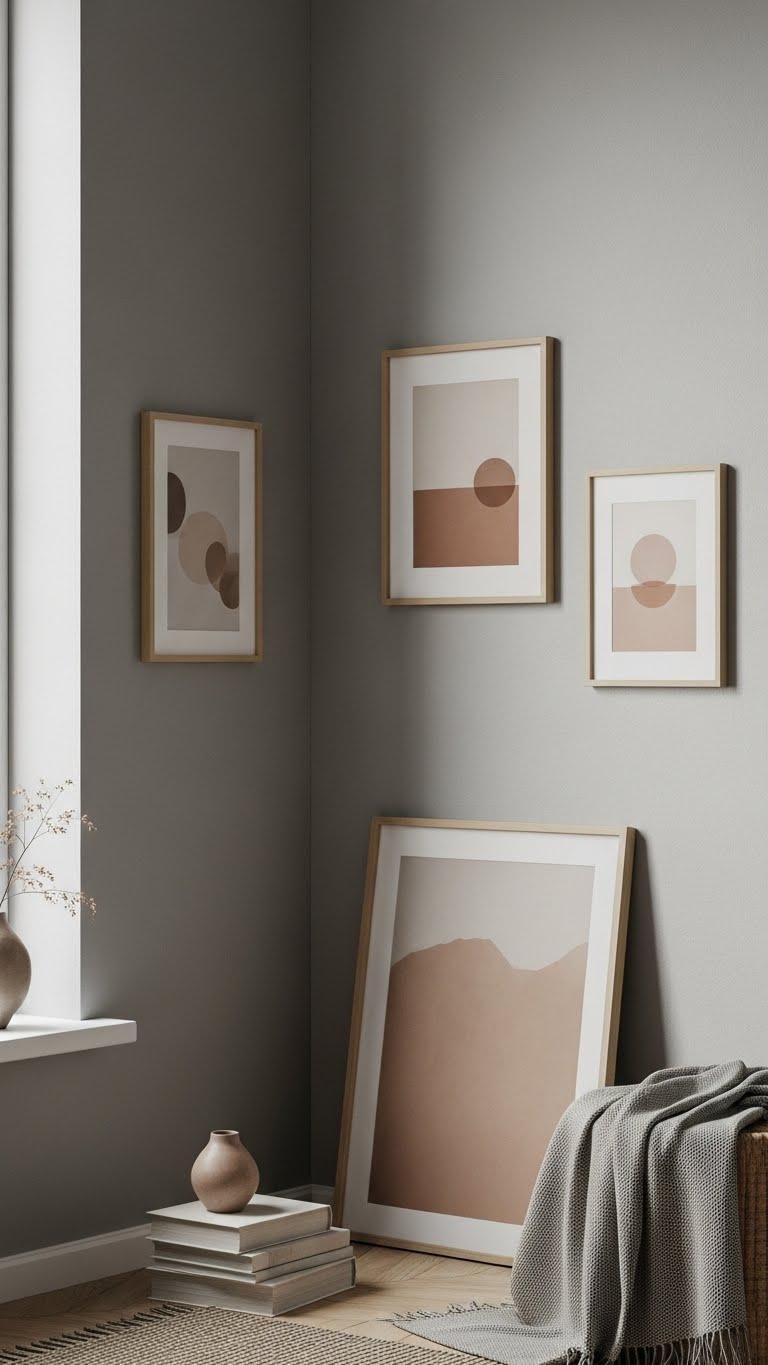
When you add tonal art and simple prints, you reinforce the room’s calm without breaking its restraint: choose works that echo your palette in muted greys, warm beiges, and soft clay tones so they read as texture more than focal drama.
You’ll favor framed simplicity, restrained scale, and negative space — letting a muted palette whisper mood while you retain freedom to edit, move, and breathe.
Add Organic-Shaped Mirrors
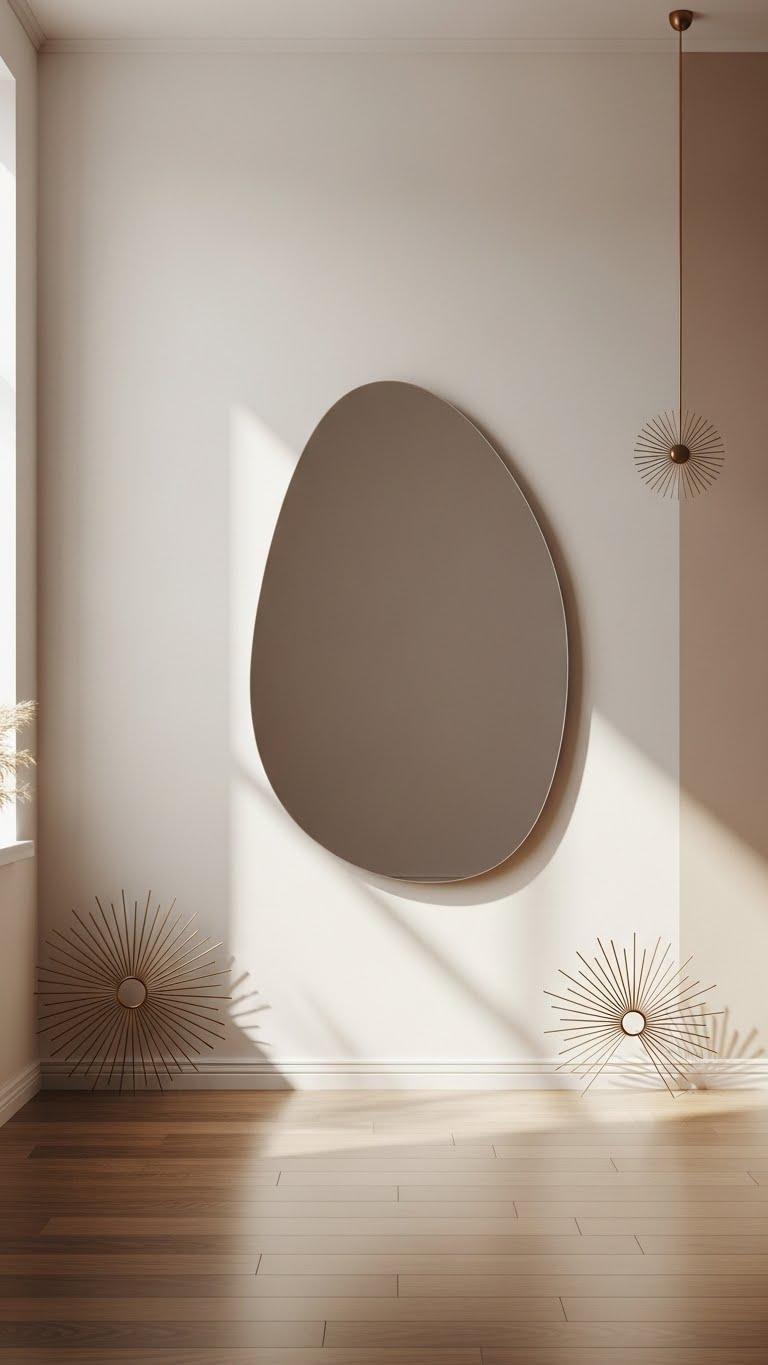
Why not soften the room’s geometry with an organic-shaped mirror that feels sculptural rather than ornamental? Choose pieces with asymmetrical frames to break rigid lines and reflect light naturally.
Let a mirror act as a liberated focal point—pair it sparingly with subtle sunburst accents or leave it alone to amplify space, mood, and movement without cluttering your calm, refined environment.
Incorporate Rattan and Woven Pieces
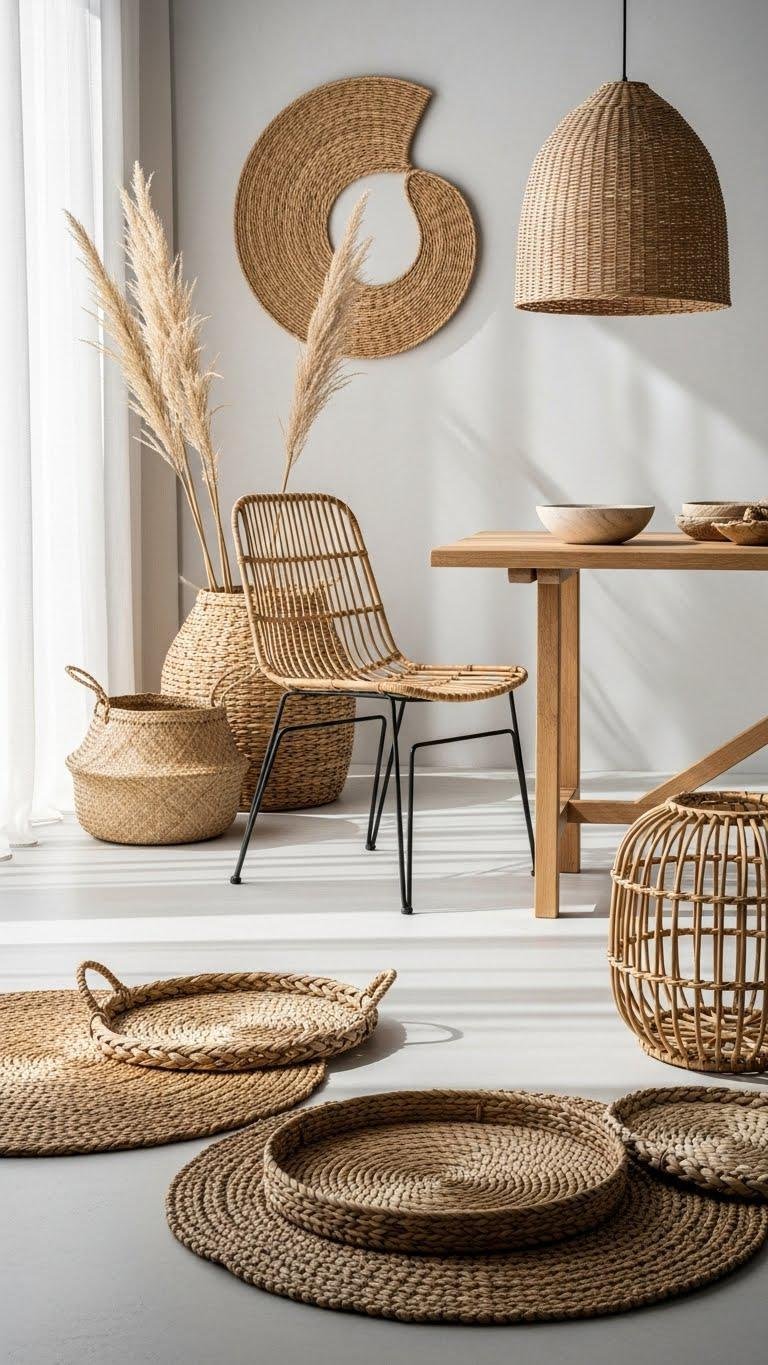
Introduce rattan and woven pieces to add texture and warmth without overpowering your minimalist palette. You’ll choose weathered rattan baskets, pendant lights, or slim chairs to create calm contrast. Mix coastal textures subtly—sea-grass mats, braided trays—so spaces feel airy and unconfined. Keep lines simple, colors muted, and let tactile pieces suggest relaxed luxury without cluttering your freedom-focused sanctuary.
Create Calm With Strategic Lighting
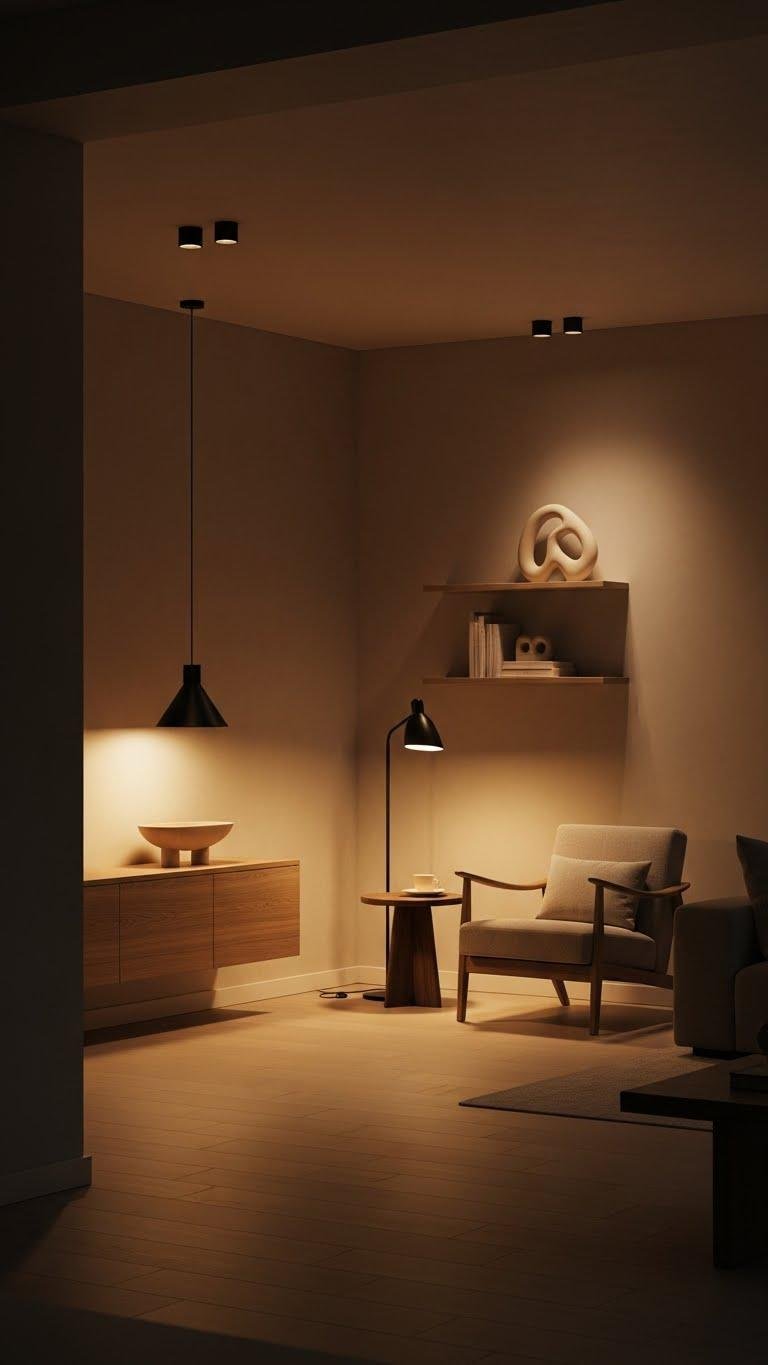
When you layer light thoughtfully, a room instantly feels calmer and more intentional; combine soft ambient lighting with targeted task and accent sources to shape mood without adding clutter. You’ll rely on warm dimming bulbs, discreet fixture placement, and minimal silhouettes to create pockets of calm. Position fixtures to draw focus, reduce glare, and let shadows define space, so your home feels open, curated, and free.
Add Greenery With Simple Planters
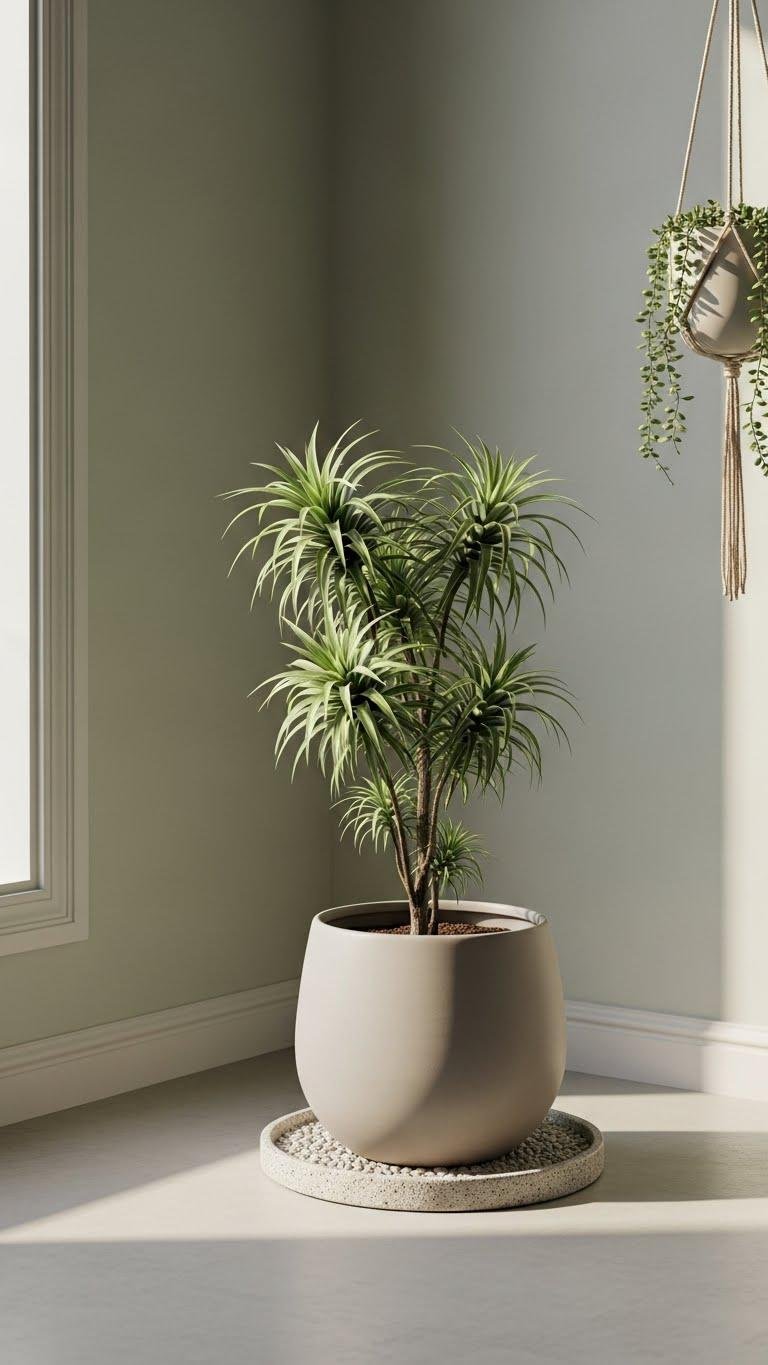
A single sculptural planter can transform a spare corner into a quiet focal point, giving the room life without clutter.
Choose air purifying varieties in matte ceramic pots or subtle hanging planters to free floor space. Keep palettes neutral, prune for clean lines, and use pebble trays under pots for drainage and a refined base. The look stays calm, intentional, and liberating.
Mix Matte and Soft-Gloss Finishes
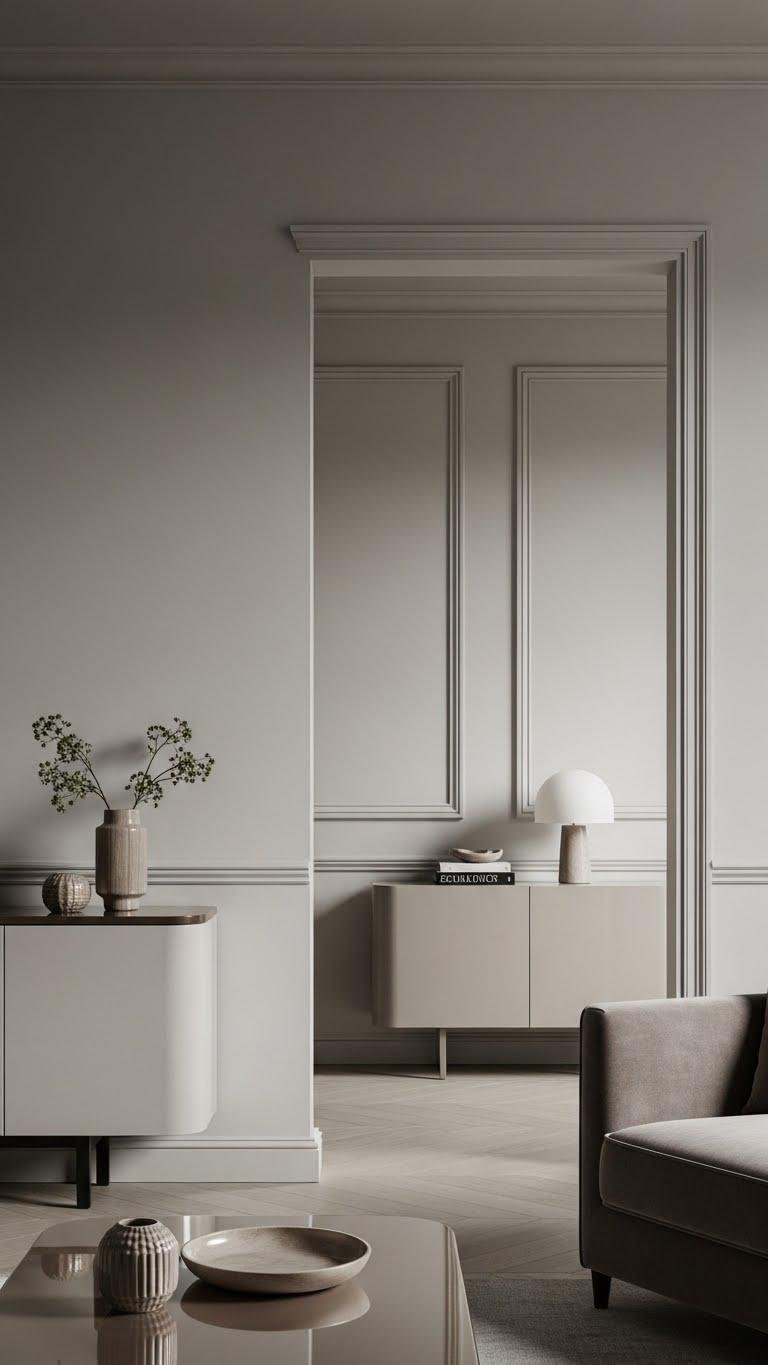
Mixing matte and soft-gloss finishes lets you sculpt light and texture with subtlety, so rooms feel layered rather than flat. You’ll create a matte gloss dialogue by pairing flat-painted walls with soft-gloss trim or furnishings, using finish contrast to highlight form without ornament. Choose restrained palettes, let sheen define planes, and enjoy a calm, open space that still reads intentional and luxurious.
Anchor Rooms With Plush Rugs
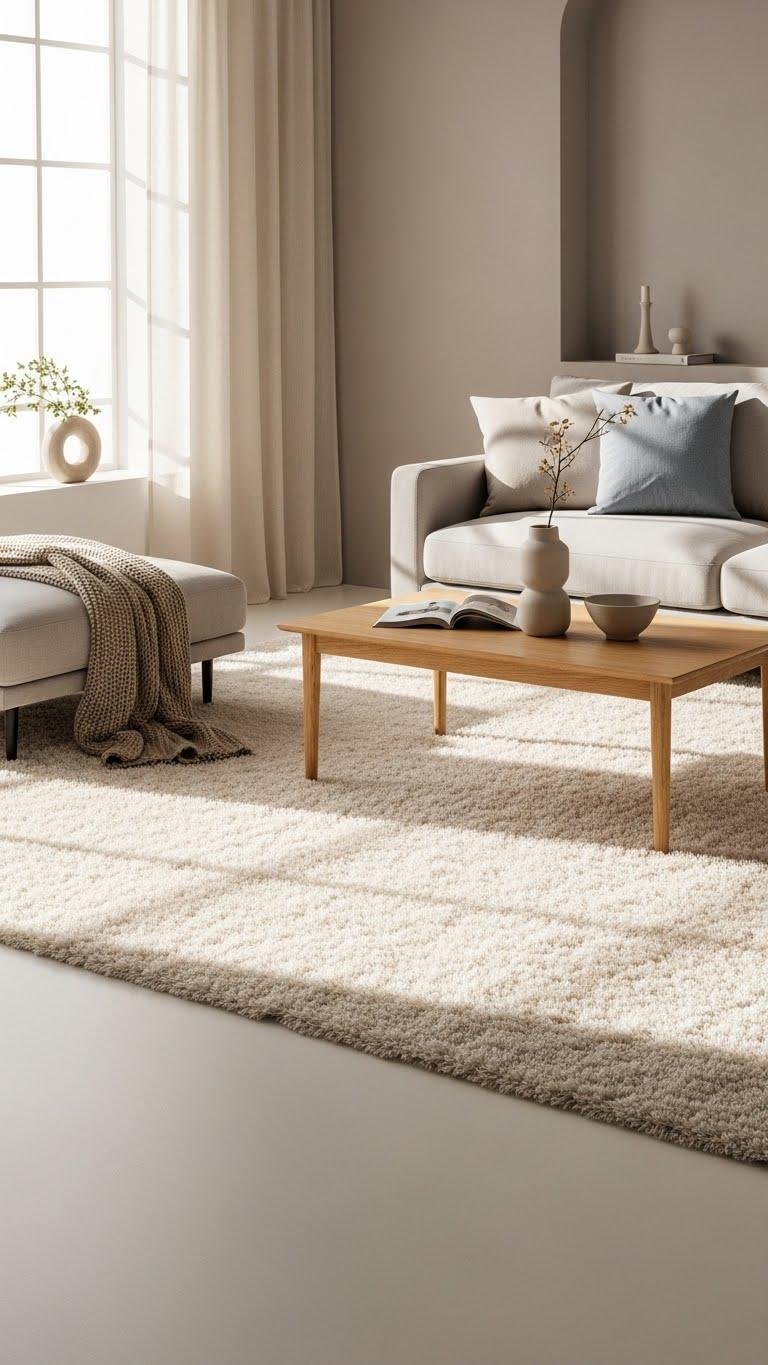
Often you’ll find a plush rug instantly grounds a space, defining seating areas and softening hard edges while keeping the room visually simple.
Choose a soft shag for tactile comfort and quiet luxury; let its scale anchor furniture without clutter. Pair with minimal furnishings, balanced negative space, and muted tones to create a calm, liberated room that feels effortless and intentionally curated.
Choose Muted, Earthy Accent Colors
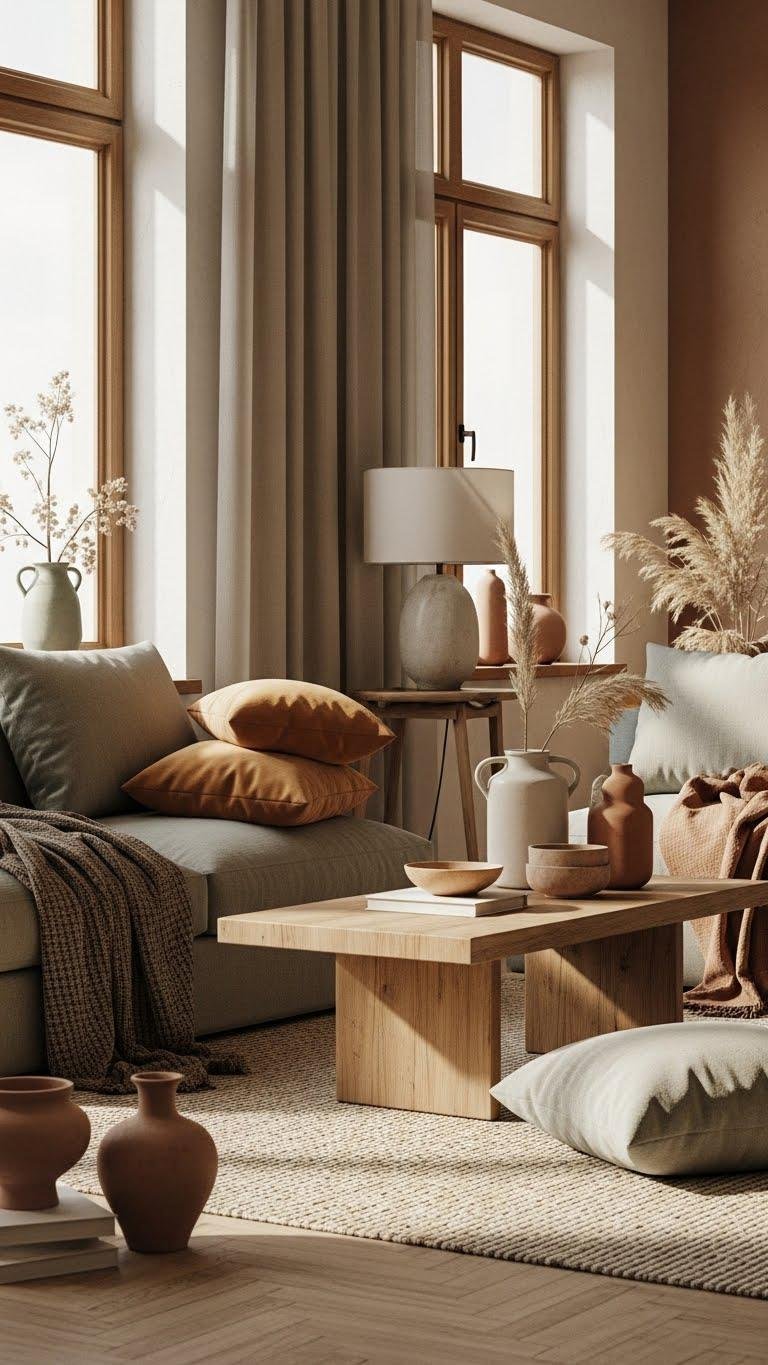
Drawing from nature’s quiet palette, choose muted, earthy accents—sage, ochre, clay, and warm taupe—to add depth without stealing the room’s calm.
You’ll layer sage accents and terracotta tones through pillows, throws, and art to create warmth and restraint. Keep contrast low, textures natural, and shapes simple so each hue supports a serene, liberated space that feels curated, not cluttered.
Use Minimal Hardware and Fixtures
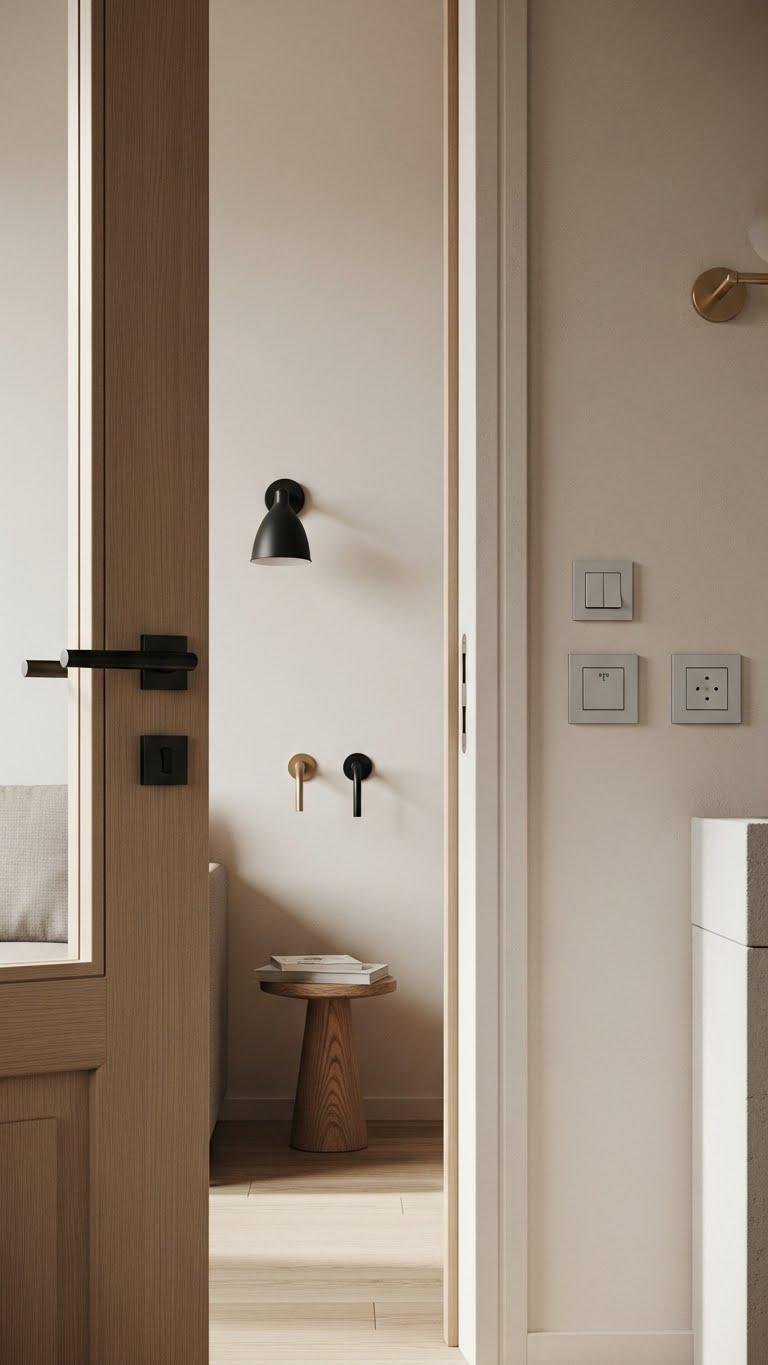
When you want the room to feel calm and uncluttered, pick slim, understated hardware and fixtures that recede visually—matte black, satin brass, or muted nickel in simple profiles lets surfaces and textures take center stage. Choose minimal fixtures and hidden hardware to streamline sightlines, simplify use, and free your space. You’ll create an airy, intentional room that feels effortless and luxuriously calm.
Curate a Few Sculptural Bookshelves
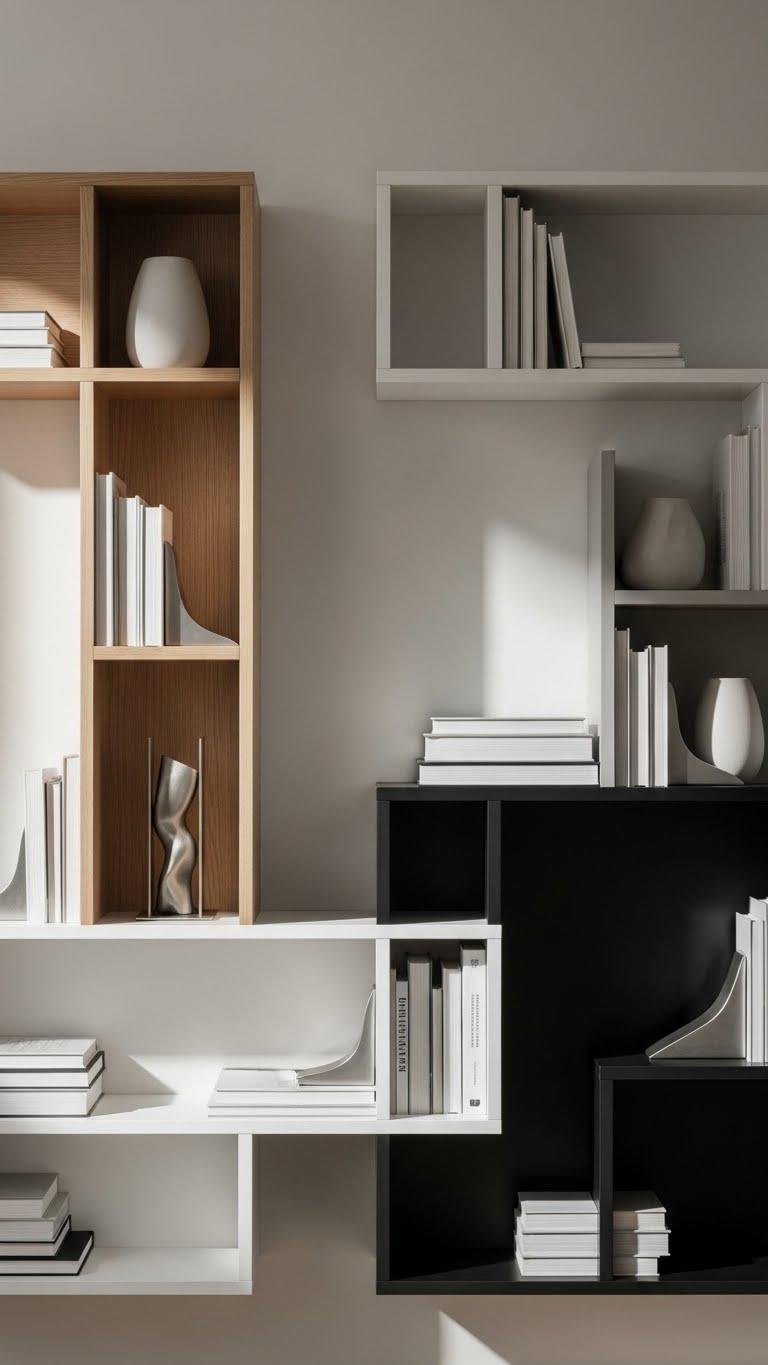
Think of bookshelves as measured sculptures: pick two or three statement units with strong lines and open negative space, then arrange them so each reads as intentional architecture rather than storage.
You’ll favor asymmetrical shelving and curated gaps, edit volumes down, and use sculpted bookends as punctuation.
Let each shelf breathe; keep palette restrained, surfaces sparse, and display purposeful to invite calm and creative freedom.
Bring Warmth With Layered Throws and Cushions
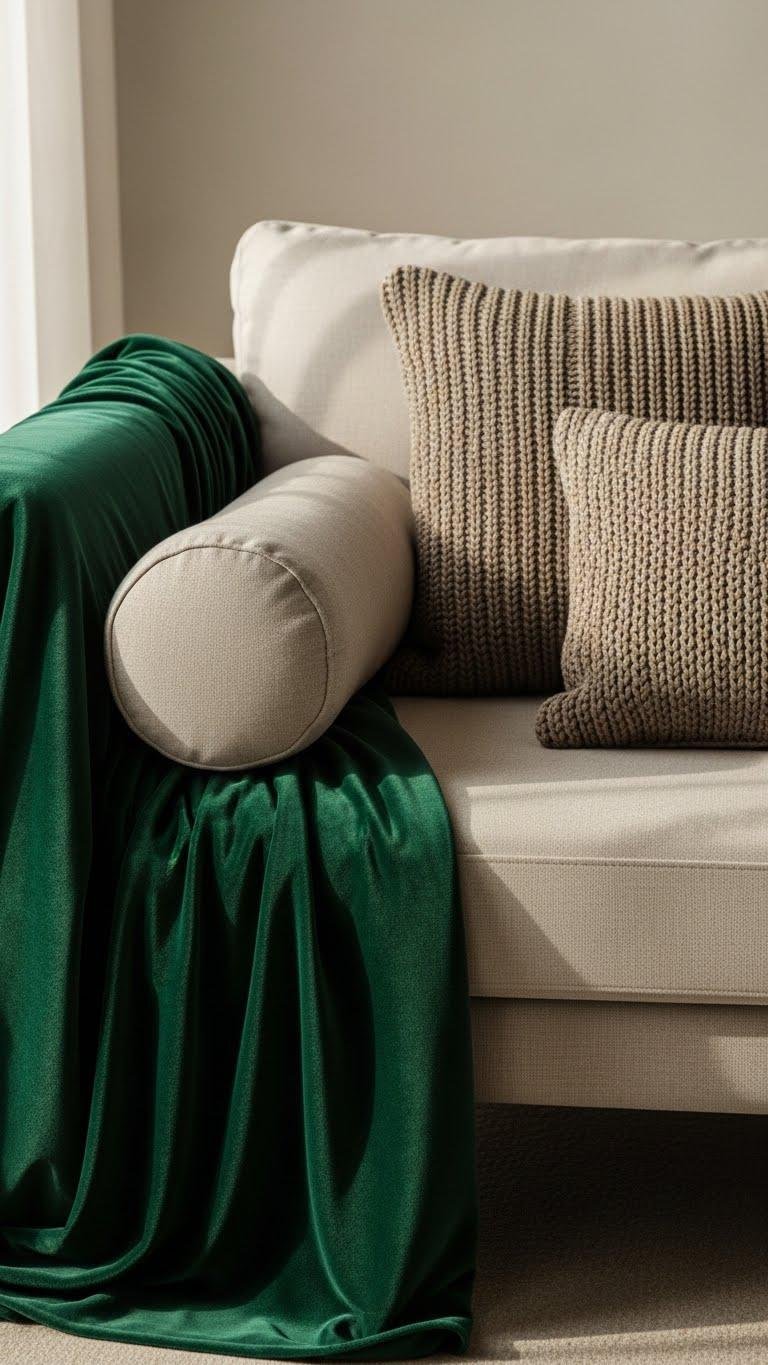
Layer soft throws and a few well-chosen cushions to instantly warm a minimalist room without cluttering it; you’ll rely on texture and scale more than pattern or color. Choose a velvet throw folded at an arm, a neutral linen bolster pillow, and one or two matte-knit cushions. You’ll create depth, tactile comfort, and effortless elegance while keeping the space open and calm.
Balance Negative Space With Focal Objects

Soft textiles settle the eye, but the room needs a clear visual anchor to feel intentional. You’ll use negative space to let that anchor breathe, creating visual breathing around a single sculptural piece. Aim for focal contrast—shape, texture, or scale—to establish object hierarchy.
Keep surrounding elements minimal so the composition feels freeing, calm, and quietly expensive without cluttering sightlines.
Favor Sustainable, Handcrafted Pieces
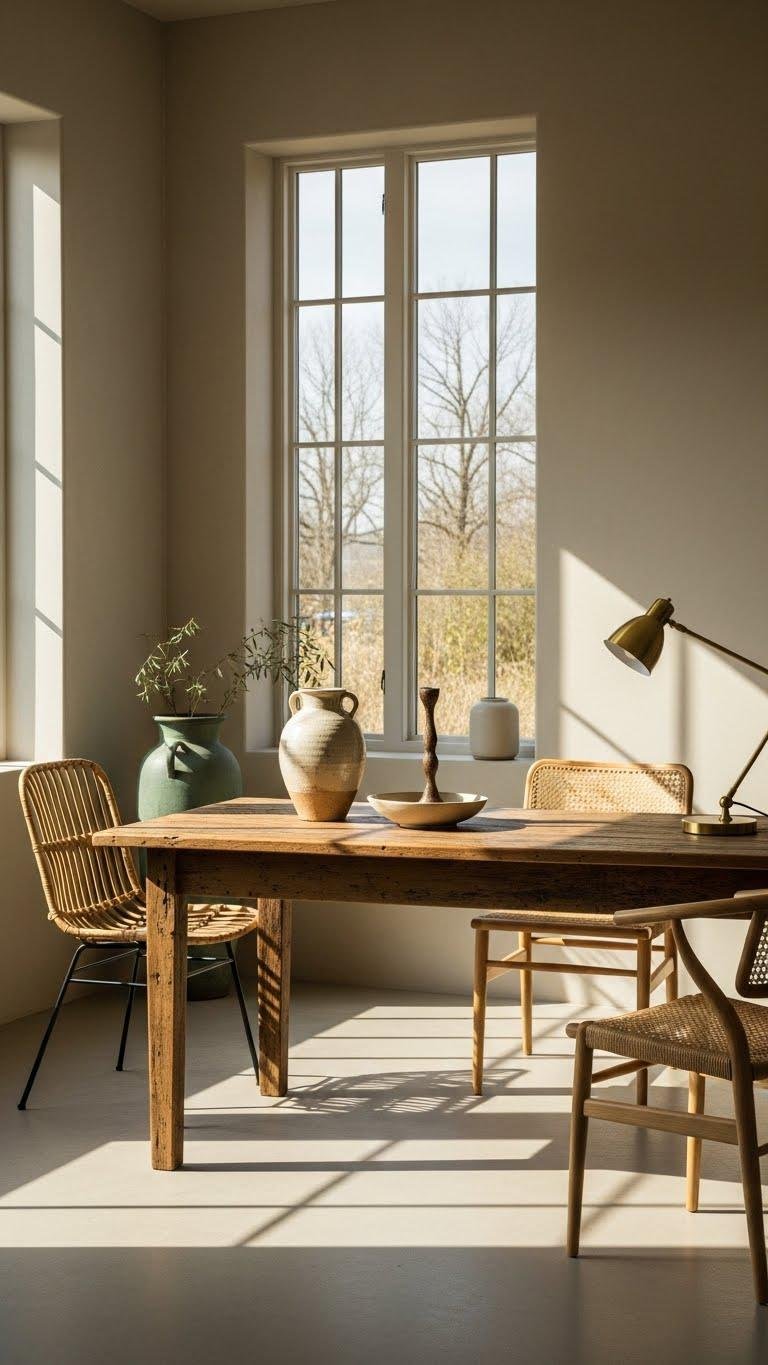
Choose a few well-made, sustainable pieces that bring character and conscience to a minimalist room. You’ll favor handcrafted objects from artisan workshops and items made with reclaimed materials, selecting only what serves function and beauty. These pieces age gracefully, tell stories, and free you from trends. Curate sparingly, prioritize quality, and let meaningful craftsmanship define your calm, expensive-feeling space.
Design Small Spaces With Japandi Principles
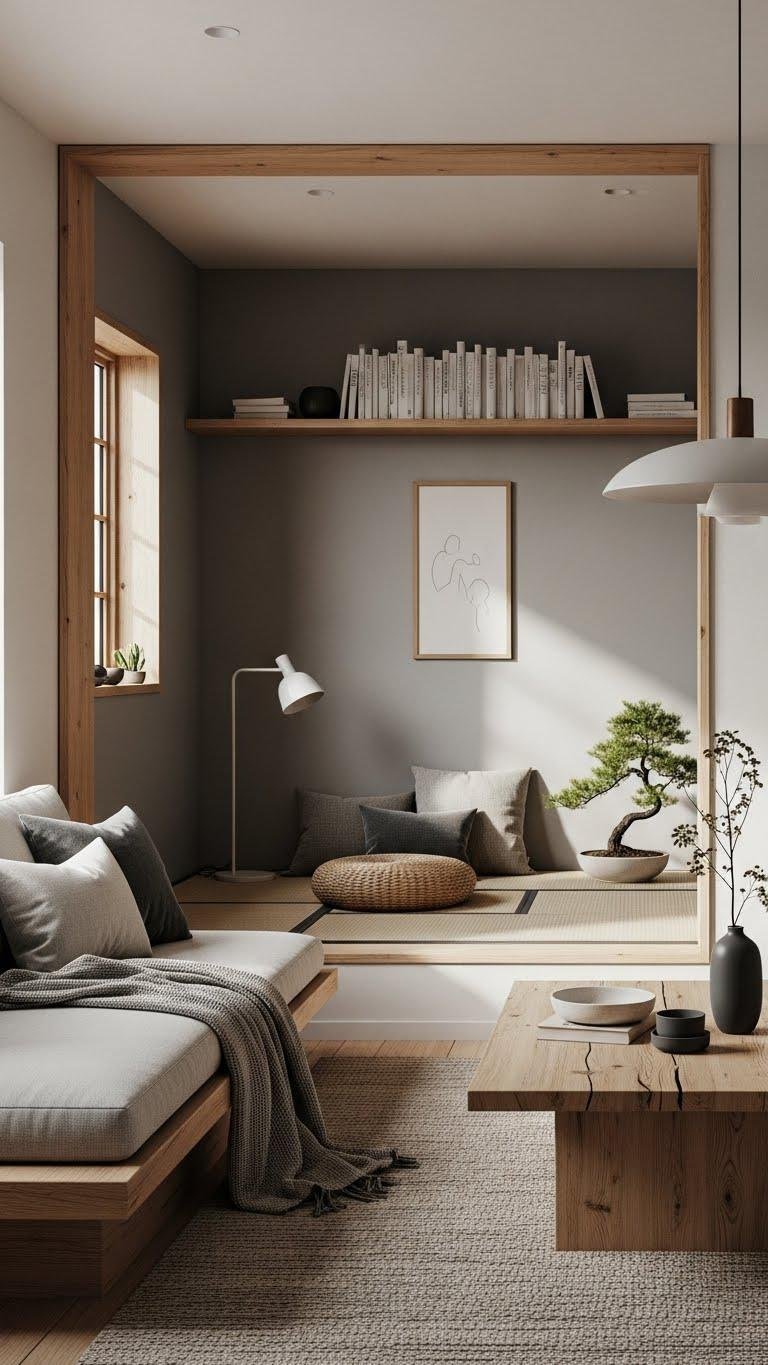
When you’re working in tight quarters, Japandi offers a clear roadmap: blend Scandinavian lightness and functionality with Japanese restraint and craftsmanship to make every inch feel intentional.
Choose low-profile furniture, muted palettes, and natural textures to expand sightlines.
Carve a zen corner or tatami nook for meditation and reading.
You’ll create calm, uncluttered rooms that honor freedom, quality, and purposeful living.