
You’ll get more done when your workspace feels intentional and works with your body — not against it. Start by positioning your desk for daylight, add ergonomic gear, layer in plants and soft textures, and hide cords so nothing distracts. These 23 practical ideas mix biophilic touches, smart storage, and simple tech tweaks to boost focus and style — keep going to see the easy swaps that make the biggest difference.
Maximize Natural Light With Strategic Desk Placement
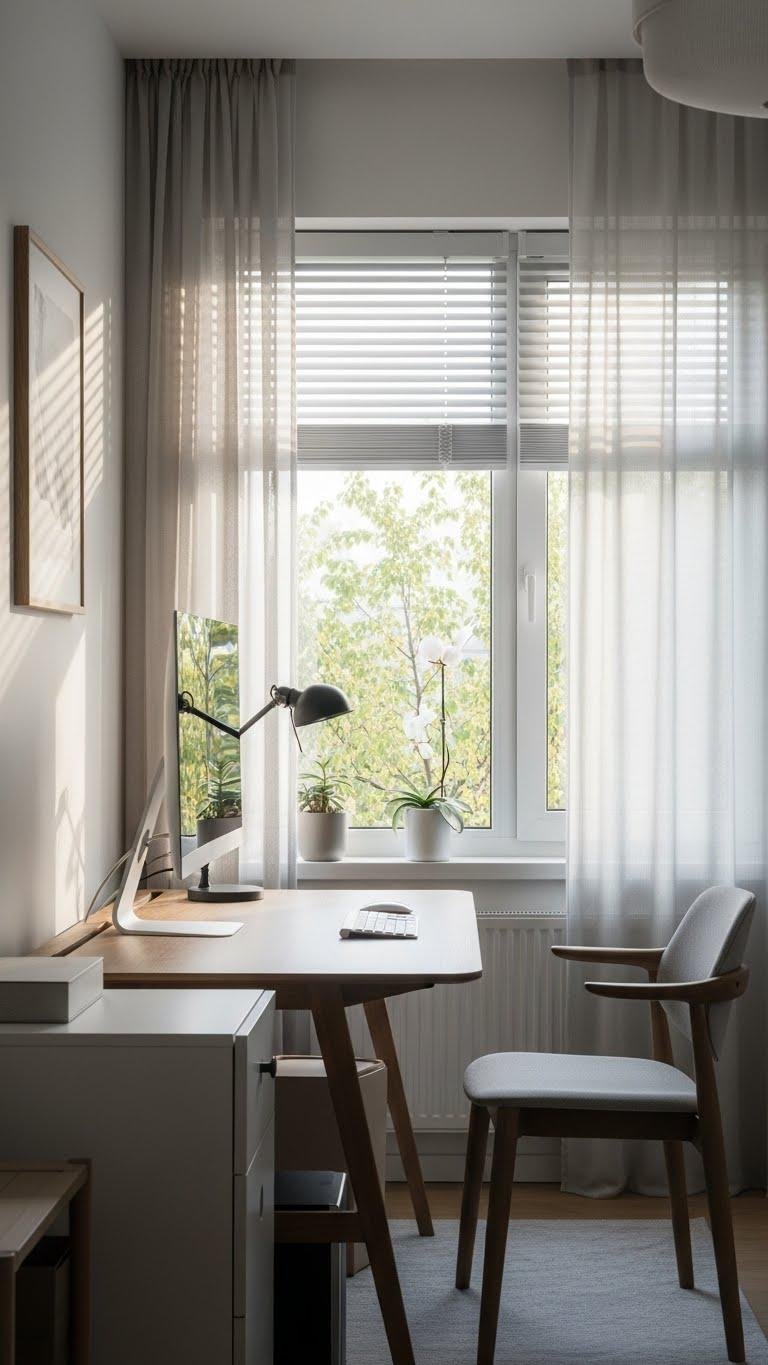
Position your desk near a window so you get consistent daylight without glare, angling the monitor perpendicular to the glass and using sheer curtains or adjustable blinds to soften direct sun. You’ll consider window orientation for seasonal light, place seating to catch views without distraction, and choose low-reflective surfaces. Prioritize glare mitigation, flexible task lighting, and layouts that keep you mobile and in control.
Add Indoor Plants for Focus and Air Quality
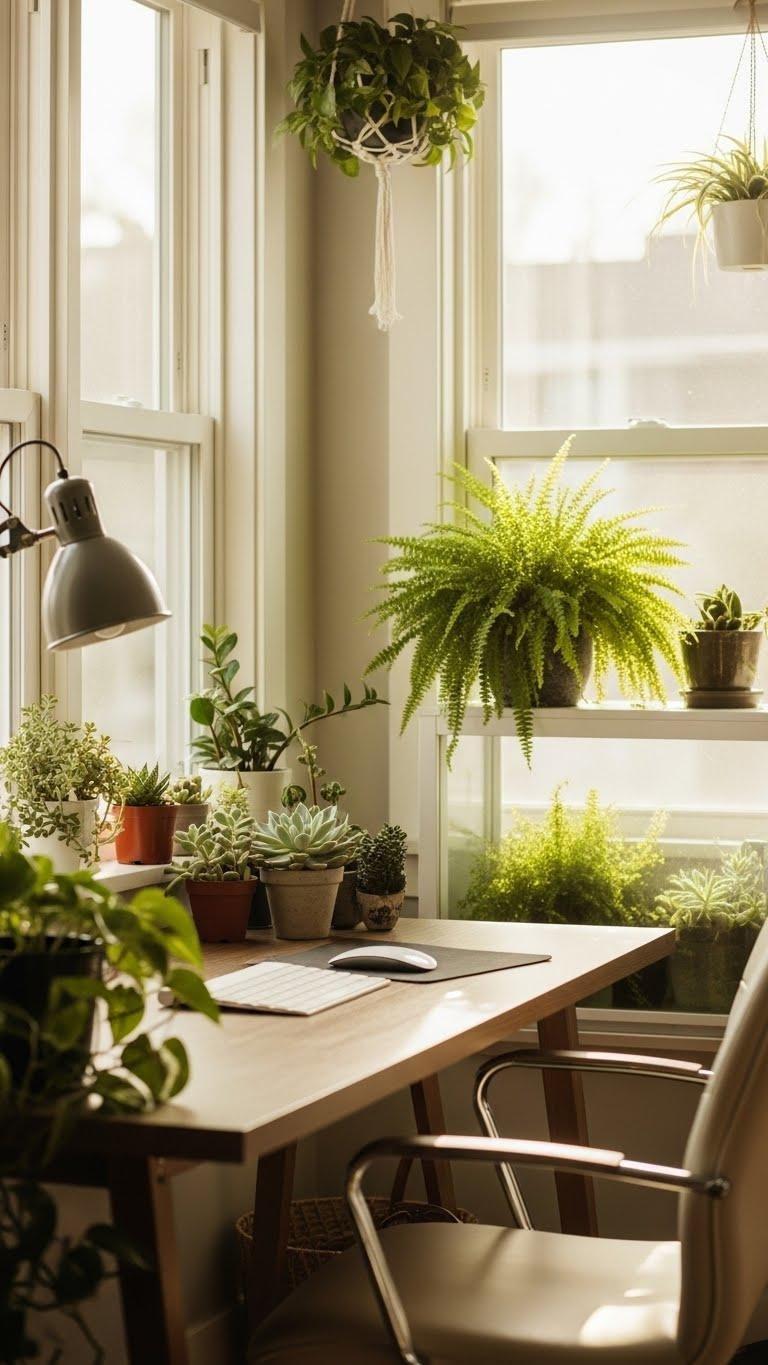
Natural light makes a room feel alive, and adding indoor plants brings that energy down to eye level — improving focus, filtering air, and softening a minimal workspace.
Choose low maintenance succulents for carefree greenery and air quality ferns near humid corners.
Place plants where they punctuate your view, create calm zones, and let a liberated, plant-forward setup boost concentration without fuss.
Install Adjustable Task Lighting
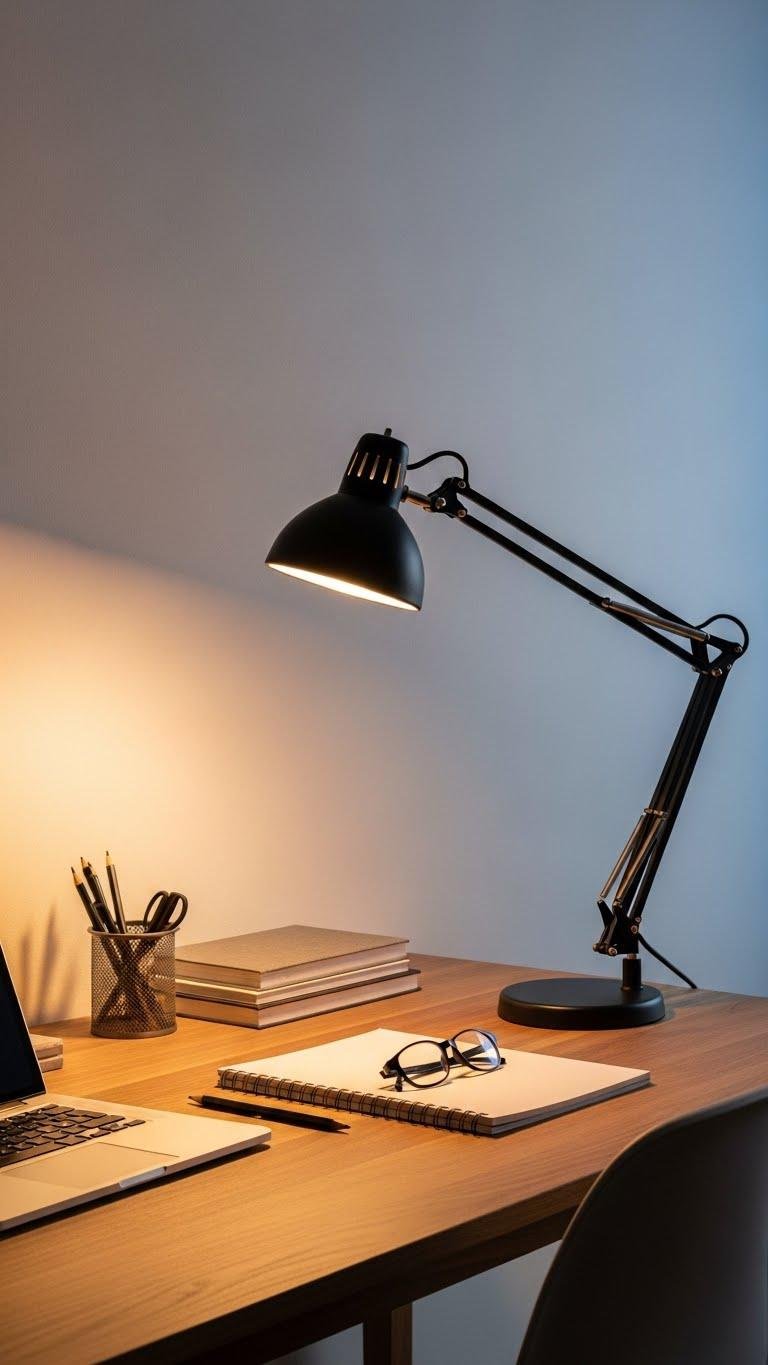
Bring targeted light to where you work by installing adjustable task lighting that follows your routines and posture. You’ll control beam angle and intensity for glare reduction, matching color temperature to time of day for alertness or calm. Choose flexible arms, dimmers, and swivel heads so lighting adapts to projects and mood. It’s a minimalist upgrade that increases focus and freedom to shape your workspace.
Create Quiet Nooks for Deep Work
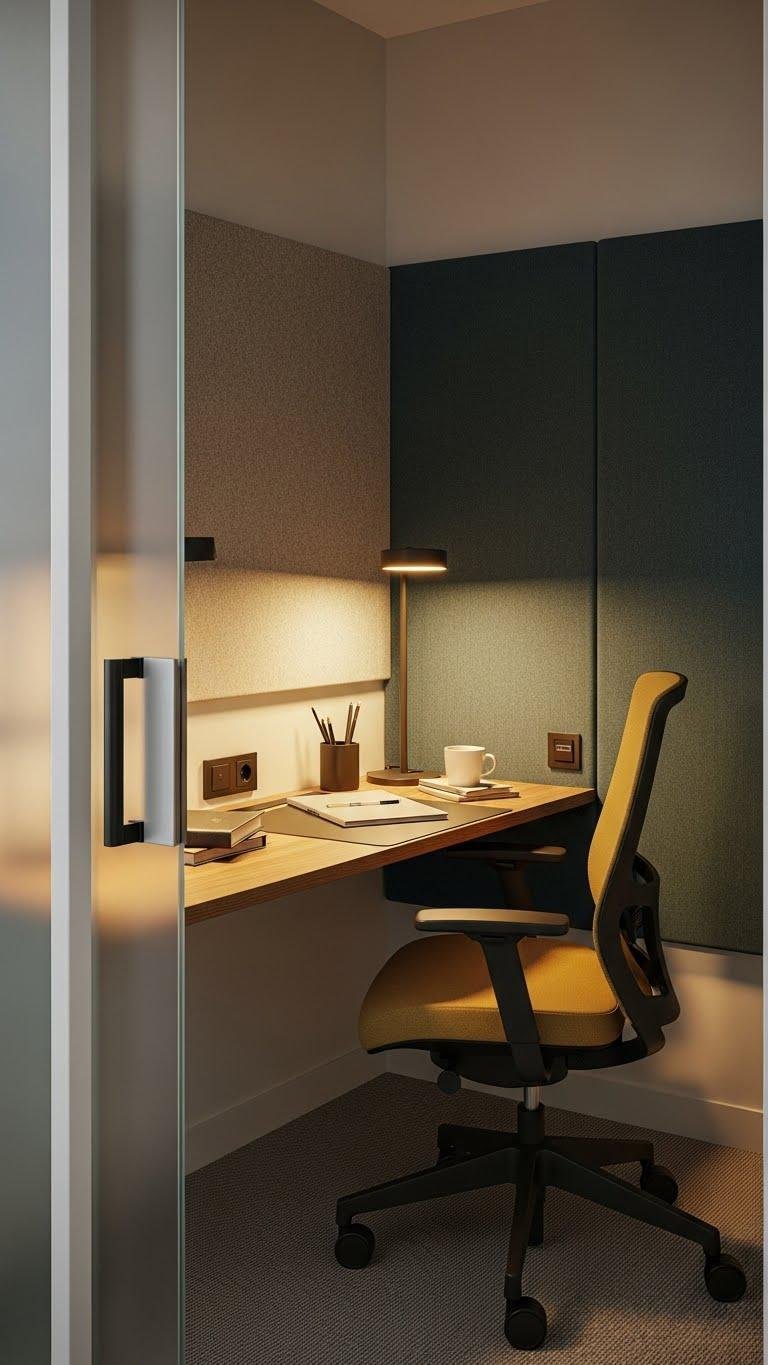
When you need to focus, carve out a small, distraction-proof nook that signals work mode—think a corner with a sound-dampening panel, a comfortable task chair, and a compact desk oriented away from traffic.
Add acoustic pods or sleek privacy dividers to block noise and sightlines. Keep essentials nearby, lighting adjustable, and surfaces tidy so you can slip into deep work quickly and reclaim your time.
Use Calming Blue and Green Accents
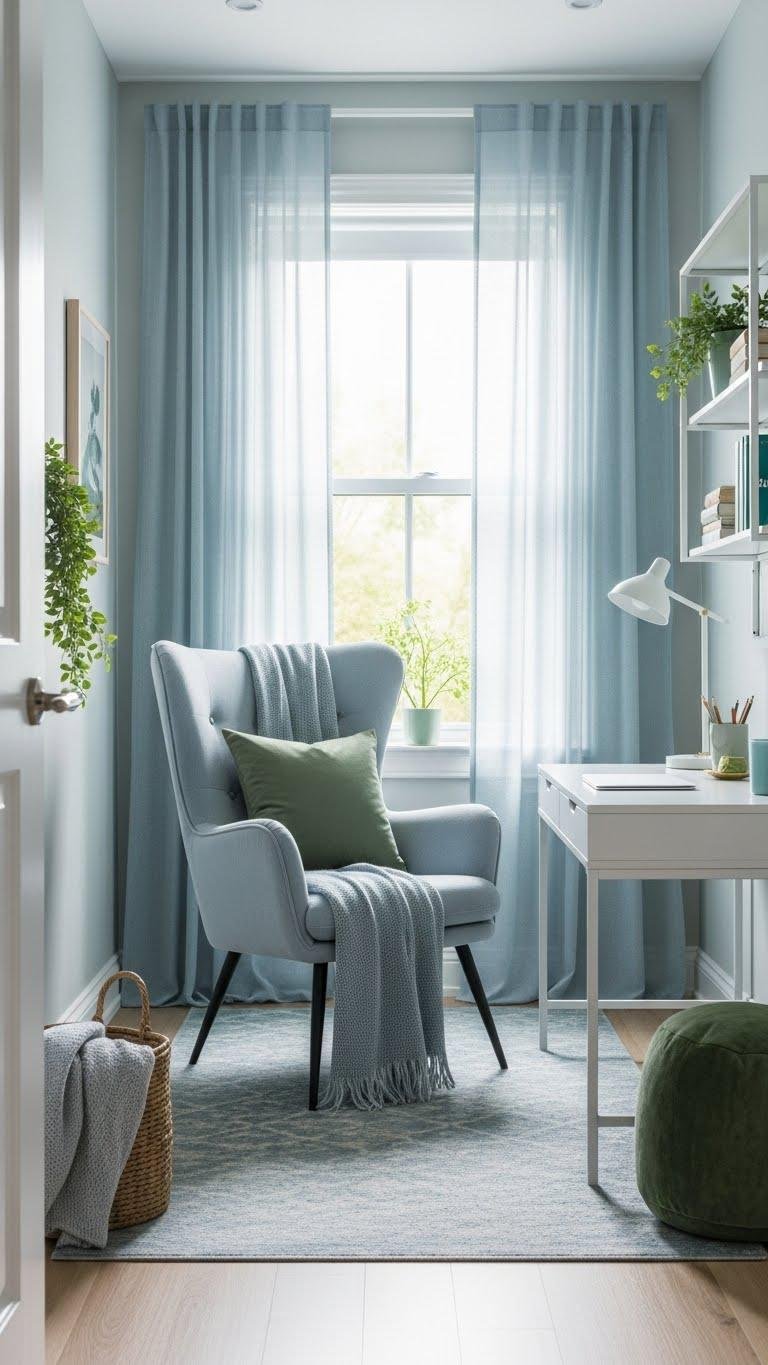
After carving out a quiet nook, soften the space with calming blue and green accents to keep focus steady and stress low. Choose soft blue textiles and a muted emerald throw or pillow to signal calm without feeling precious.
You’ll mix modern lines with relaxed color to stay productive and free, swapping bold tones for subtle contrasts that support clarity and choice in your workspace.
Incorporate Biophilic Materials and Textures
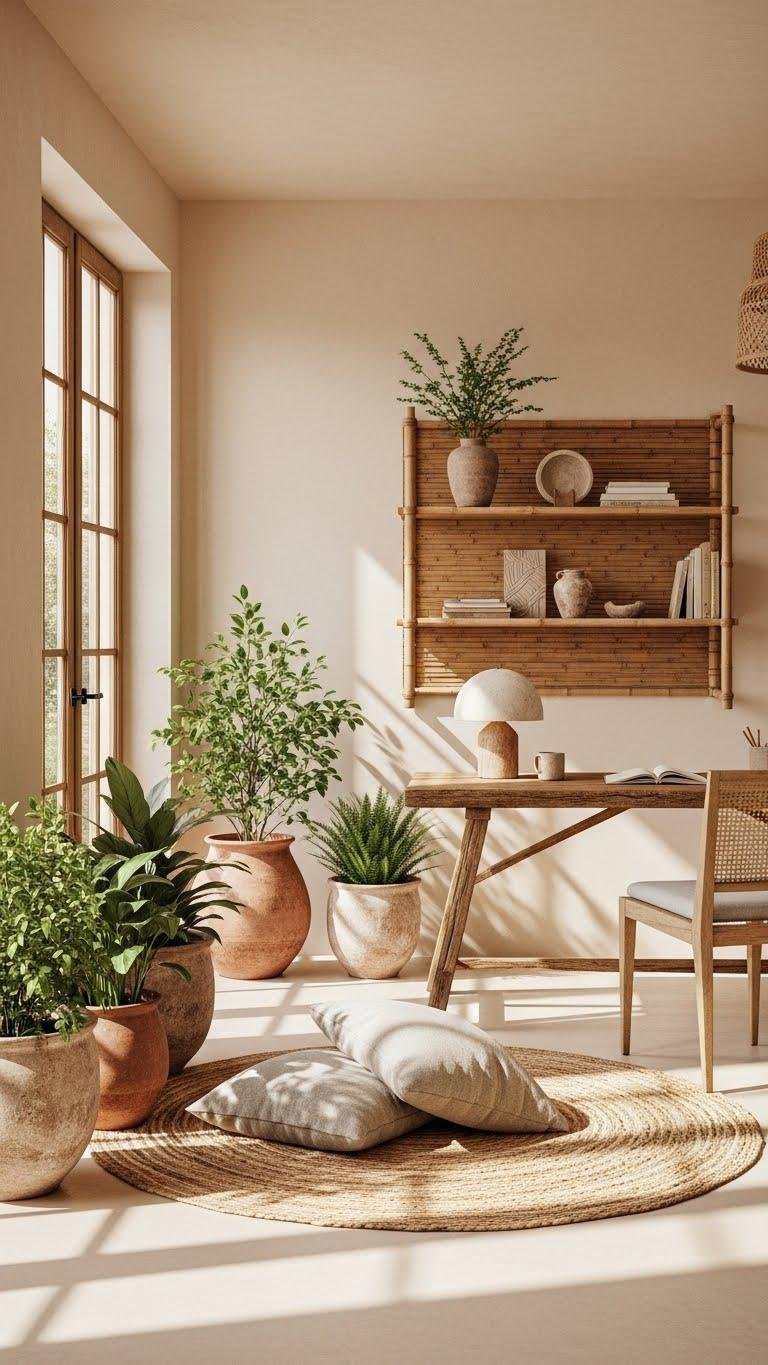
Though you might start with a single statement piece, layering biophilic materials and textures brings nature’s calm across your whole workspace: choose reclaimed wood desks or bamboo shelves, woven jute rugs, stone or terracotta planters, and tactile linens to create warmth and sensory variety. Add woven woodwear accents and tactile stone elements for contrast. Let natural tones, soft textures, and open flow free your focus.
Introduce Standing or Adjustable Workstations
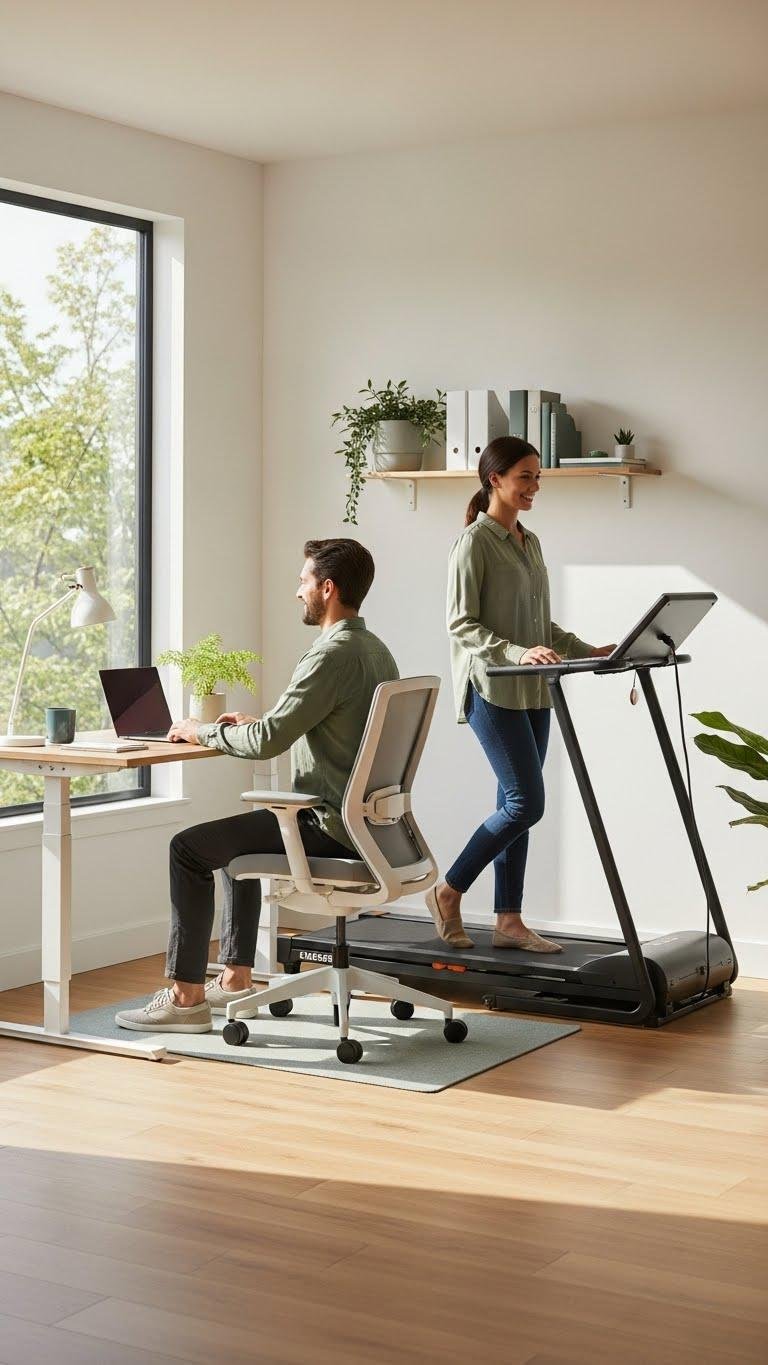
If you want to reduce sedentary strain and boost energy, add a standing or height-adjustable workstation to your office—these desks let you alternate sitting and standing throughout the day, support better posture, and fit a range of work styles.
Choose height adjustable desks or compact treadmill desks for movement-friendly zones. You’ll feel freer, focus longer, and customize your setup to suit workflow and vibe.
Add Personal Storage to Reduce Clutter
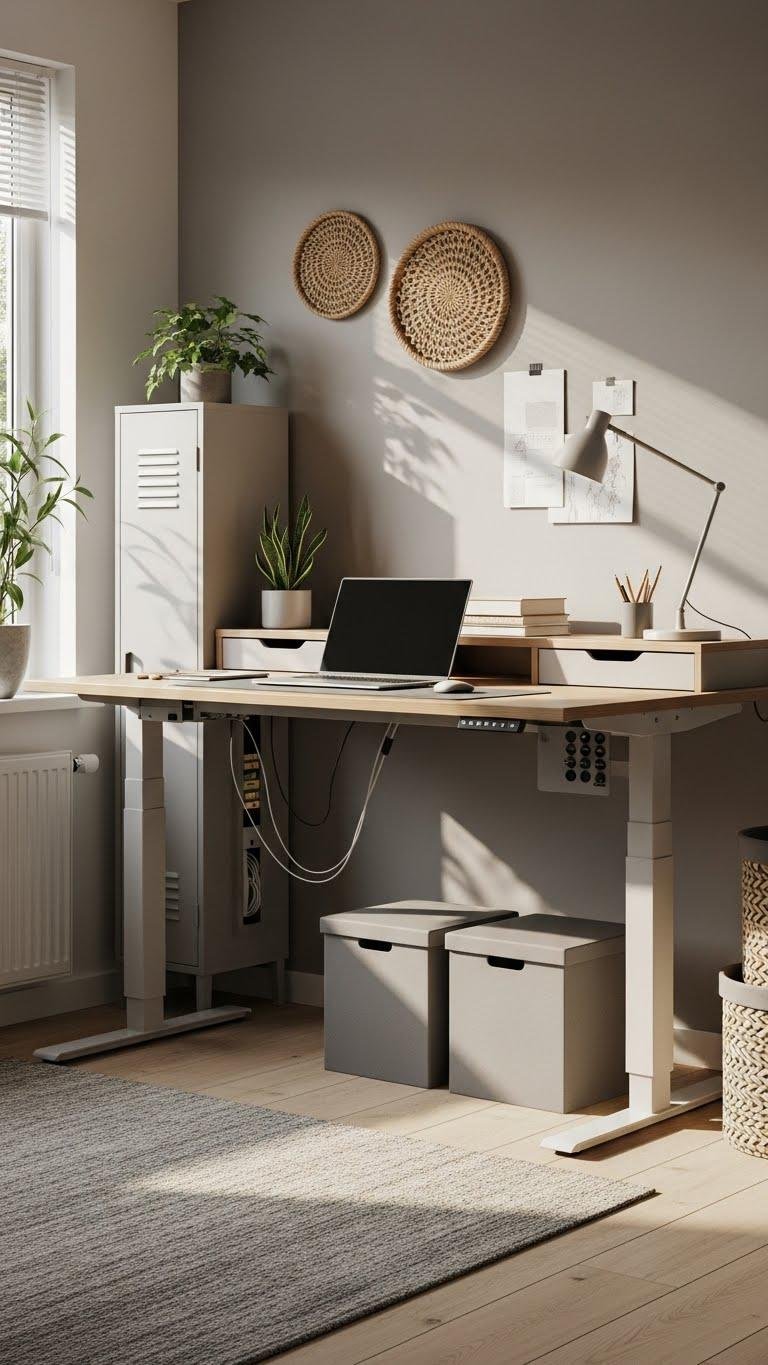
Standing or height-adjustable desks help you move more, but they can also shift clutter into sightlines—so add personal storage to keep your space calm and functional. Use under-desk drawers, slim lockers and hidden compartments for cables and current projects. Mix decorative baskets for open storage and a few closed bins to stay tidy. You’ll feel freer and more focused.
Define Zones With Modular Furniture
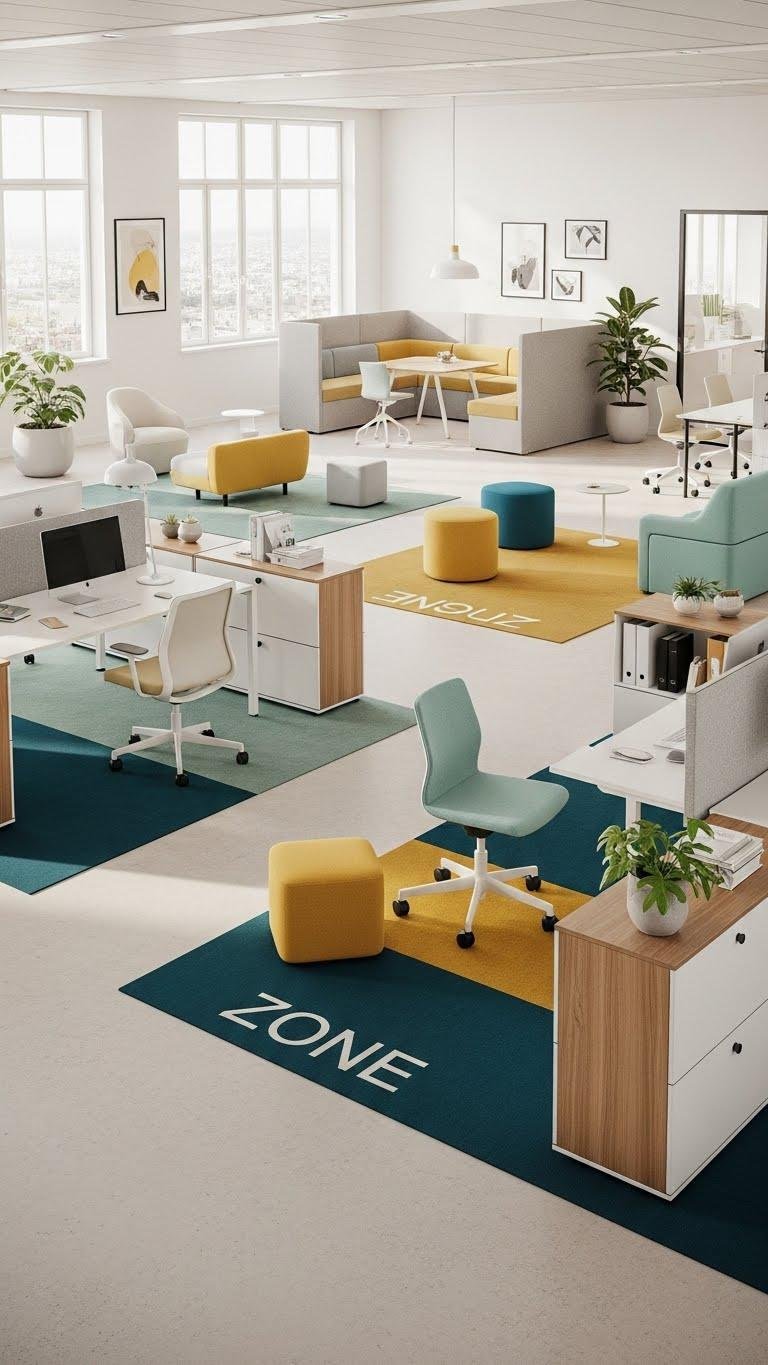
When you arrange modular furniture, you can carve your office into distinct zones for focused work, meetings, and relaxation without permanent walls.
Choose modular storage units to define boundaries, add zone rugs to anchor each area, and pick movable seating so you can reconfigure freely. This lets you control flow, minimize distractions, and keep a sleek, adaptable workspace that matches your pace.
Display Inspiring Artwork and Mood Boards
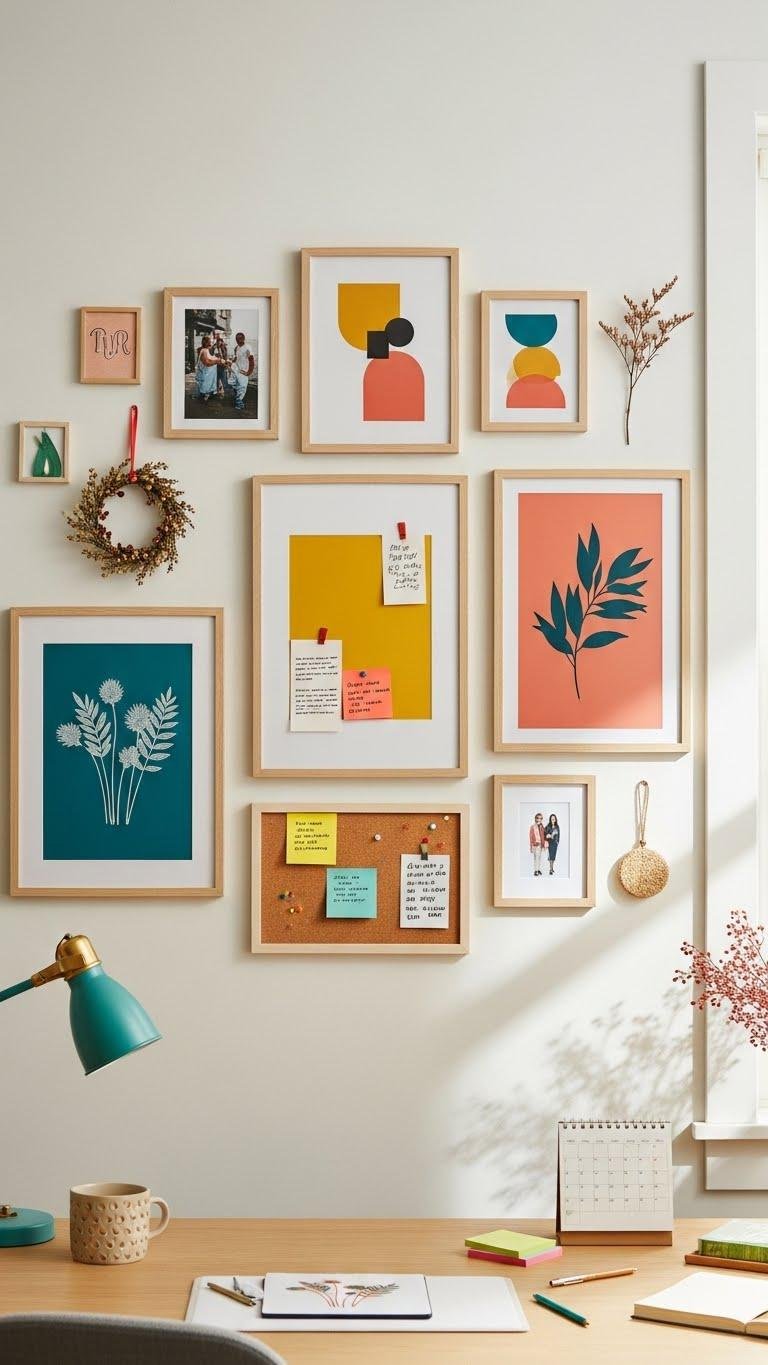
Because visuals shape mood and focus, curate a mix of inspiring artwork and practical mood boards to give your office personality and purpose. You’ll arrange a gallery wall of curated prints, photos, and notes that reflect goals and values. Rotate elements seasonally, keep layouts uncluttered, and combine bold statements with functional pinboards so your space feels free, intentional, and energizing.
Use Sound-Absorbing Panels and Soft Furnishings
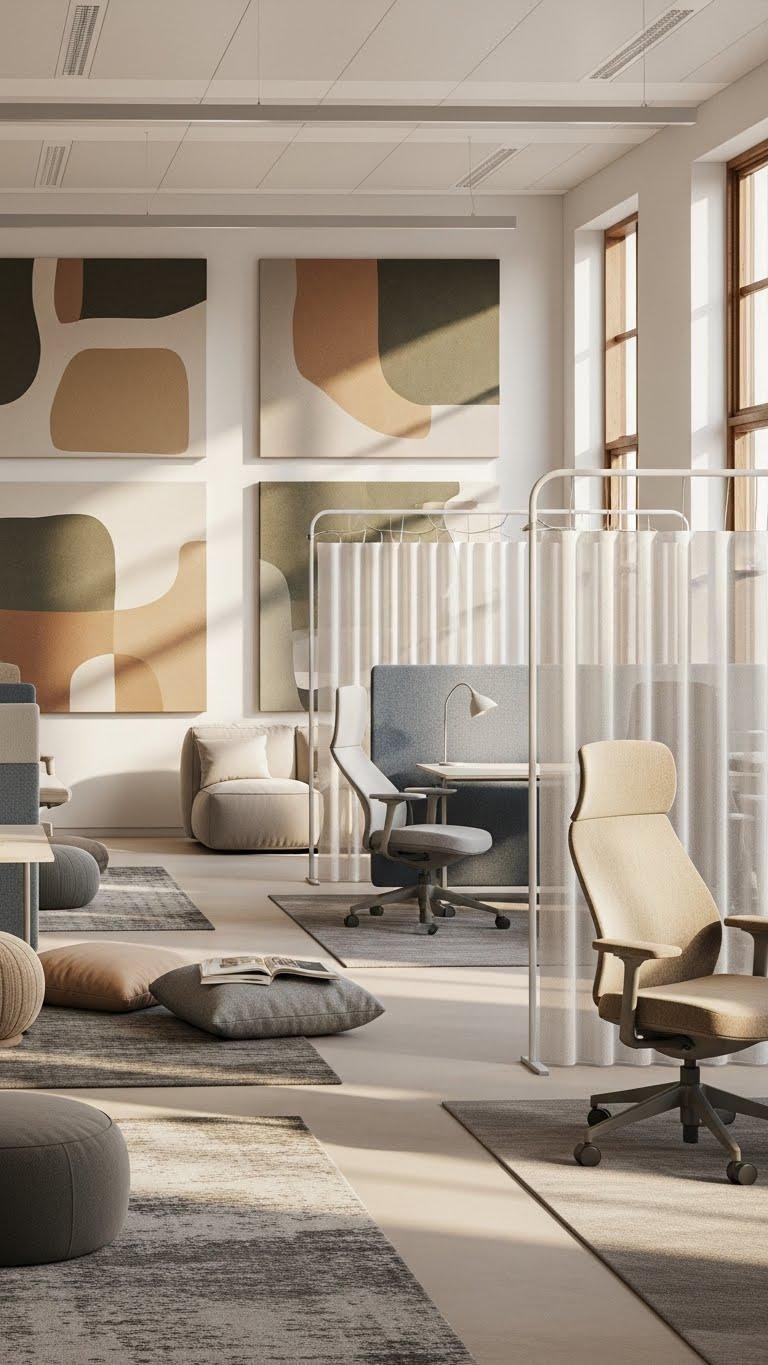
If you want a calmer, more focused workspace, add sound-absorbing panels and soft furnishings to tame echoes and reduce distractions.
You’ll choose acoustic artwork for style and function, place fabric partitions to define zones without walls, and layer rugs, cushions, and upholstered chairs to soften sound.
These choices keep your space open, flexible, and distraction-resistant so you can work freely and with focus.
Integrate Views of Nature or Green Walls

Although you don’t need a garden view to bring the benefits of nature inside, integrating living plants or a green wall instantly lifts mood, improves air quality, and reduces stress. You can pair real foliage with window murals for depth or add low-maintenance moss frames for texture.
Choose flexible, wall-mounted systems that let you rearrange plants, freeing your space and creativity while boosting focus.
Keep a Clear, Minimalist Desk Surface
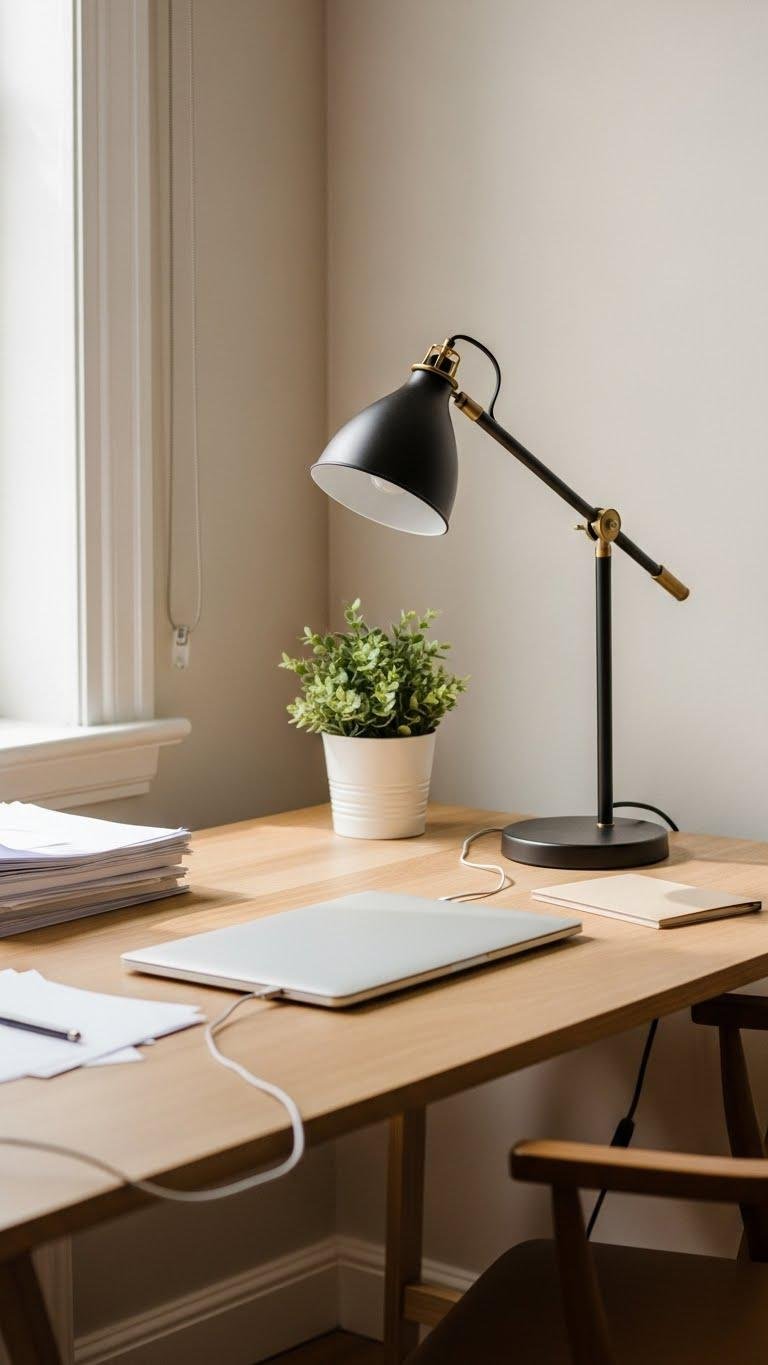
Often a clutter-free desk is the single best upgrade you can make for focus and aesthetics. You’ll keep essentials only: laptop, lamp, a single plant.
Adopt rapid fileminimization and quick desktop rituals each evening to clear papers, cable tangles, and visual noise. Minimal surfaces free your mind, speed decision-making, and let you work with calm, intentional energy that supports creative freedom.
Select Warm, Focus-Friendly Color Palettes
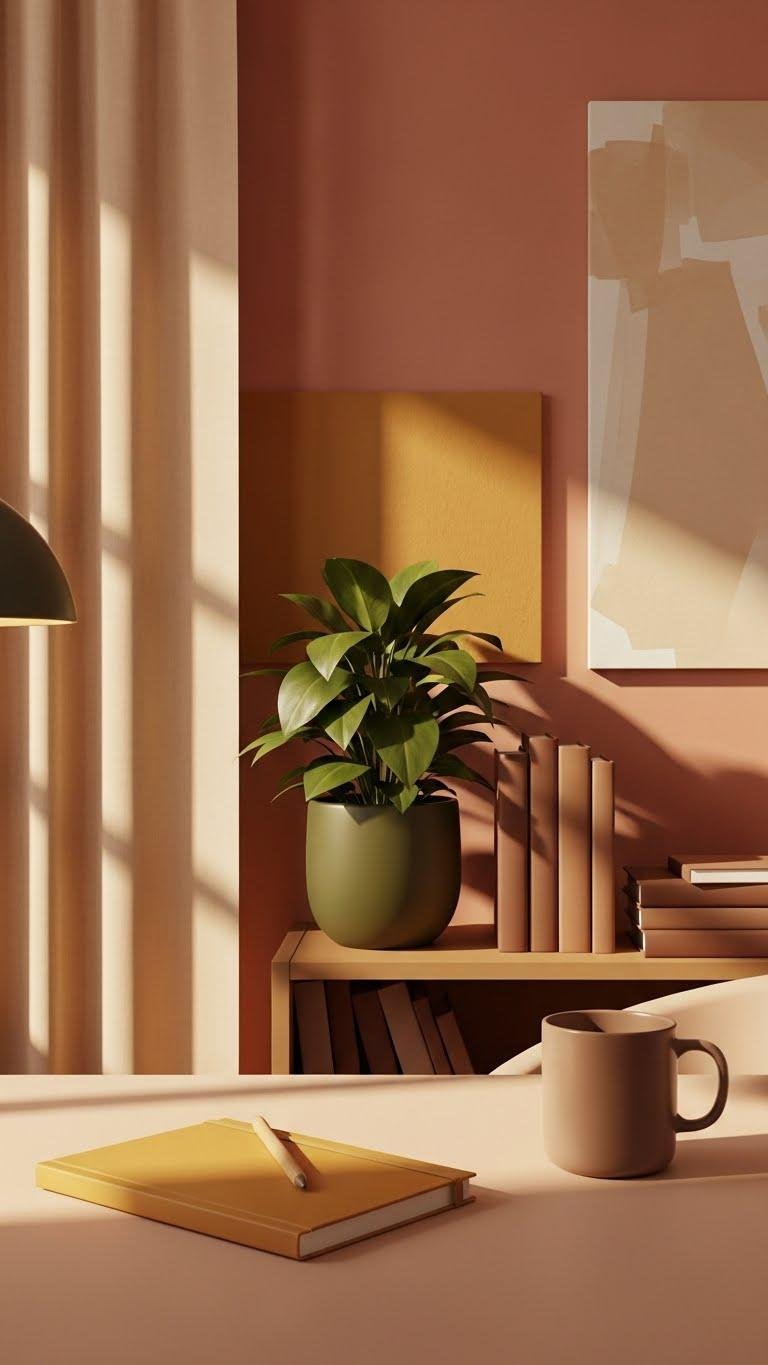
When you pick warm, focus-friendly colors, aim for tones that soothe without dulling attention: think soft terracotta, muted mustard, creamy beige, and deep olive accents. You’ll combine soft terracotta with muted ochre for energy, balance warm taupe for calm, and add cocoa accents for depth. Keep contrasts subtle, switch textures, and let the palette support clear, liberated work.
Use Task-Specific Lighting Layers
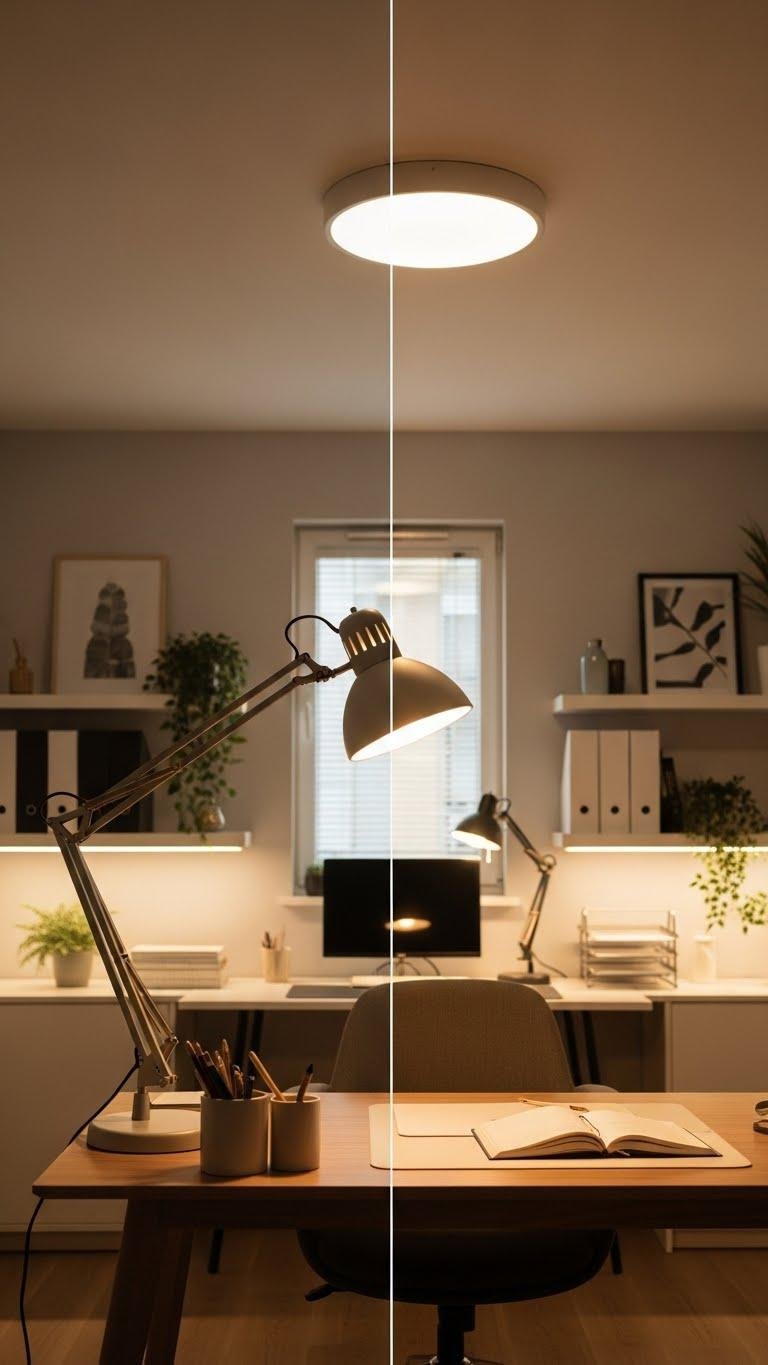
Because focused work depends on clear, adaptable light, layer your office lighting so each task gets its own source: ambient for general comfort, a bright adjustable task lamp for reading and detail work, and low-level accent lights to reduce contrast and eye strain.
You’ll control contrast ratios and glare control, tune color temperature to suit mood, and keep your setup flexible so you can move and create freely.
Provide Collaborative Breakout Areas
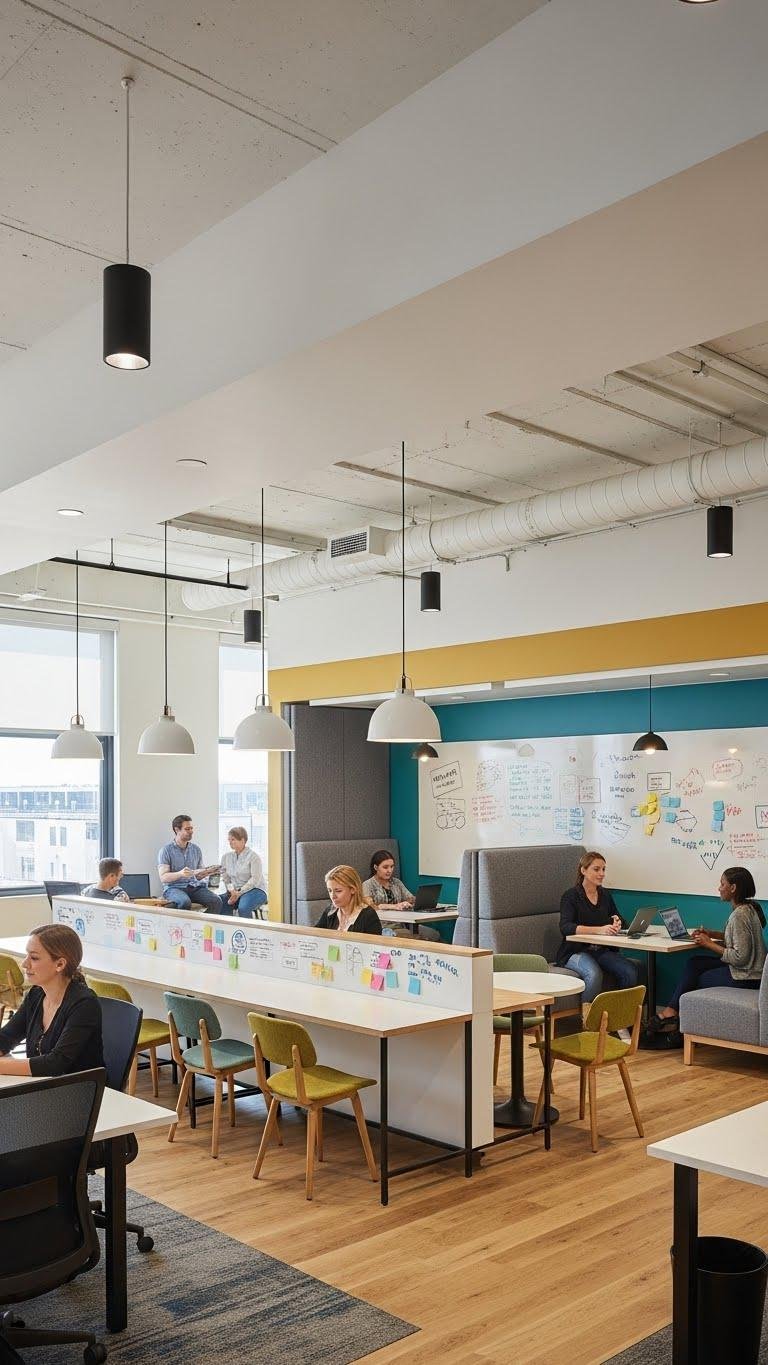
Although you want a focused desk for heads-down work, carve out nearby breakout zones that let people swap ideas, sketch, or take short meetings without hijacking the main workspace.
You’ll favor a Whiteboard Bar for rapid visual thinking and Modular Booths for flexible privacy. Keep layouts open, add movable seating, and let teams claim space—freedom to collaborate, then return to focus.
Add Subtle Scent and Air-Purifying Elements

After you’ve carved out breakout zones for quick idea swaps, think about how scent and clean air can quietly support focus and comfort. You can add minimal scent stations with subtle citrus or rosemary blends to energize without overwhelming. Pair them with charcoal bags or air-purifying plants to remove odors and toxins. This keeps the space fresh, calm, and freedom-friendly.
Install Cable Management Solutions
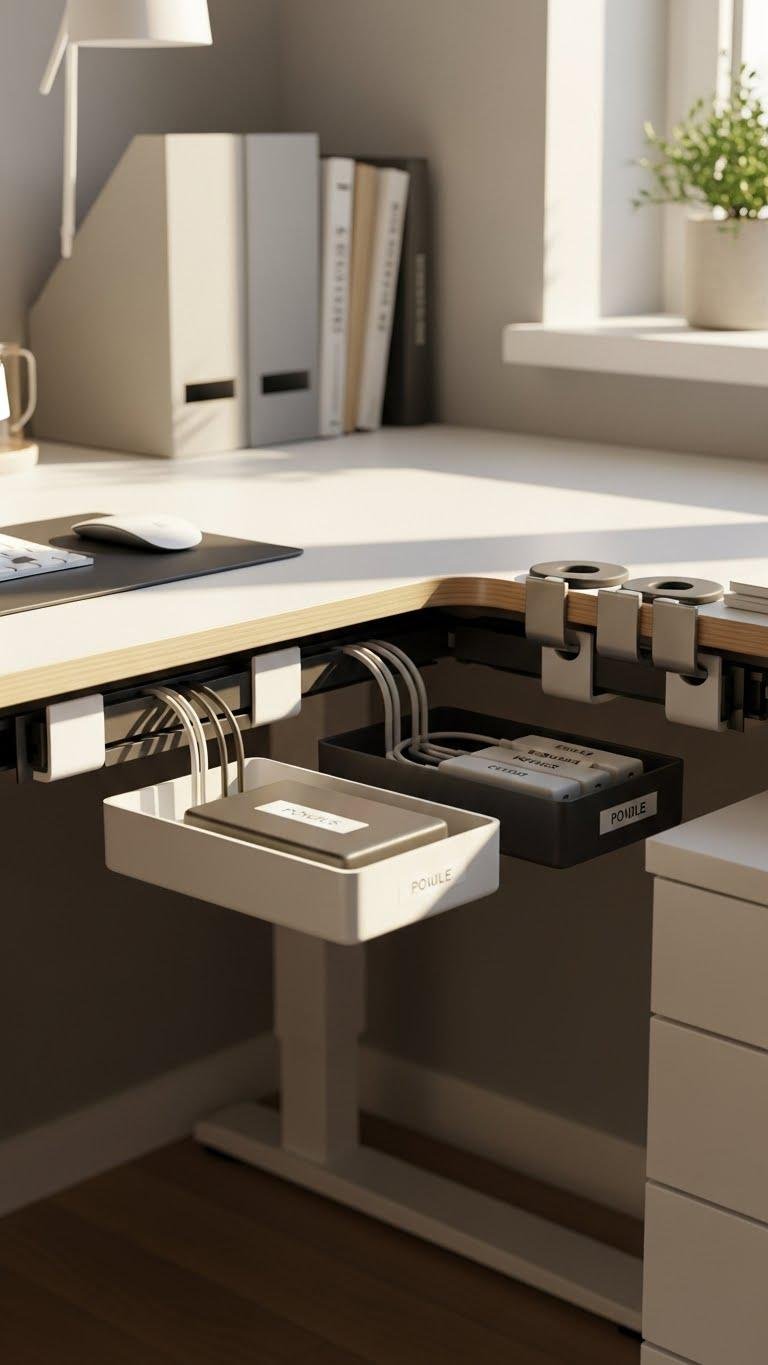
Tame the visual chaos of cords with simple, stylish cable management that keeps your office looking sleek and functioning smoothly.
You’ll free up space and focus by routing wires through concealed raceways, using magnetic cable organizers for quick swaps, and labeling power bundles.
Pick minimalist trays and clips that match your decor so cords disappear, you reclaim movement, and your workspace stays crisp and uncluttered.
Create a Comfortable, Productive Lounge Area

When you design a lounge area, focus on comfort and function so it actually gets used: choose seating that supports varied postures (a sofa for relaxed work, a lounge chair for short breaks, and a stool for quick chats), layer soft textiles and adjustable lighting for mood, and include small surfaces and outlets for laptops and drinks.
Add low profile seating, ambient music, movable rugs, plants, and easy storage so the space feels free, flexible, and inviting.
Use Adjustable Monitor Arms and Stands
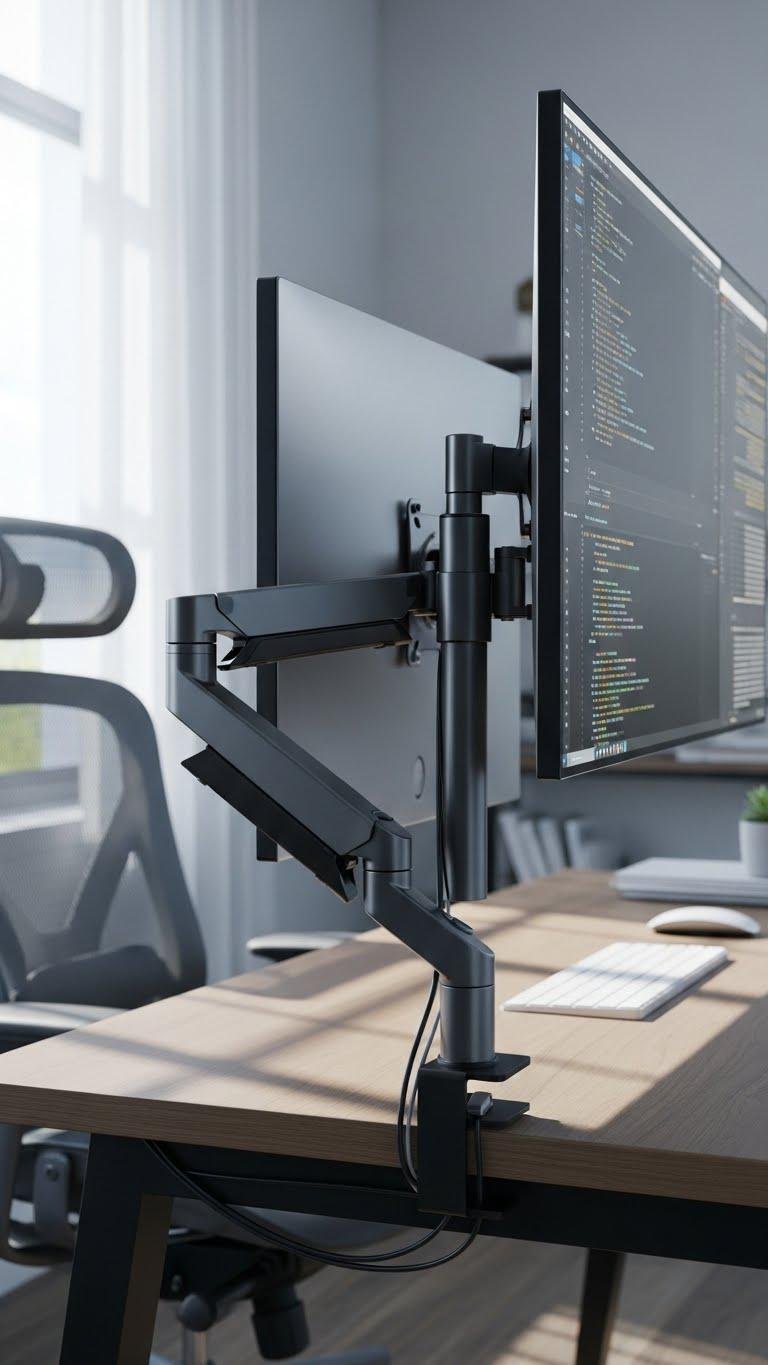
Mount adjustable monitor arms or use sturdy stands to reclaim desk space and dial in ergonomic viewing angles. You’ll free your posture and workspace, switching between landscape and a vertical monitor setup for coding or reading. Choose sleek, durable arms that clamp or grommet-mount, adjust height and tilt easily, and hide cables. This keeps your desk minimalist, flexible, and focused on performance.
Incorporate Personalization Without Clutter
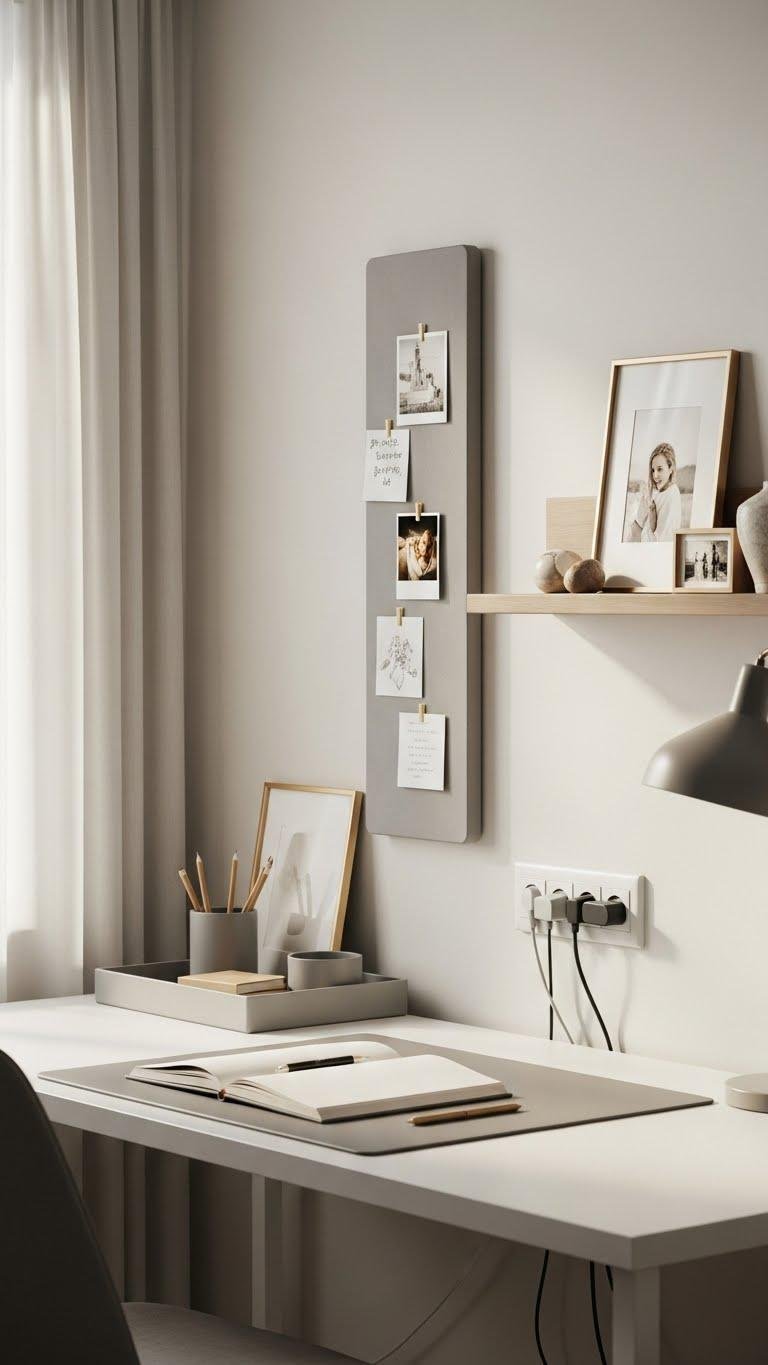
Often you’ll want your workspace to feel personal without turning into a visual mess, so pick a few meaningful items and display them deliberately.
Keep a Custom pinboard for rotating inspiration and quick notes, and a small Memory shelf for one or two cherished objects.
Use slim frames, neutral trays, and cable management so your personality shows but your focus stays intact.
Implement Flexible Layouts for Different Work Modes
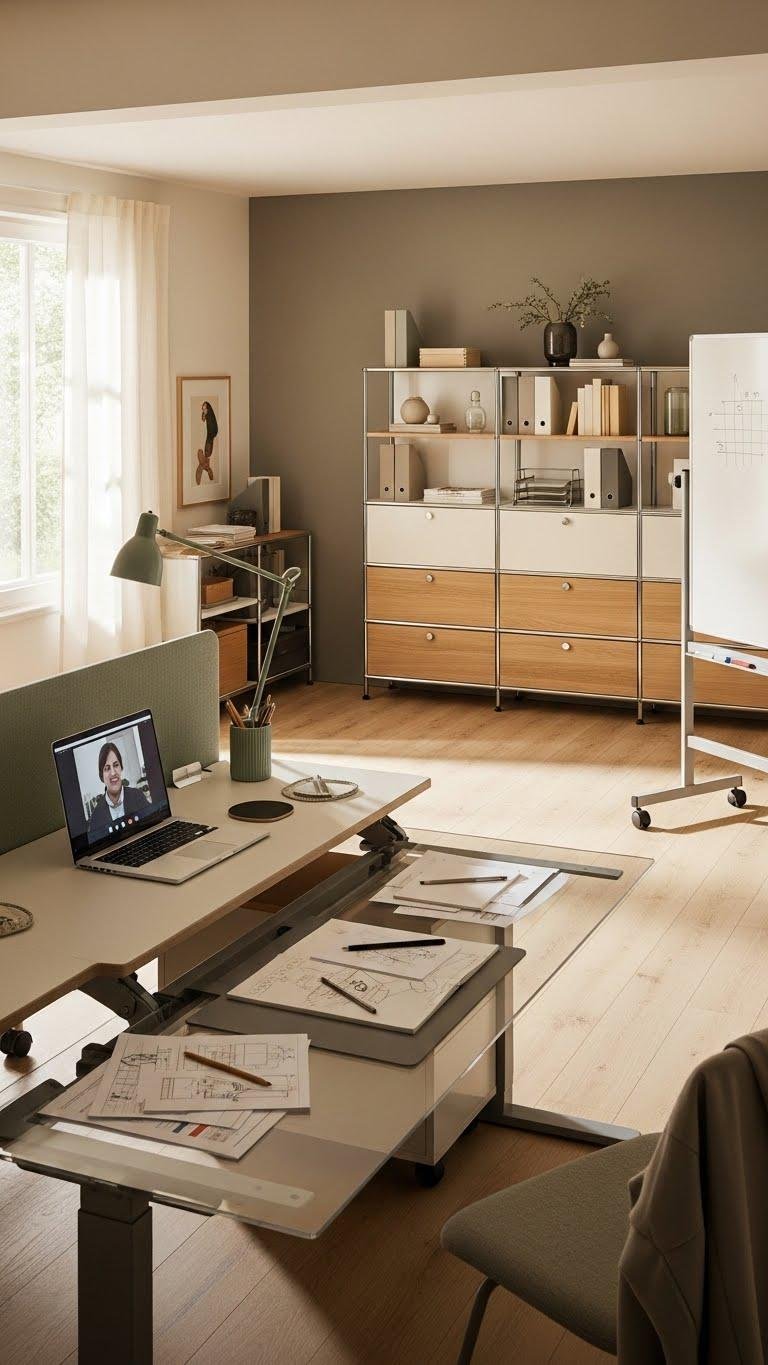
Because your workday can demand different modes — deep focus, video calls, quick creative bursts — design a layout that shifts with you: position your desk for an unobstructed view for calls, keep a clear secondary surface for sketching or spreading documents, and arrange storage so you can toggle between minimal and resource-rich setups in seconds. Add adaptive partitions and mobile whiteboards to redefine zones fast.