
You’ll find that styling shelves is more about restraint than accumulation: pick a few well-made objects, vary heights, and let negative space work for you. Think odd-numbered groupings, repeat materials for rhythm, and anchor arrangements with a single sculptural piece or a stack of books. These simple shifts make shelves feel curated, not cluttered — and they’ll change how your whole room looks once you apply them.
Curate a Trio of Decorative Books and a Sculptural Object
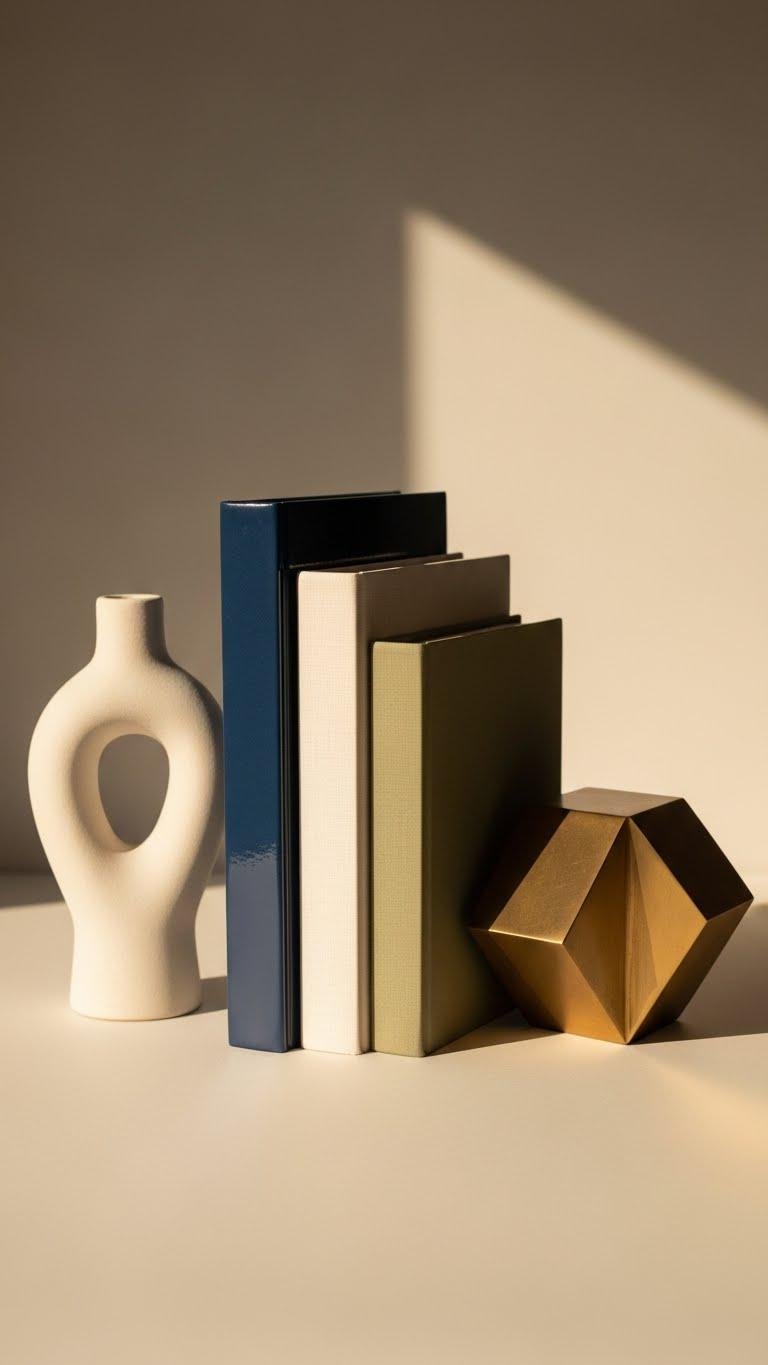
Start with three decorative books stacked or fanned in varying heights and finishes, then anchor them with a single sculptural object that contrasts in shape or material—think matte ceramic against glossy covers or a brass abstract form beside linen-bound volumes. You’ll use color blocking and tactile contrast to define rhythm, balance negative space, and let each piece breathe—minimal, intentional, and freeing.
Lean an Oversized Art Print Behind Small Vases
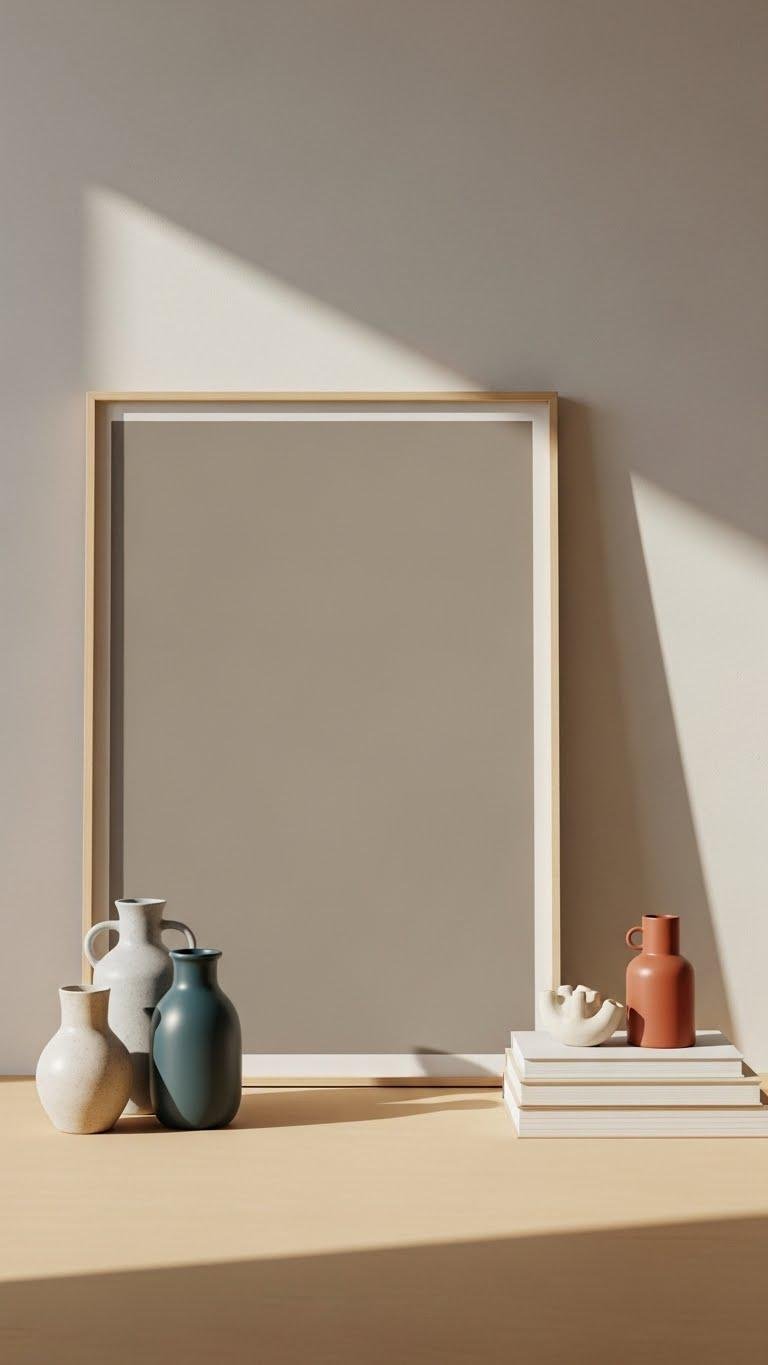
After arranging your books and sculptural piece, lean an oversized art print behind a cluster of small vases to introduce scale and a soft backdrop that anchors the vignette. You’ll create oversized contrast while keeping the display airy; let muted tones and negative space offer backdrop balance. Move pieces until proportions feel liberated, with one daring accent to express your personal freedom.
Stack Cookbooks With a Ceramic Bowl on Top

With a few well-chosen cookbooks stacked low and neat, you create a compact pedestal that lifts a simple ceramic bowl into an intentional styling moment.
You’ll practice cookbook styling by varying spine tones and sizes, then top with a matte bowl for ceramic contrast. The result feels curated yet relaxed, giving you the freedom to refresh textures and colors as your mood shifts.
Mix Woven Baskets and Folded Linens on Lower Shelves
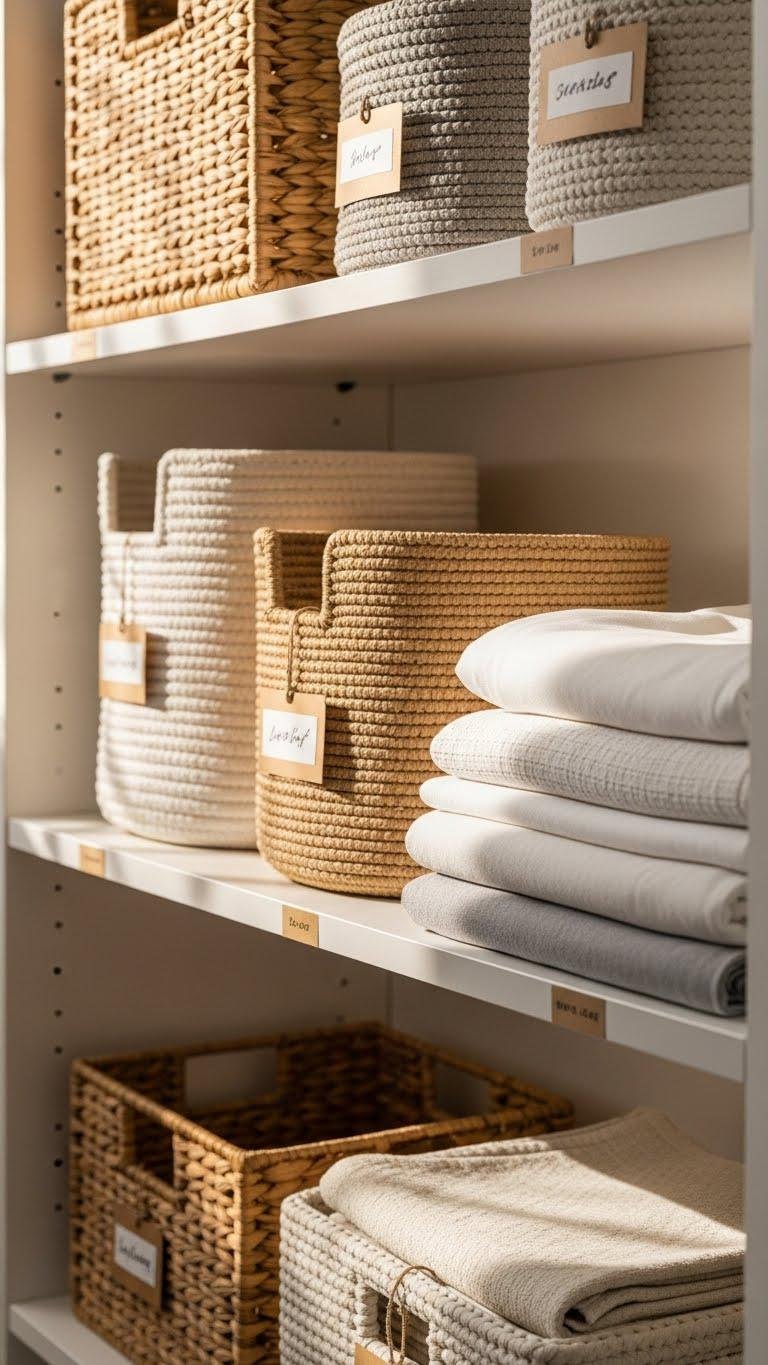
Tuck woven baskets and neatly folded linens onto lower shelves to ground your display and add tactile warmth.
You’ll keep items accessible while maintaining a curated look: group baskets in neutral tones, alternate textures, and label contents for effortless retrieval.
Rotate soft goods regularly as part of a mindful linen rotation, so your space feels free, organized, and quietly sophisticated without clutter.
Arrange a Cluster of Candlesticks in Varying Heights
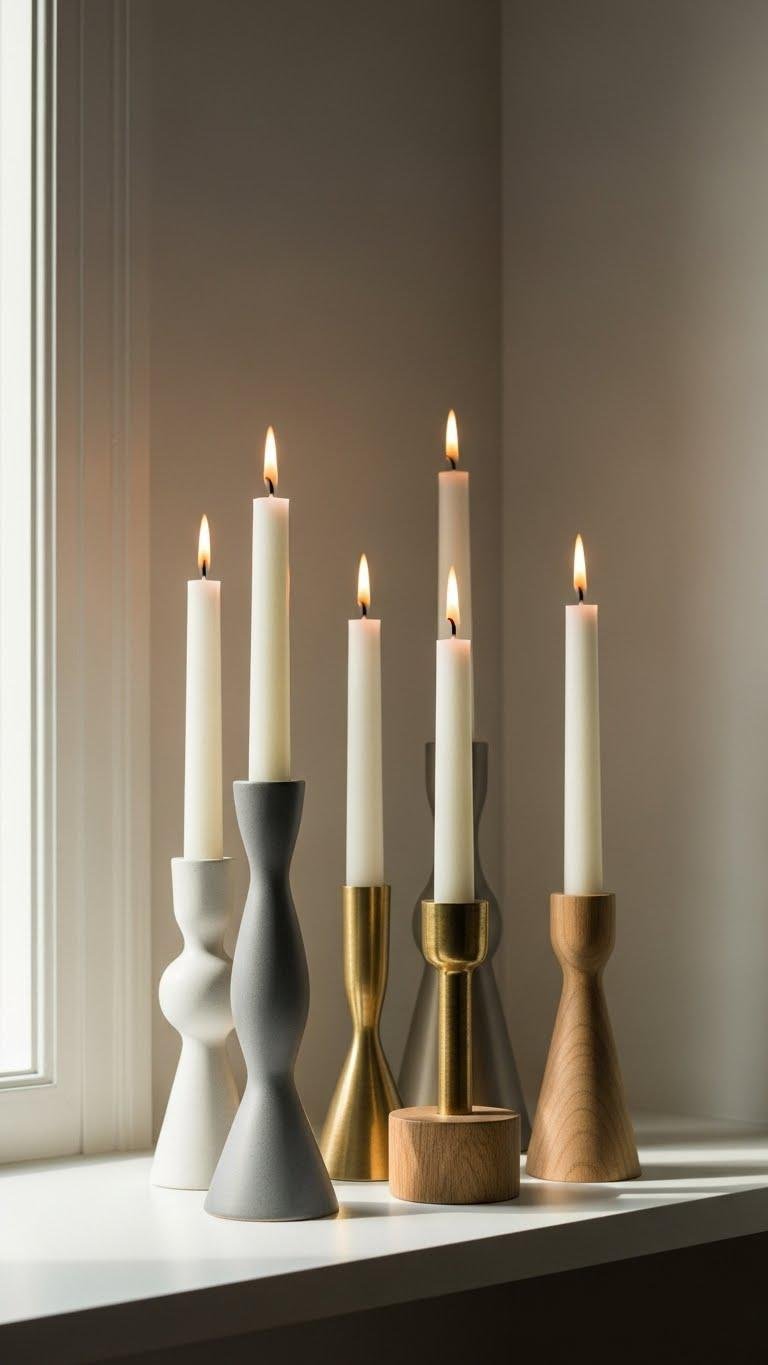
Cluster candlesticks of different heights to create a focused, sculptural vignette that draws the eye and adds vertical rhythm to your shelf.
You’ll balance candle placement for safety and style, grouping odd numbers and varying materials to emphasize height contrast.
Let negative space breathe around the cluster, choosing subtle hues so the arrangement feels curated, calm, and free rather than cluttered.
Combine a Tall Vase With Dried Botanicals and a Small Frame
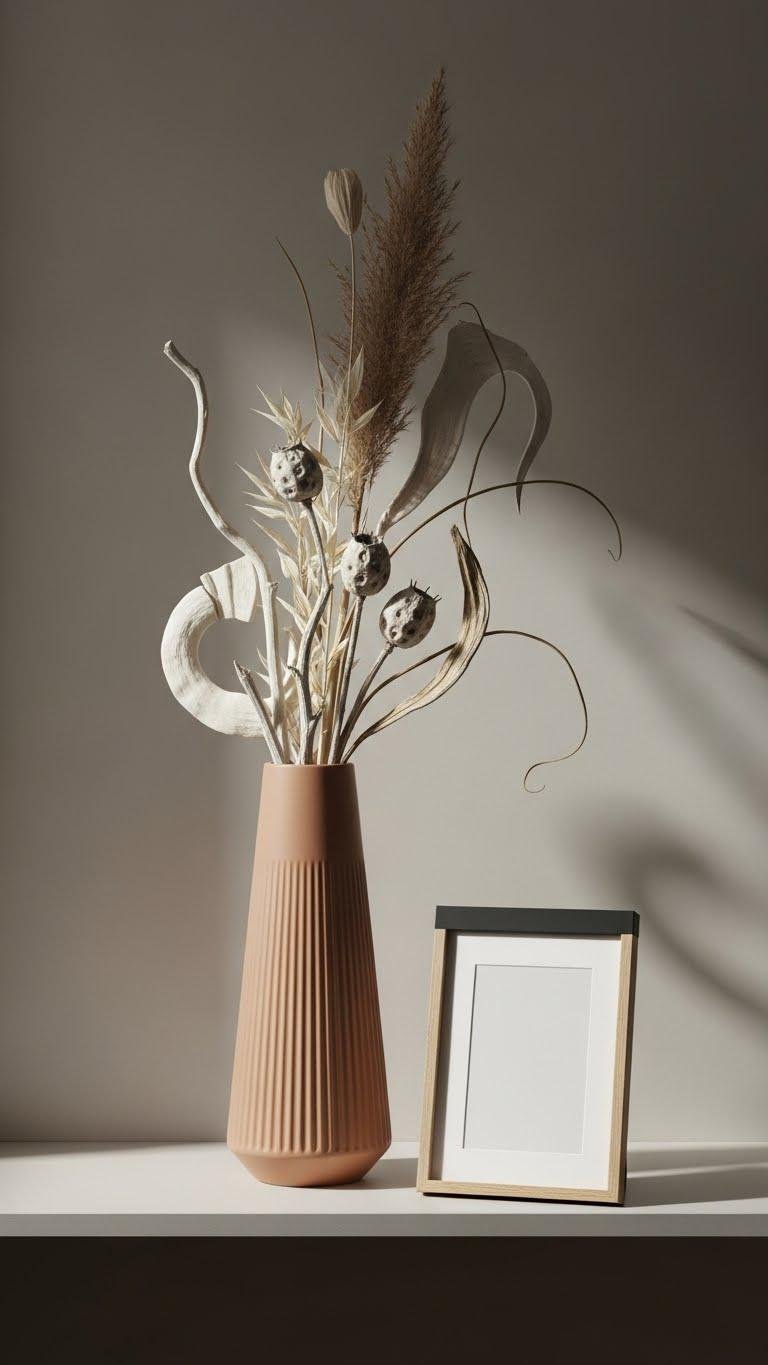
If you want a striking yet serene focal point, pair a tall, tapered vase of quiet material—matte ceramic, ribbed glass, or raw terracotta—with a handful of dried botanicals and a small, simple frame nearby. You’ll favor a matte finish and sculptural dried arrangement, using scale contrast to anchor the shelf. Mindful frame placement leans slightly forward, inviting the eye without crowding the composition.
Create a Mini Plant Corner With Succulents and Pebble Trays
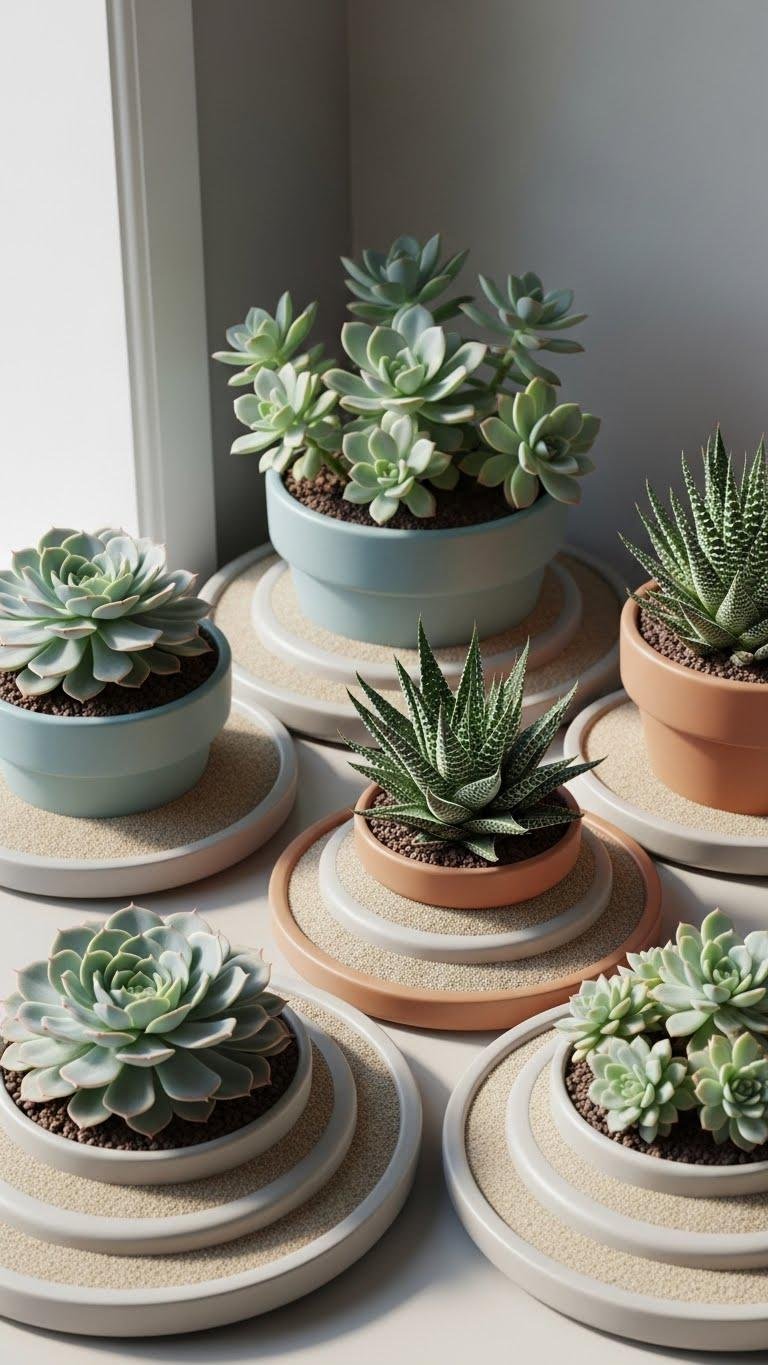
After the sculptural height of a dried arrangement, add a low-lying counterpoint by grouping small succulents on shallow pebble trays to create a compact, living vignette. You’ll curate varied textures, practice succulent propagation for fresh offsets, and layer pebble arrangement patterns to anchor each pot.
Keep shapes simple, let light guide placement, and enjoy the effortless, liberating calm this mini plant corner provides.
Use Horizontal Book Stacks as Risers for Collectibles
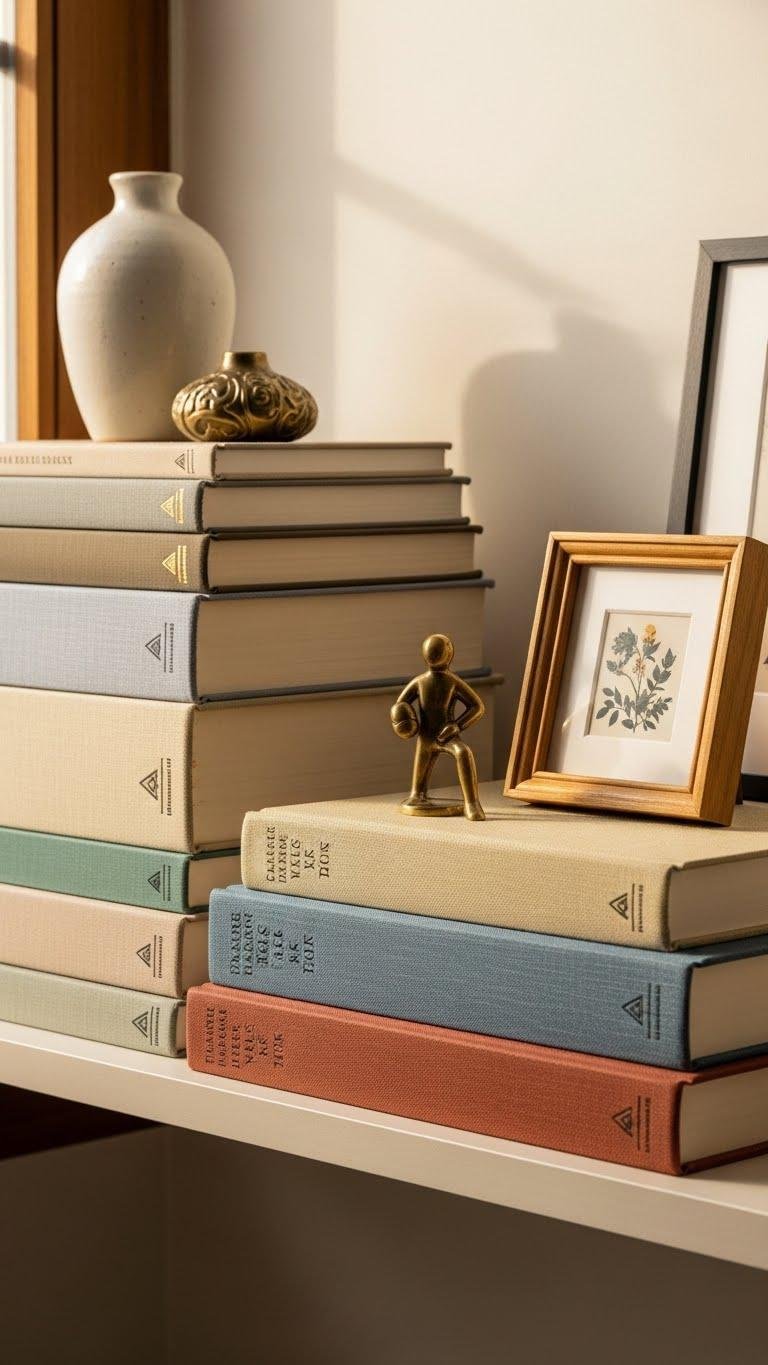
When you want to add subtle height and visual rhythm to a shelf, stack a few hardcover books horizontally to serve as elegant risers for small collectibles. You’ll create curated stacked risers that lift pieces without clutter, turning books into refined collectible pedestals. Choose covers with cohesive tones, vary stack heights, and arrange negative space so each object breathes and feels intentionally free.
Pair a Mirror With Metal Accents and Neutral Books

Because a mirror instantly multiplies light and space, pair it with a few metal accents and neutral-bound books to create a calm, layered vignette that reads as both practical and purposeful. You’ll choose a brushed gold mirror, place sculptural brass trays and a slim candle, then stack linen bound books to anchor the arrangement—clean, liberated styling that feels intentional without constriction.
Display a Single Statement Sculpture With Negative Space
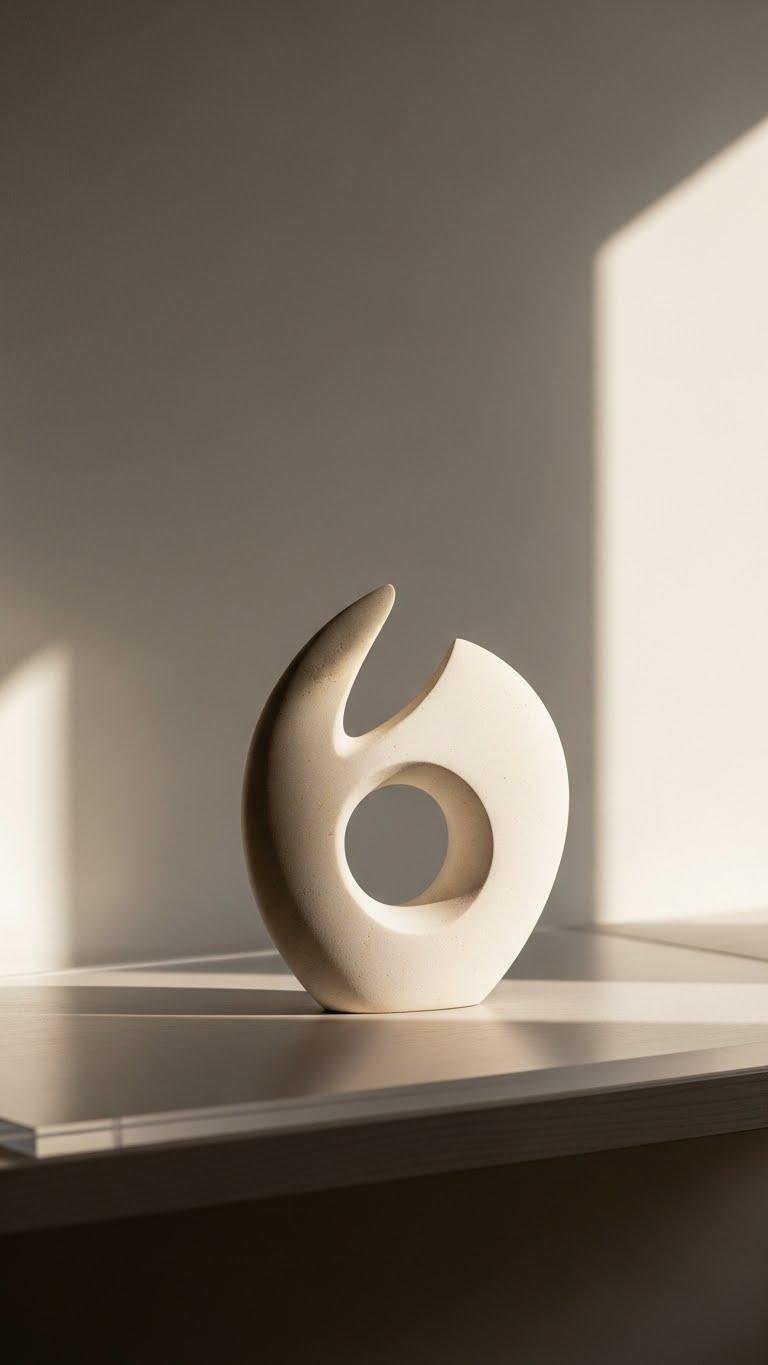
Though a single sculpture can anchor a shelf, leave plenty of breathing room around it so the piece reads as intentional rather than crowded. You’ll choose scaled minimalism: one sculptural form with an airy silhouette, placed off-center on a clear plane. Let negative space speak, resisting clutter so the object feels liberated, curated, and precise—an elegant focal point that invites calm and movement.
Group Three Matching Ceramic Pots With Different Plants
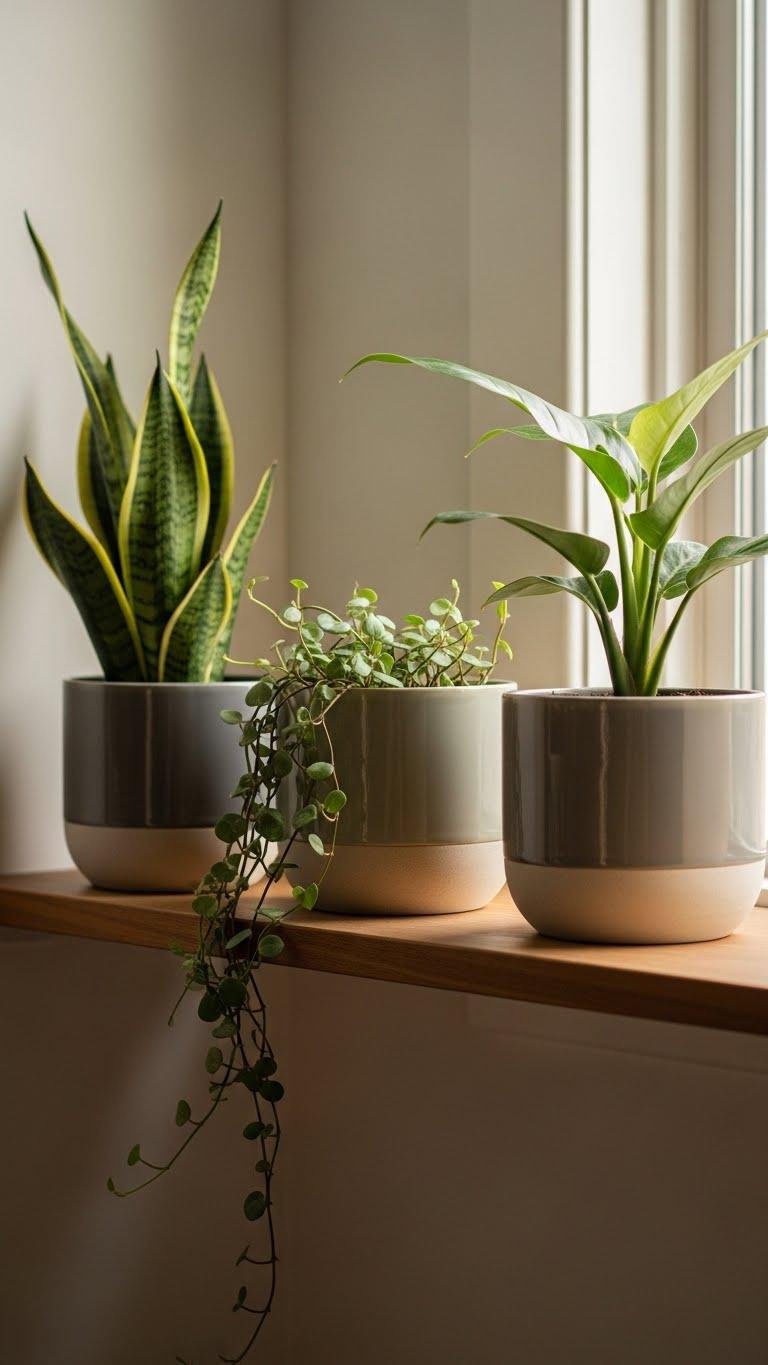
A trio of matching ceramic pots gives your shelf an instant sense of rhythm and refinement—place them side by side so their shared material and shape read as a unified block while each plant introduces a distinct texture and height.
Choose matte glaze finishes for subtle cohesion, then mix varied foliage—tall, trailing, sculptural—so you create a curated, liberated vignette that feels collected, not contrived.
Layer Framed Photos and a Low Glass Terrarium
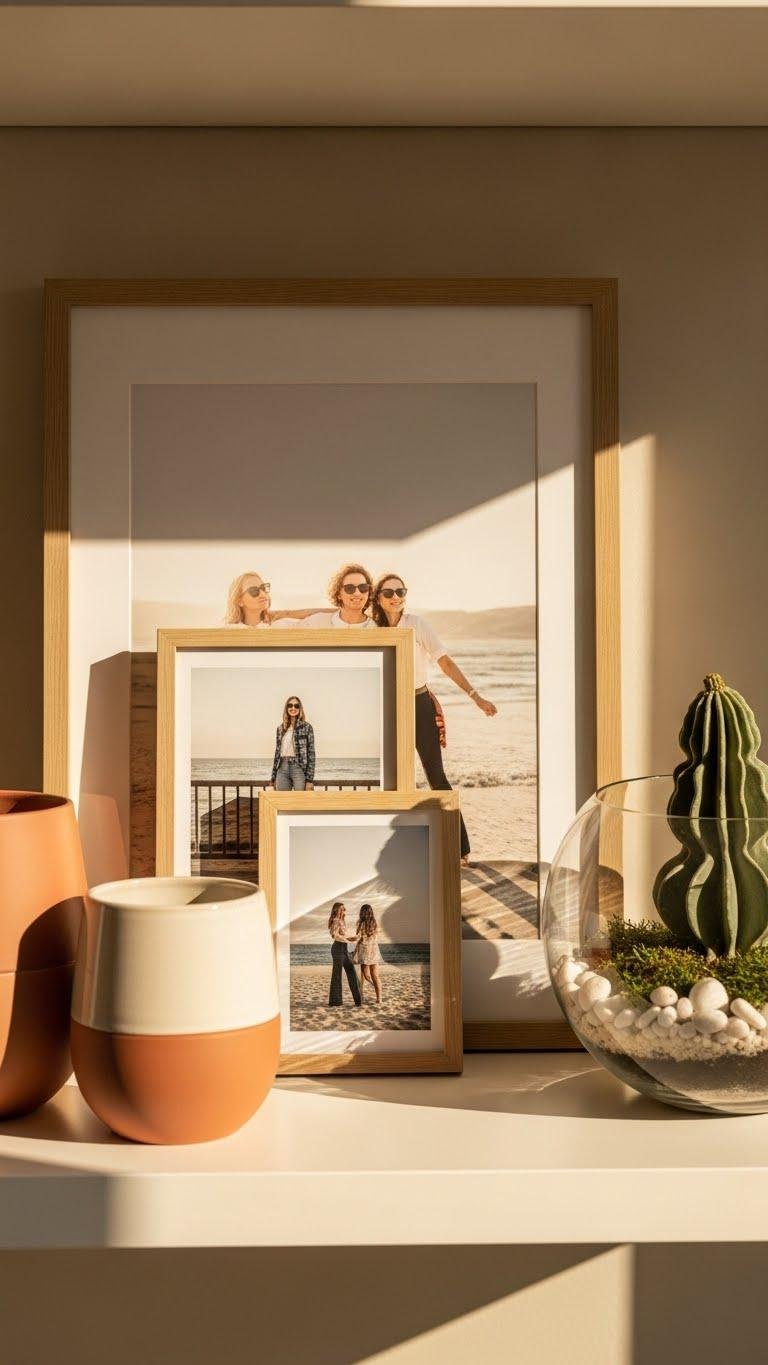
Pair those matching pots with layered imagery and a low glass terrarium to broaden your shelf’s narrative.
You’ll arrange frame layering—mix small photos and a larger print—so edges peek.
Place the glass terrarium nearby with a sculptural succulent and pebbles for contrast.
This curated, airy composition feels intentional yet free, inviting rotation and personal mementos without clutter.
Place a Tray to Corral Small Everyday Items
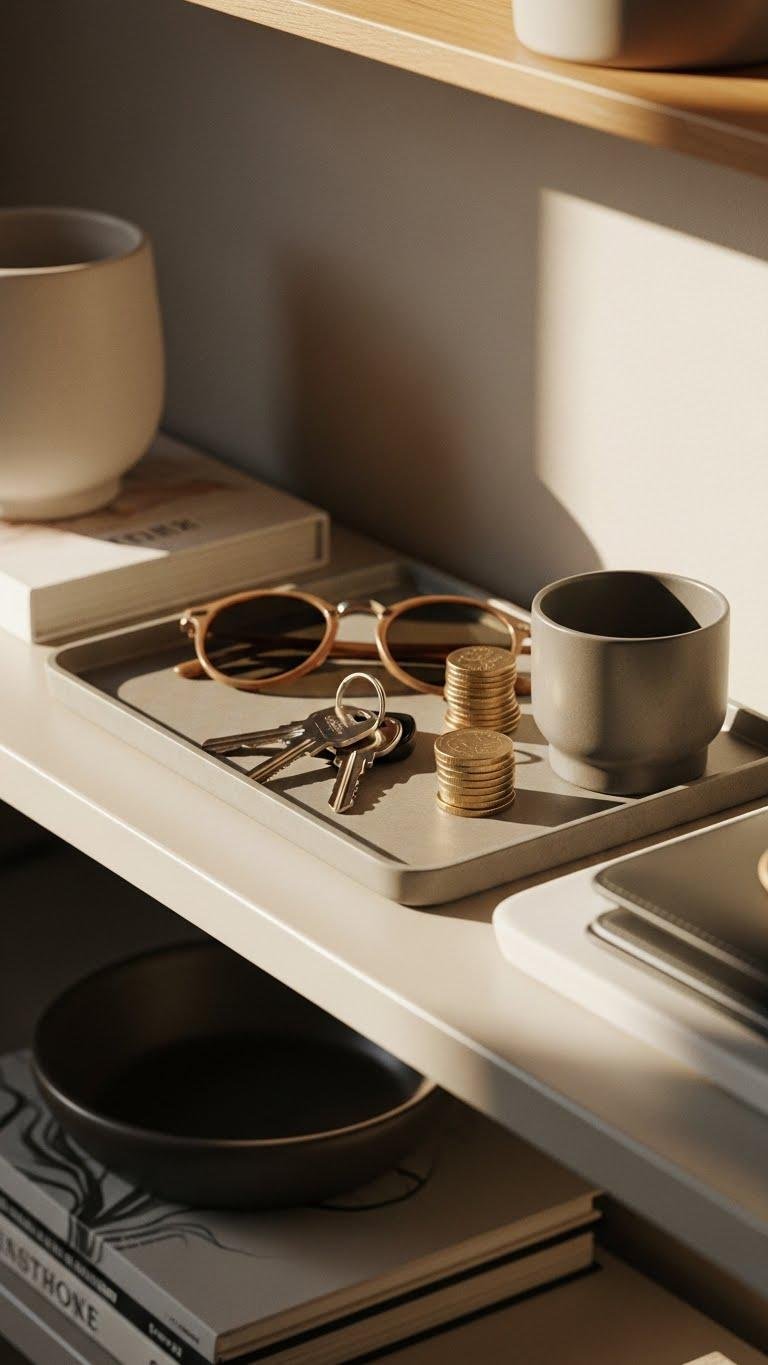
Tuck a low-profile tray onto your shelf to neatly corral keys, sunglasses, loose change, and other small everyday items so they look intentional instead of scattered.
Choose an entry tray or sleek countertop caddy in muted brass or matte ceramic to keep essentials organized. You’ll feel liberated by the tidy surface; everything has a designated spot that reads curated and effortless.
Balance a Stack of Vintage Books With a Modern Clock

Blend the old and new by stacking a handful of well-loved, vintage books and setting a sleek, modern clock atop or beside them to create a focused vignette. You’ll embrace an antique pairing that feels intentional while the minimalist contrast keeps the look airy. Place pieces with purpose, vary spine heights subtly, and let negative space offer calm — a liberated, curated statement.
Style a Shelf With Aesthetic Storage Boxes and a Small Lamp
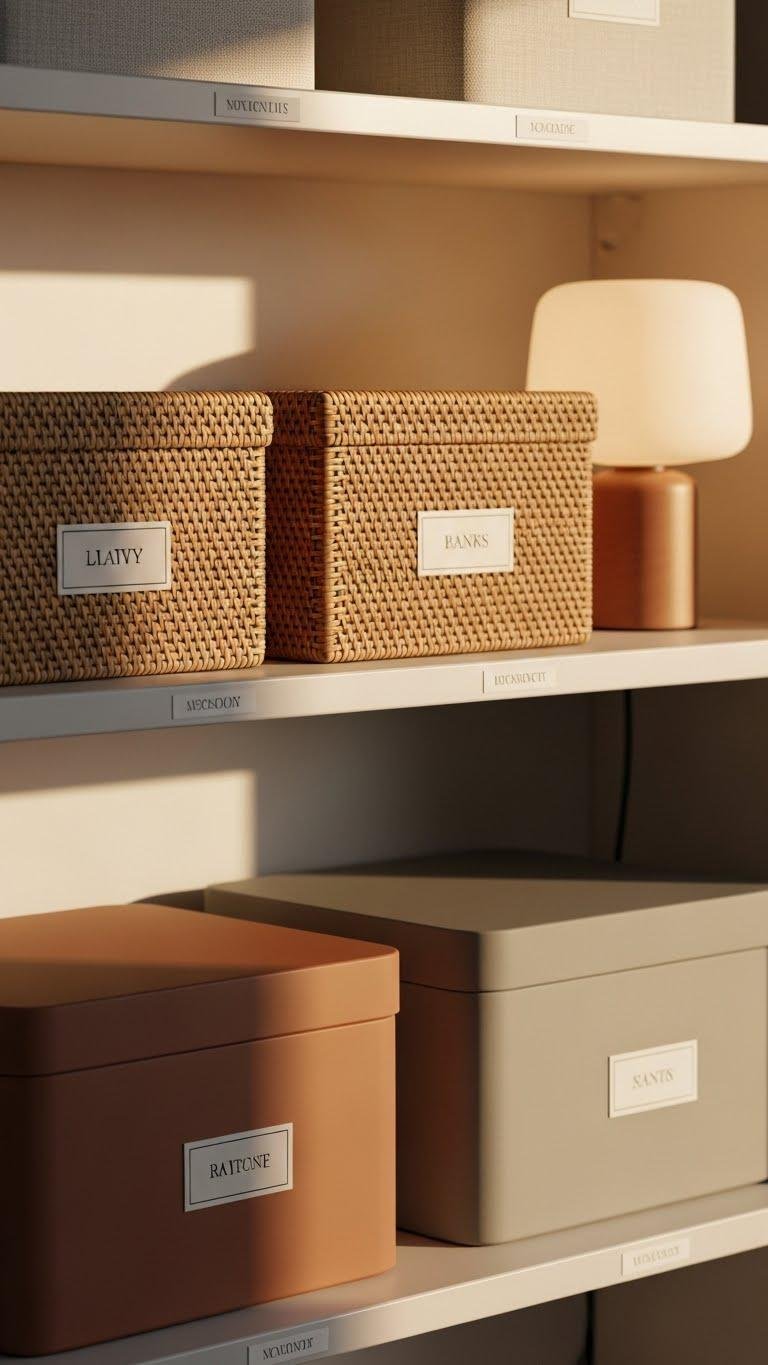
Bring order and warmth to a shelf by arranging a trio of aesthetic storage boxes alongside a small lamp so each piece feels deliberately placed. You’ll pair varied box textures—linen, woven and matte—for tactile contrast, then position the lamp to cast soft lighting over edges and labels. This curated grouping frees visual clutter, invites easy access, and keeps your space feeling open and intentional.
Repeat a Decorative Motif Across Adjacent Shelves
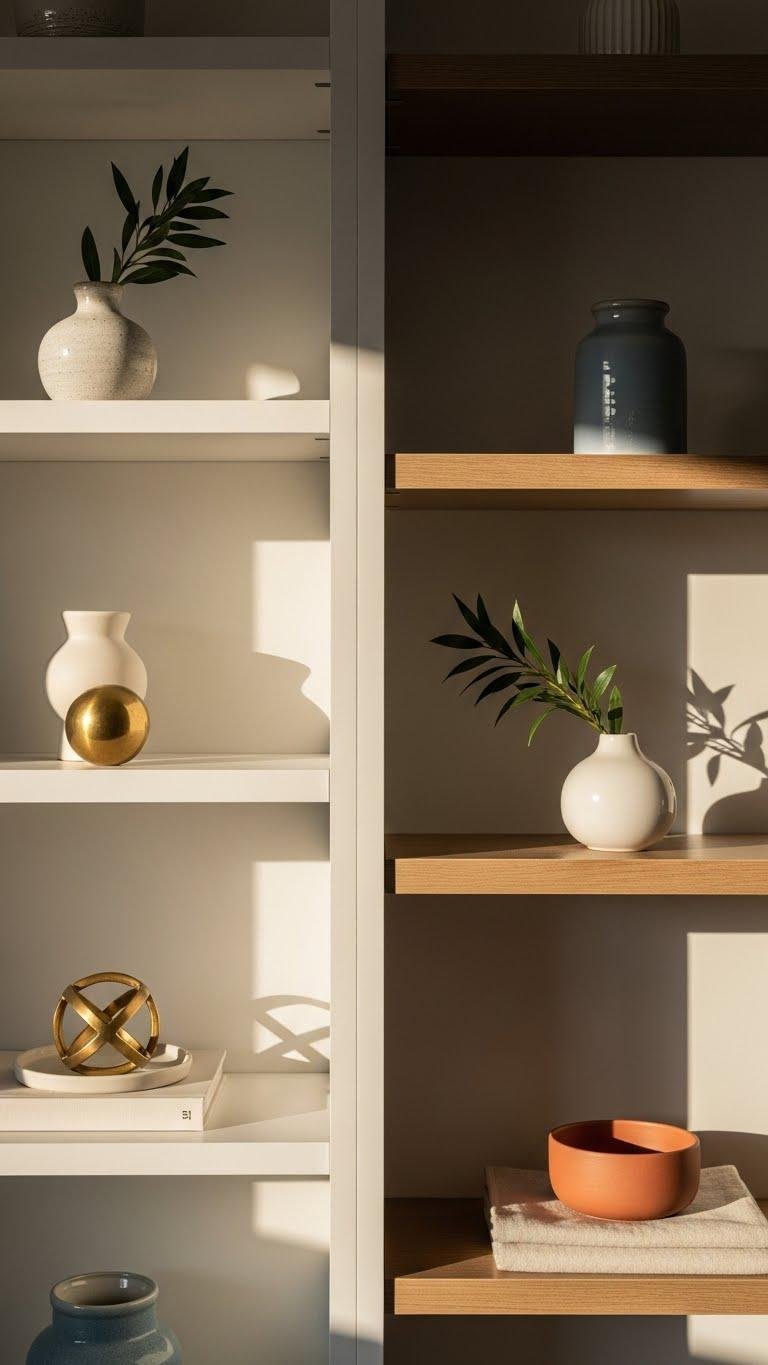
When you repeat a decorative motif across adjacent shelves, you create a quiet rhythm that guides the eye and ties multiple vignettes into a cohesive whole.
Embrace motif repetition—choose a color, shape, or small object and echo it subtly across levels.
You’ll achieve deliberate shelf continuity that feels effortless, curated, and freeing, letting each shelf breathe while contributing to an intentional overall story.
Combine Textured Objects: Wood, Glass, and Woven
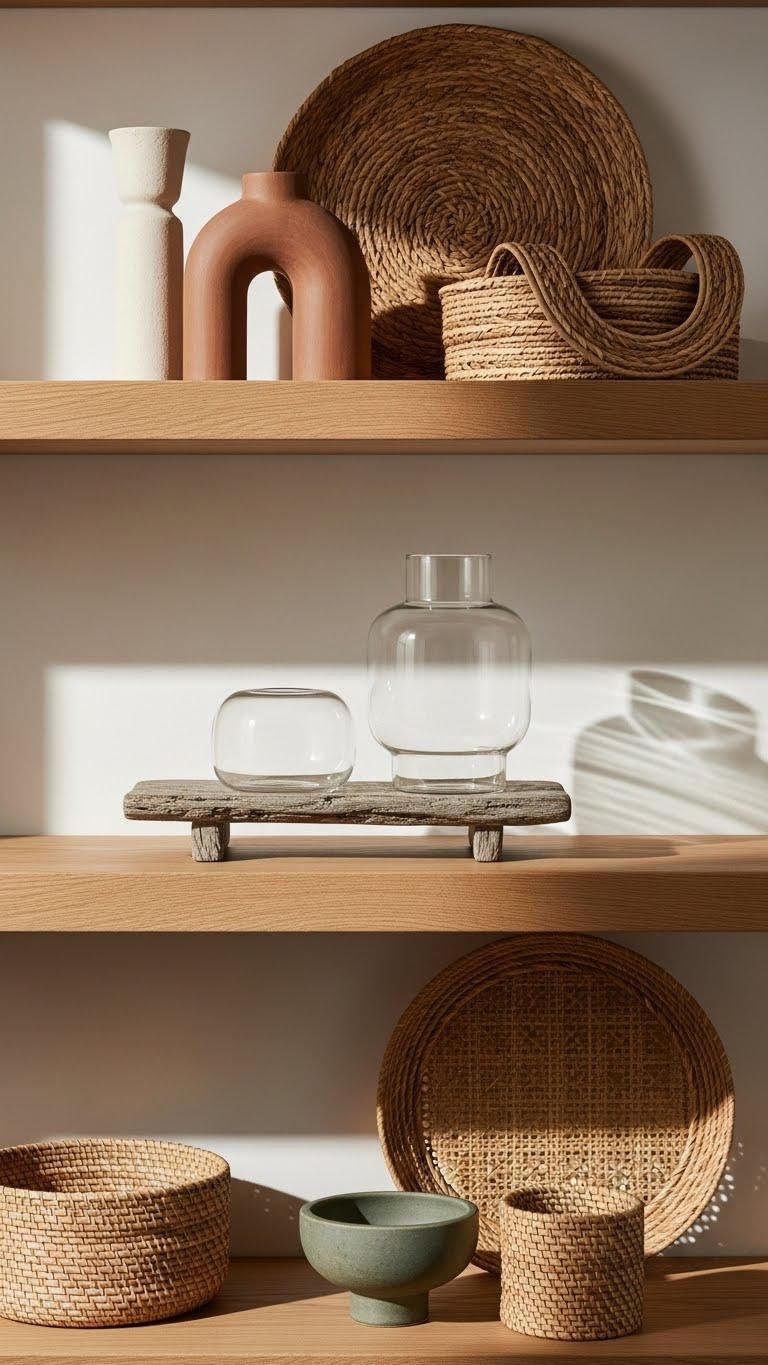
Layer wood, glass, and woven pieces to build a tactile story on your shelves that reads as thoughtfully edited rather than cluttered. You’ll pair weathered timber trays with sleek glass vases and baskets so rattan contrasts pop. Edit to three focal textures per shelf, vary heights, and leave breathing space. This curated restraint feels liberating, intentional, and effortlessly chic.
Showcase a Collection of Small Plates or Bowls on Stands
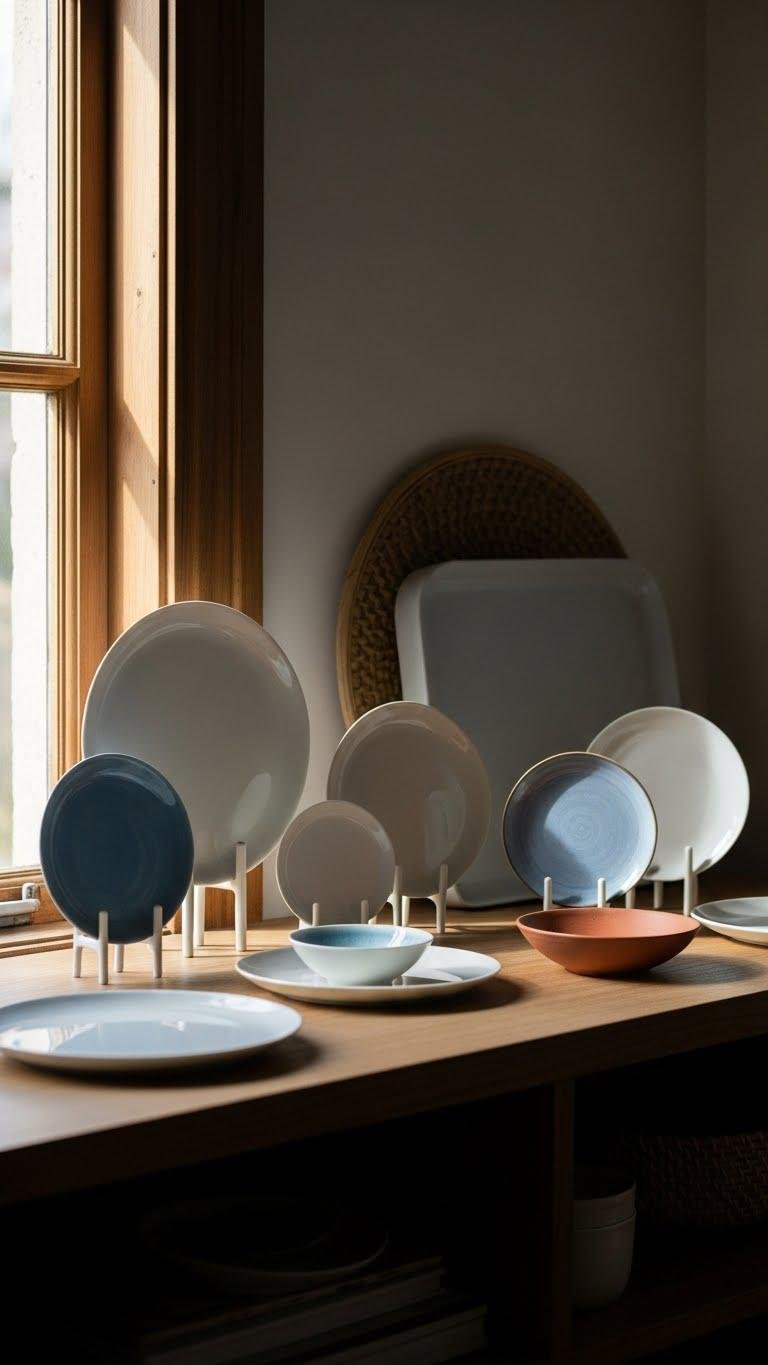
After arranging tactile wood, glass, and woven pieces, let a collection of small plates or bowls take center stage on the next shelf to introduce pattern, color, and scale without overwhelming the composition. You’ll display miniature plates on slender porcelain stands, mixing matte and glossy glazes, spacing them deliberately. This curated vignette feels liberated, refined, and effortlessly personal, inviting playful rotation.
Add a Tall Candlestick as a Vertical Anchor Among Books
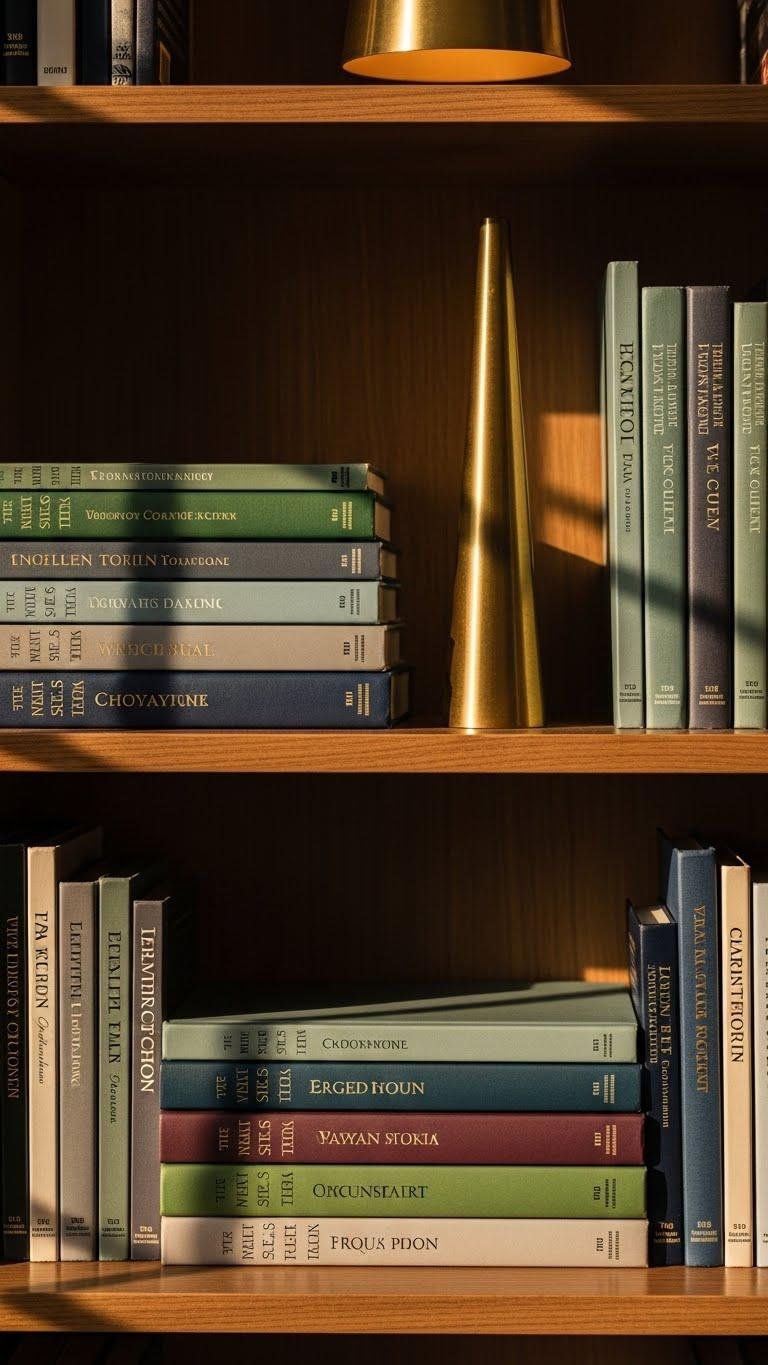
If you want to introduce a clean vertical line that grounds a run of horizontally stacked books, place a tall candlestick amid them to act as a purposeful anchor. You’ll balance scale and rhythm by choosing a tapered candleholder with elegant proportions; pair it with a brass sconce elsewhere on the shelf for warmth. This curated detail feels freeing and intentional.
Use Trailing Greenery to Soften Upper Shelf Edges
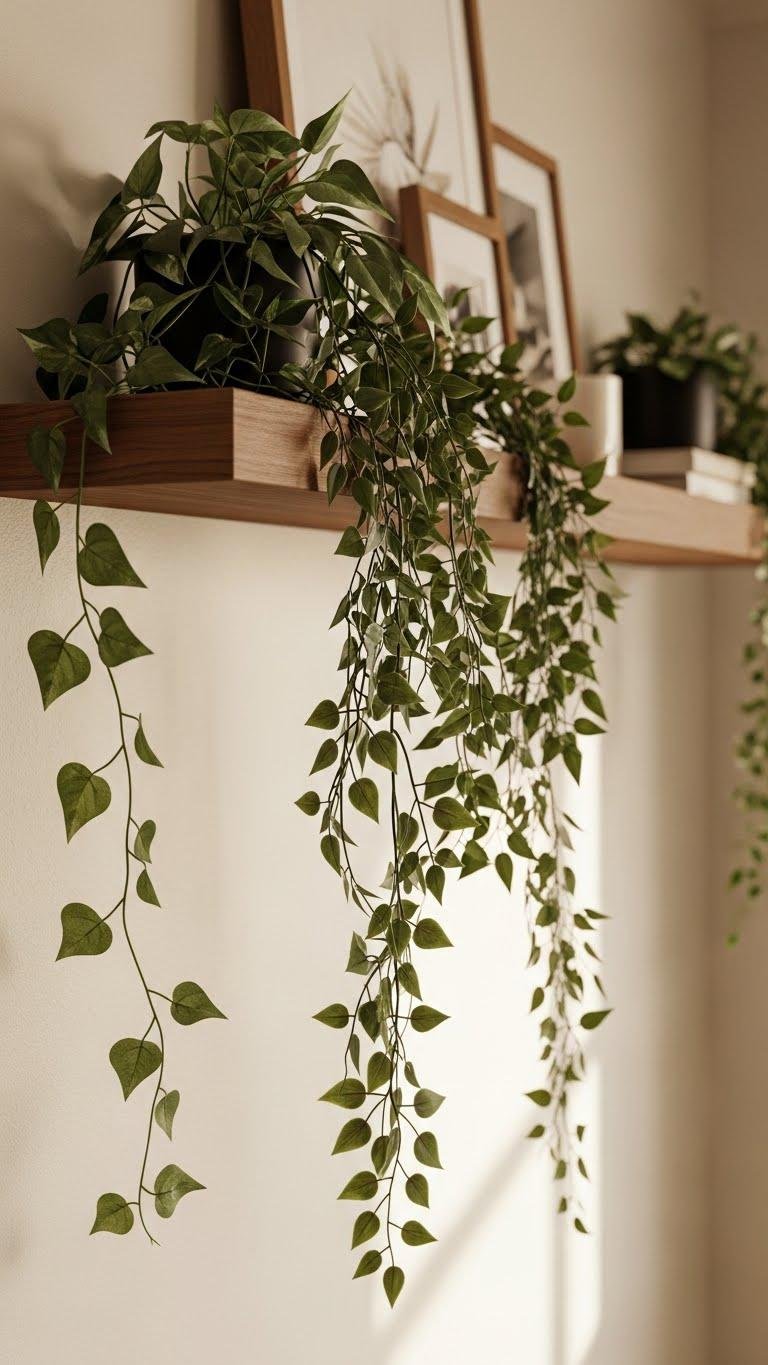
Softening the hard line where wall meets shelf, trailing greenery lets you introduce movement and a lived-in ease without sacrificing a curated look. You’ll drape a hanging pothos casually over the top edge or tuck a strand of faux ivy behind framed art to blur angles. Choose varied lengths, subtle asymmetry, and restrained textures so freedom feels intentional, not messy.
Create Rhythm With Alternating Color-Accent Pieces
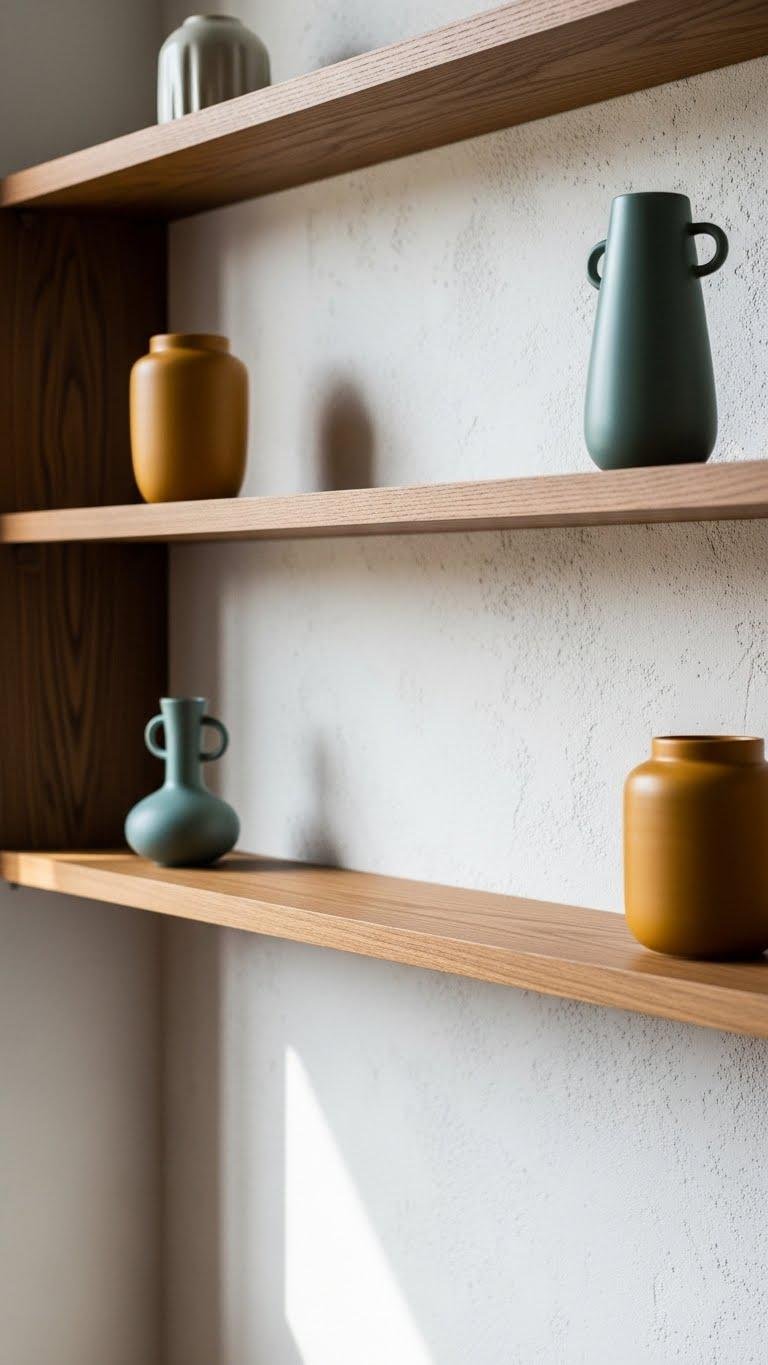
Often, you’ll create visual momentum by repeating a color pop at regular intervals—think a small ceramic in ochre, a muted teal vase, then another ochre object—so the eye travels across the shelf instead of stopping at one focal point. You’ll use a subtle color pulse and alternating accents to guide movement, balancing scale and negative space so each piece breathes and feels intentionally placed.
Mix Functional Items Like Baskets and Attractive Jars
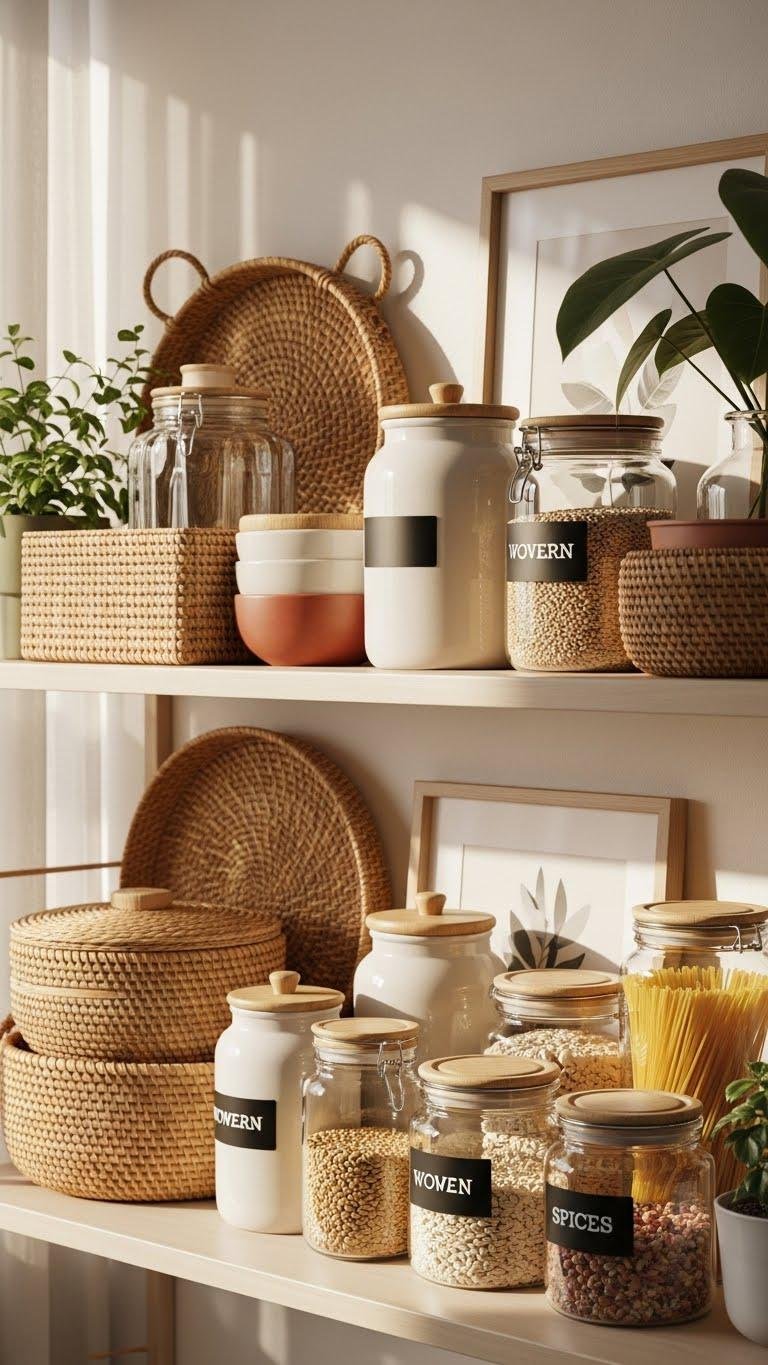
Mix a few practical pieces—woven baskets, lidded jars, and labeled canisters—right in with decorative objects so your shelf looks lived-in and curated. You’ll balance utility and style by adding woven labels for quick identification and transparent canisters to showcase contents. Arrange heights, textures, and negative space deliberately so each functional item feels intentional, freeing you from clutter while keeping the display elegant.
Feature One Bold Patterned Item With Calm Solids Around It
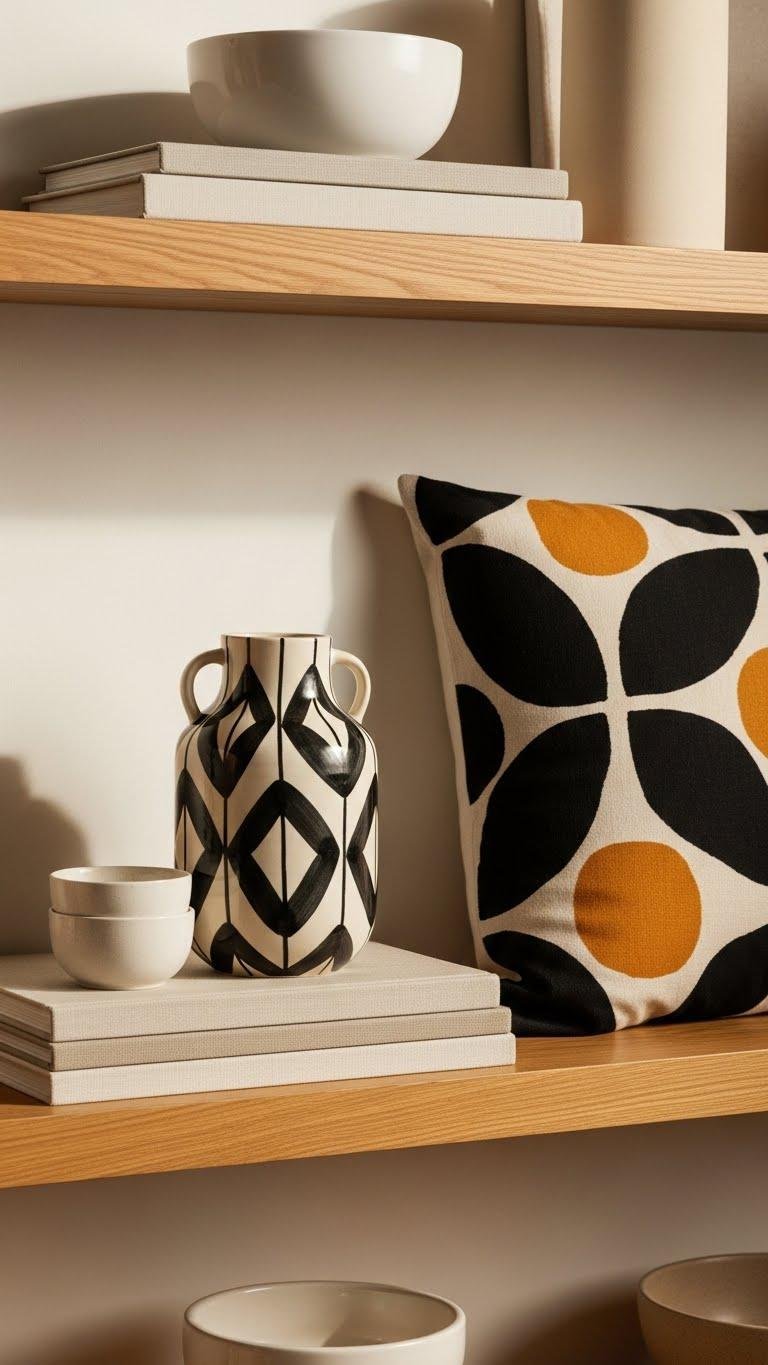
When you place a single bold patterned piece—a vase, pillow, or framed print—on your shelf, let the surrounding items stay calm and textural so that the pattern reads as intentional, not chaotic.
You’ll set that bold textile against a solid backdrop of matte ceramics, linen-covered books, and warm wood.
Keep scale restrained, negative space generous, and the composition effortlessly liberated.
Layer a Small Rug Swatch or Fabric Sample Behind Books
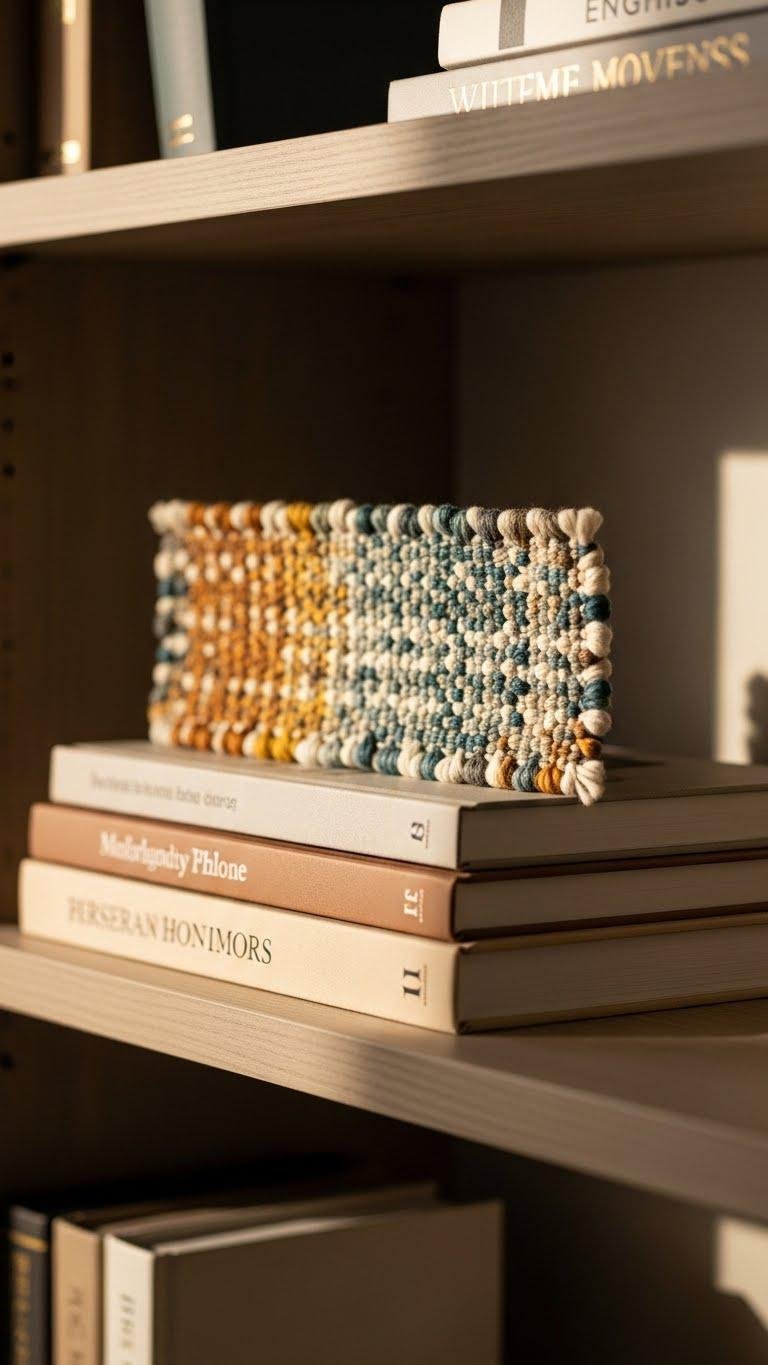
If you want to add depth and unexpected texture to a shelf, tuck a small rug swatch or fabric sample behind a stack of books so its edge peeks out like a private accent.
You’ll create deliberate fabric layering and subtle pattern contrast, letting a liberated, curated vibe emerge. Rotate swatches seasonally, align colors with art, and keep proportions measured for effortless, refined impact.
Arrange Odd-Numbered Groupings of Decorative Objects
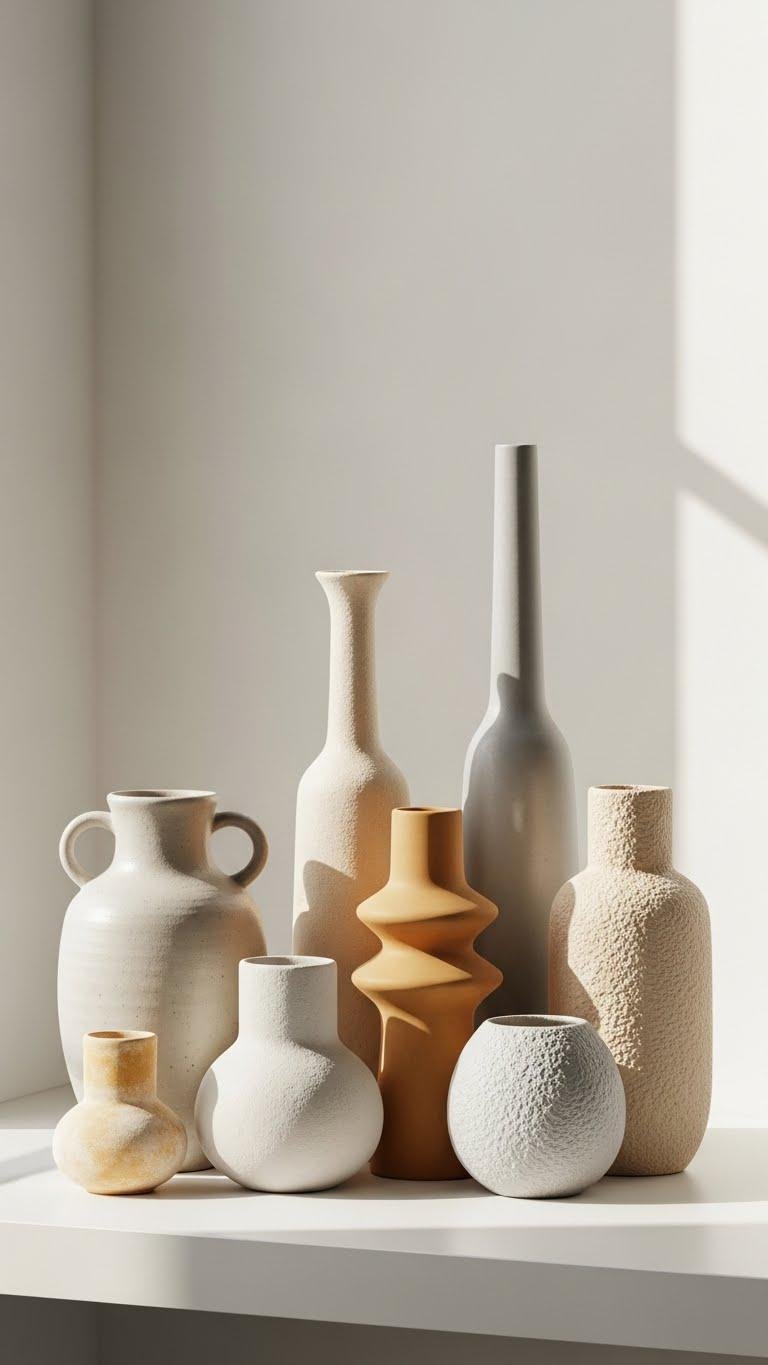
An odd-numbered grouping—three, five, or seven pieces—creates a natural rhythm that your eye reads as intentional rather than accidental; place varying heights, textures, and shapes close enough to read as a single composition but with slight gaps so each piece can breathe. Curate objects to achieve asymmetrical balance and textural contrast, letting negative space and curated restraint give you playful, liberated simplicity.
Incorporate Seasonal Accents and Swap Them Regularly
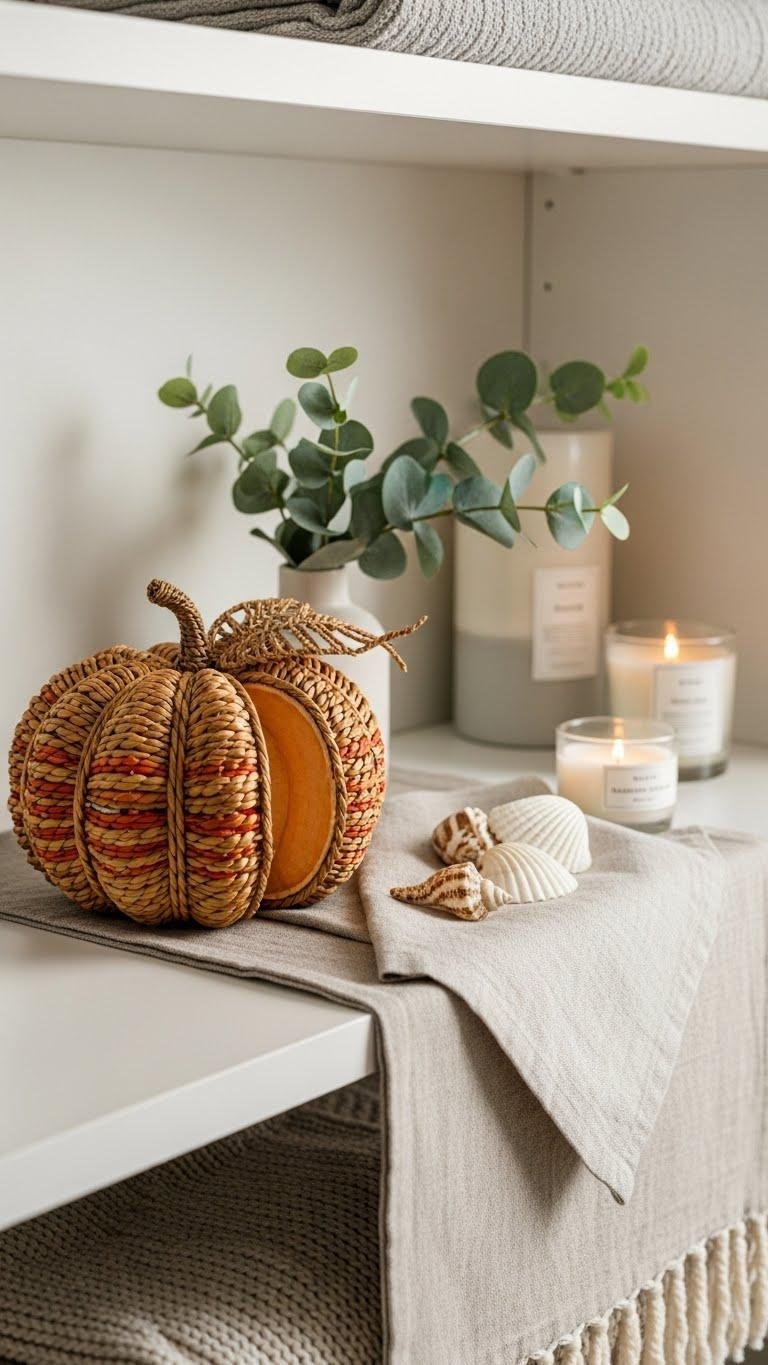
Regularly rotate a few seasonal accents to keep your shelf feeling refreshed and deliberately curated; you’ll find small swaps—a woven pumpkin in autumn, a sprig of eucalyptus in spring, a cluster of seashells in summer—offer big changes in mood without overhauling the composition.
You’ll pair subtle seasonal scenting with rotating textiles and a restrained palette, letting intentional swaps evoke freedom while maintaining refined cohesion.
Balance Heavier Pottery Below With Lighter Glassware Above
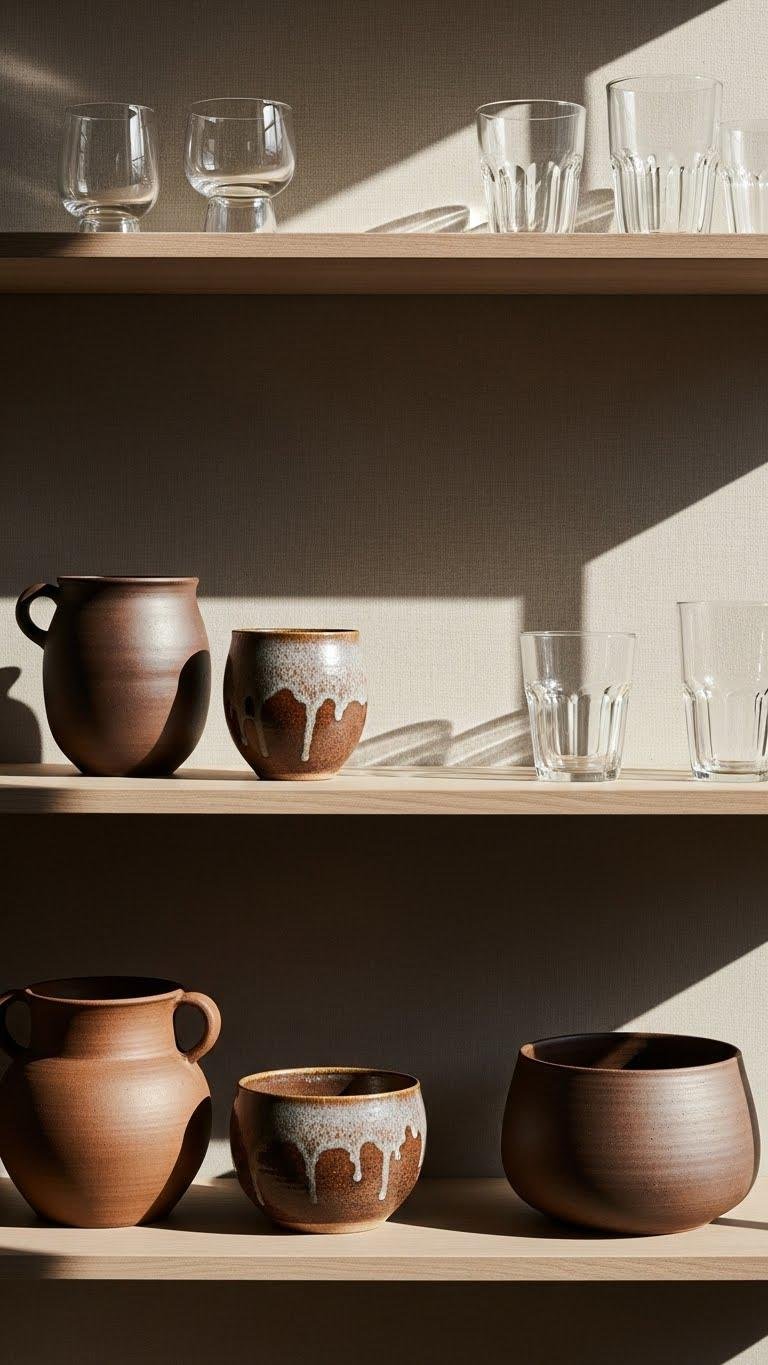
With a deliberate eye toward scale and texture, place heavier pottery on lower shelves and reserve lighter glassware for the upper tiers to create both visual stability and effortless elegance.
You’ll anchor displays with a weighted lower plane, then introduce contrast with an airy upper arrangement. Choose pieces deliberately, vary heights subtly, and let the composition feel open yet grounded so you enjoy curated freedom.
Keep Intentional Negative Space to Let Pieces Breathe
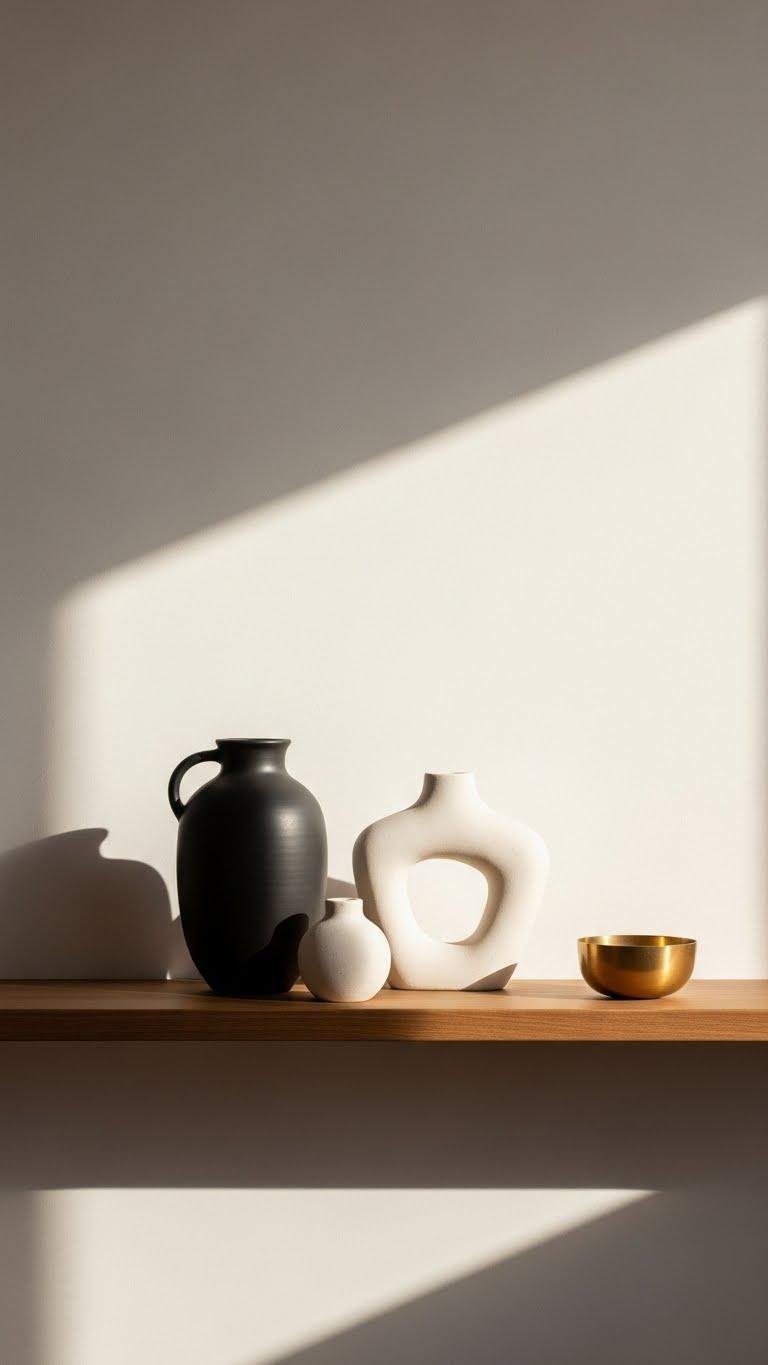
Often, you’ll find the most striking arrangements are the ones that breathe — leave deliberate gaps between objects so each piece can read clearly and contribute to the whole.
You’ll cultivate spacious negative space and intentional breathing room, letting sculptural items sing without crowding.
Edit ruthlessly, arrange with intent, and enjoy the liberating clarity that comes from restraint and thoughtfully placed emptiness.