
Start with a blank slate and clear every shelf so you can see proportions and negative space; then build from the bottom with low, heavy anchors like woven baskets or pottery, and add staggered book stacks, vertical groupings, and plants at varied heights to create rhythm. Edit ruthlessly, layer to add depth, and repeat textures and diagonal color echoes for cohesion—keep things airy and intentional, and you’ll want to try the next set of practical layouts.
Start With a Blank Slate and Build Anchors First
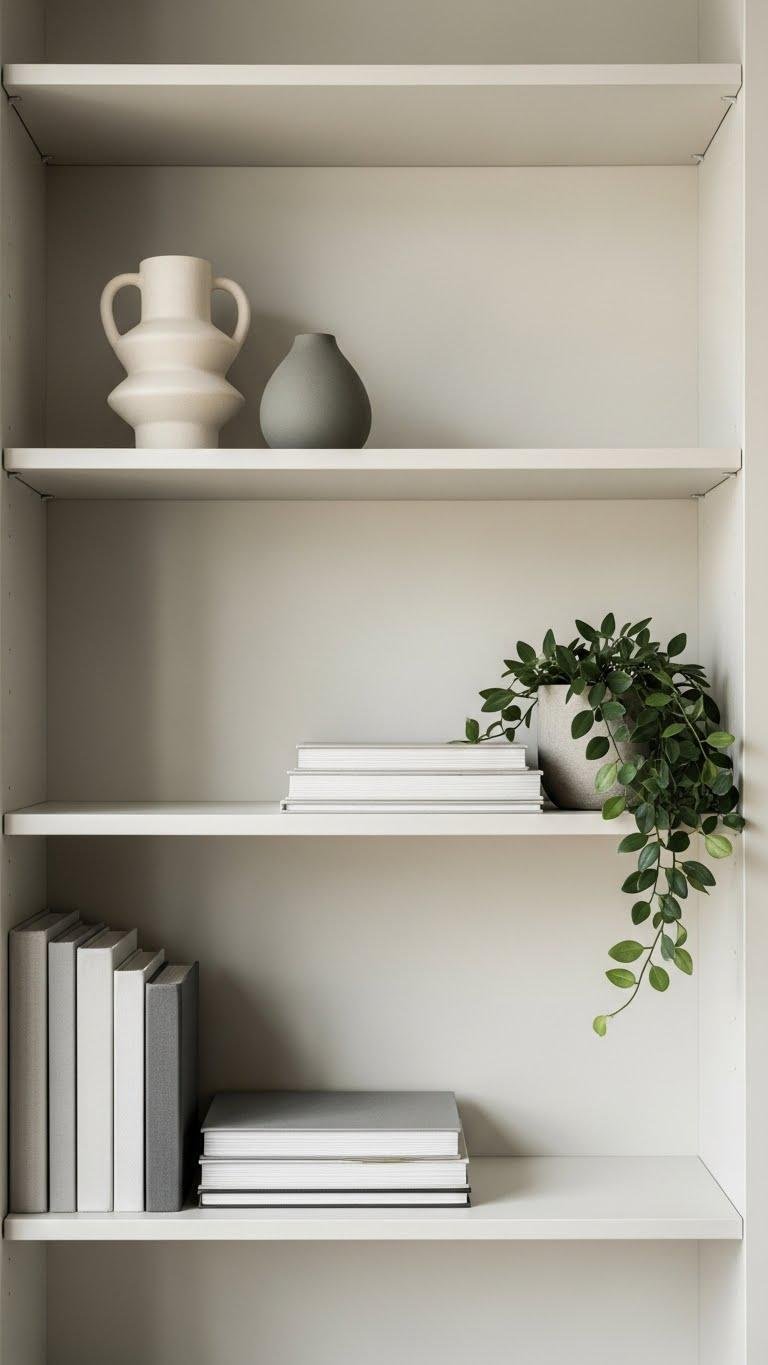
Before you arrange anything, clear every shelf so you can see the proportions and lines you’re working with; starting from a blank slate helps you avoid cluttered decisions and design by accident. You’ll establish blank foundations, then choose anchor placement deliberately. Place anchors to balance scale, leave breathing room, and vary height. You’ll edit ruthlessly, keeping freedom of movement and visual calm.
Arrange Large Anchors on Lower Shelves
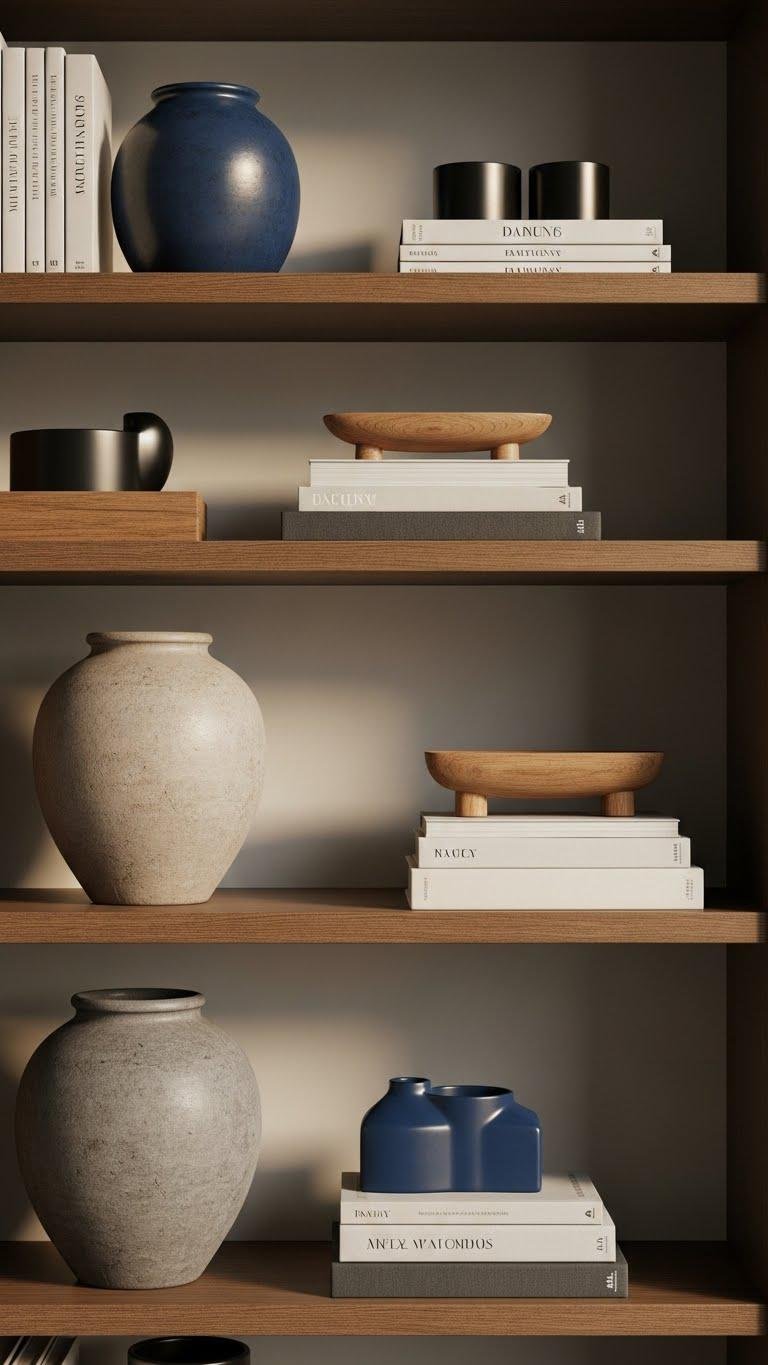
Start by placing your largest anchors on the lowest shelves to ground the composition and create visual stability. You’ll favor heavy bases and low anchors to anchor sightlines, balancing scale and negative space. Position weighty pieces slightly off-center, leave breathing room, and vary heights subtly. This disciplined approach feels freeing — you control order, rhythm, and the effortless harmony of each shelf.
Group Items by Category Before Styling
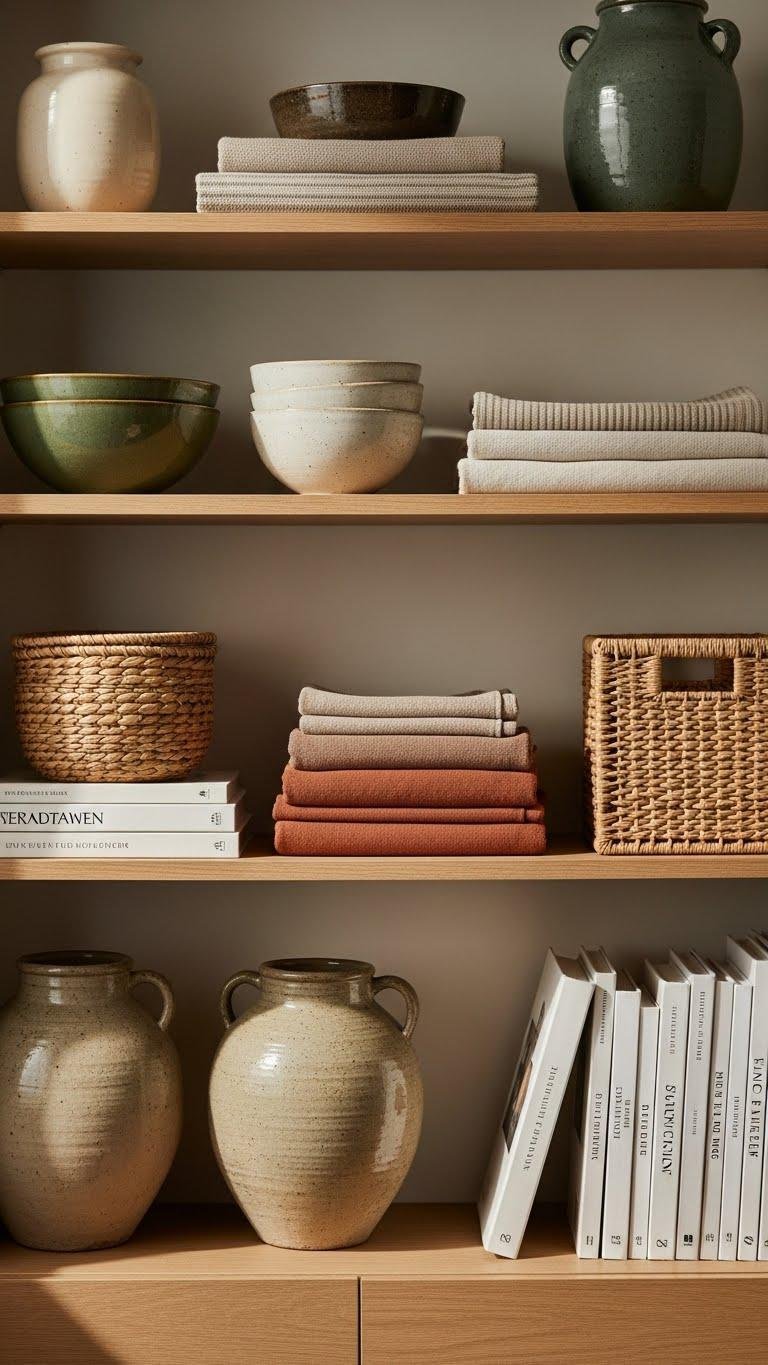
Having anchored the lower shelves with your heaviest pieces, group like items together so you can see what you really have to work with.
You’ll assess inventory, prioritize pieces, and decide on color coordination and material sorting. This lets you edit ruthlessly, freeing space for intention.
Arrange collections by purpose, then choose what complements rather than competes to maintain a curated, liberated aesthetic.
Create Trios With Varying Heights
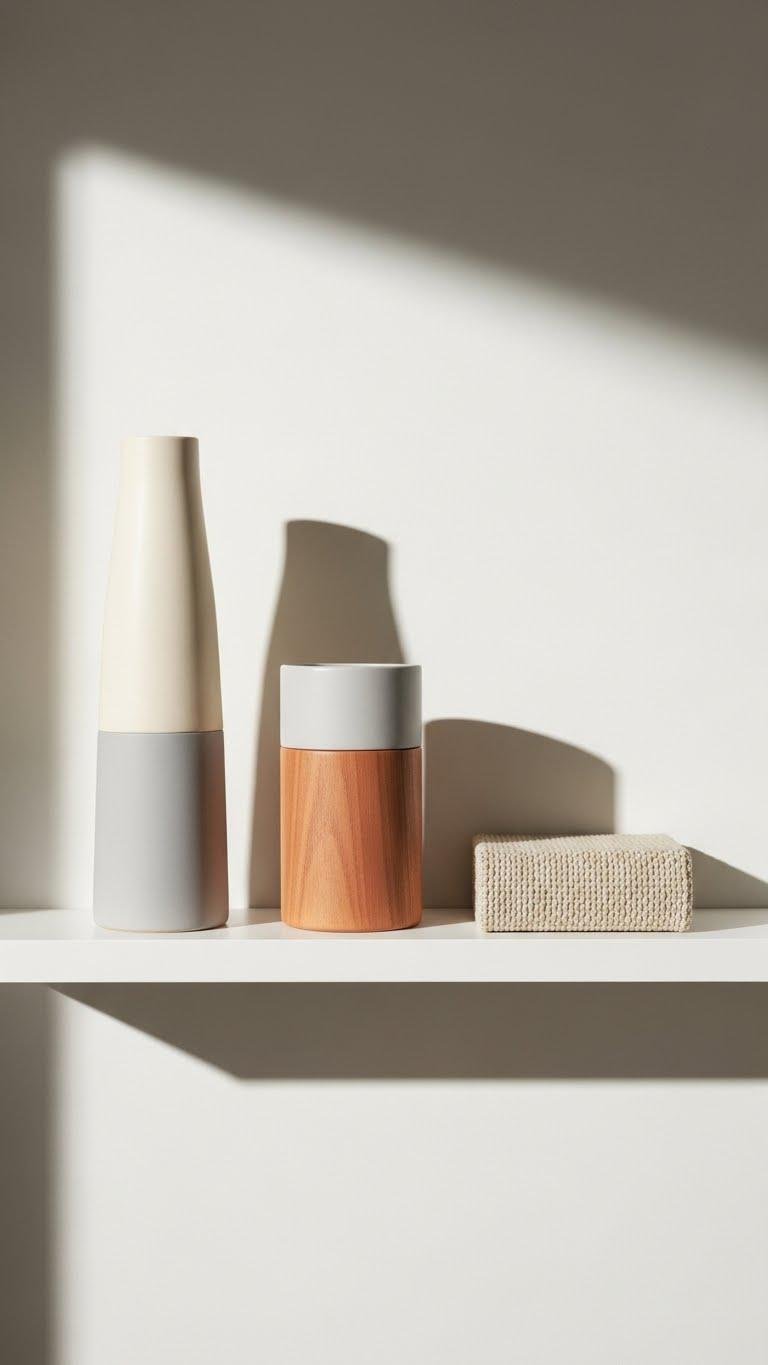
Often you’ll find that arranging objects in threes brings instant balance and visual interest to a shelf; group a tall piece, a medium object, and a low item so each has breathing room and a clear relationship to the others. You’ll craft intentional trio symmetry by varying textures and colors, emphasizing subtle height gradients. Edit relentlessly, keep negative space, and let each trio feel liberated yet purposeful.
Mix Tall and Short Pieces for Rhythm

After you’ve mastered trios, push the rhythm further by pairing tall and short pieces across the shelf to create visual tempo. You’ll alternate varying silhouettes to guide the eye, balancing mass and void. Place objects with deliberate staggered elevations so sightlines move naturally, never static. Trust proportion, negative space, and confident placement; you’ll achieve a curated, liberated look that still feels intentional.
Stack Books Horizontally to Raise Objects
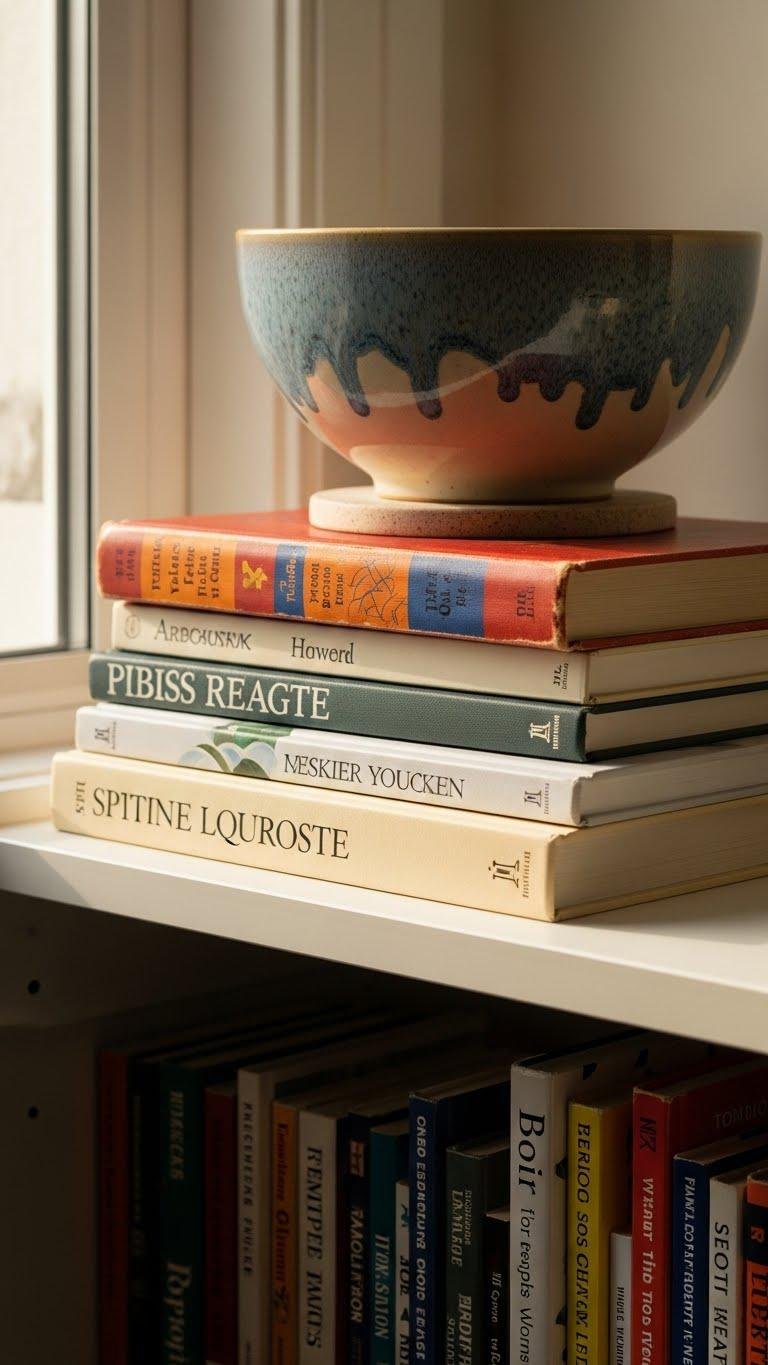
Layer books horizontally to elevate objects and anchor the composition with deliberate height changes. You’ll place a vintage cookbook beneath a ceramic bowl to create focal height and visual balance, then adjust stack thickness for scale. Choose varied spine colors and protect surfaces with a thin coaster. This tactic gives you freedom to rearrange layers confidently while keeping the shelf intentional and polished.
Layer Small Items in Front of Taller Pieces
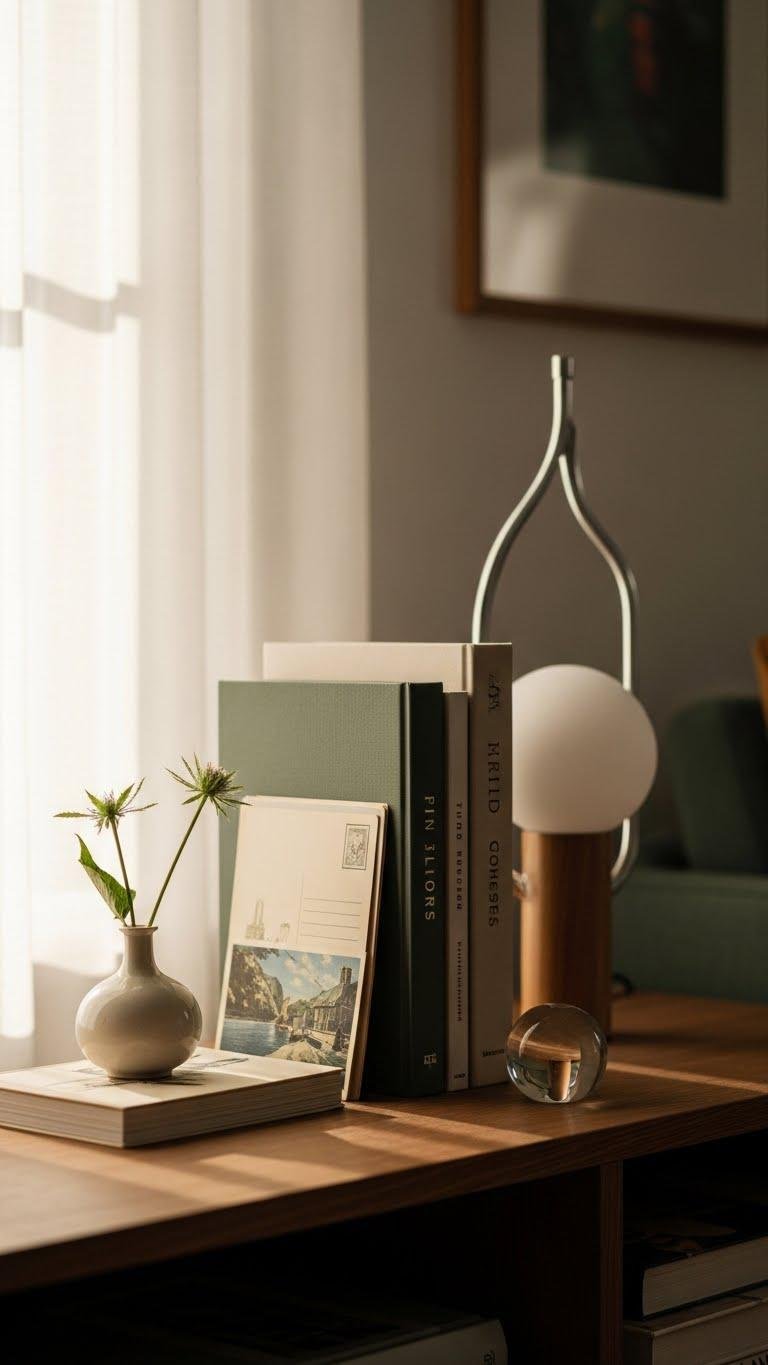
Usually you’ll place smaller objects like a ceramic bud vase, a stack of postcards, or a sculptural paperweight directly in front of taller pieces to create depth and guide the eye. You’ll use front layering with scale models or delicate objects to punctuate height, control sightlines, and allow freedom in composition. Arrange intentional groupings, vary spacing, and keep proportions crisp.
Use Oversized Baskets or Pottery at the Base
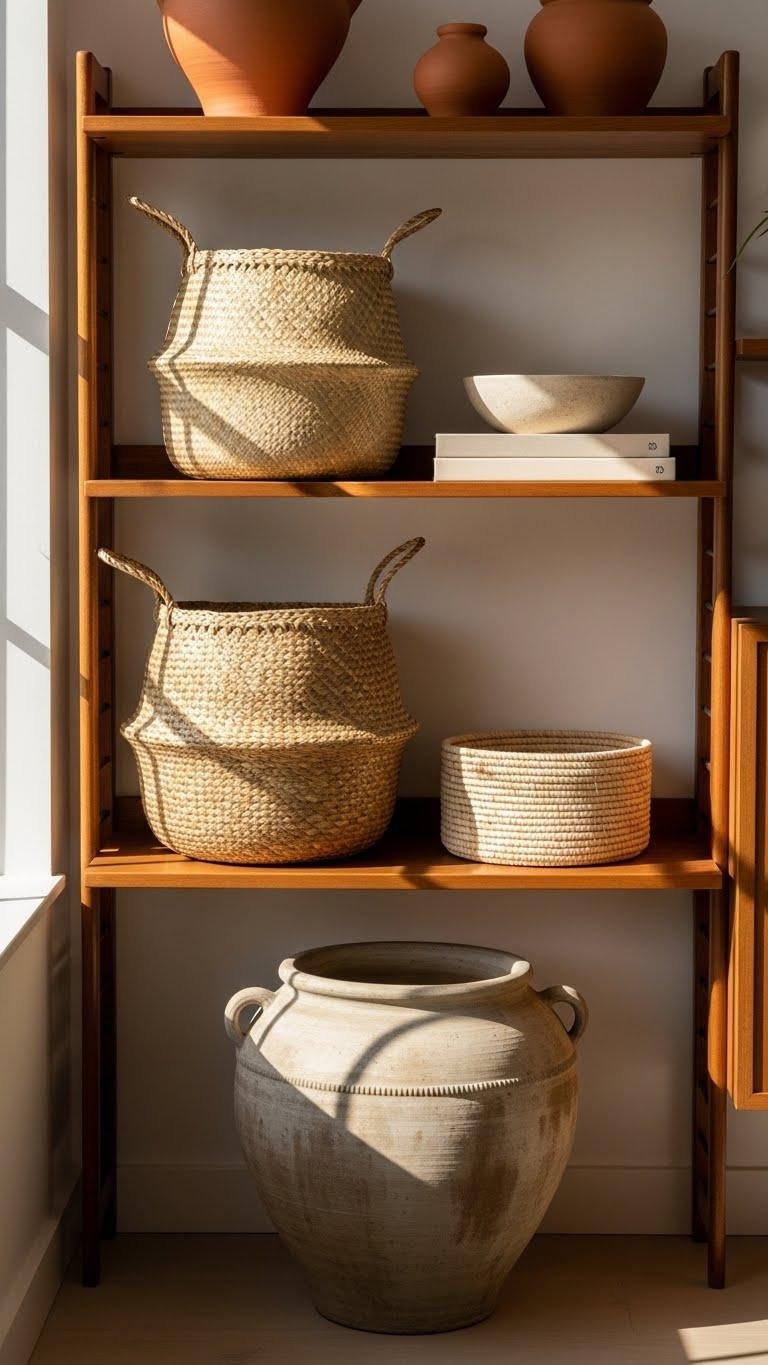
Ground larger baskets or earthenware at the base of a shelf to anchor the arrangement and balance vertical weight.
You’ll choose pieces in natural fibers or clay to give visual grounding and tactile contrast. Place oversized planters or woven baskets asymmetrically for effortless stability, keeping surrounding objects lighter and pared-back so the base reads intentional, curated, and free rather than cluttered.
Alternate Quantity of Groupings Per Shelf
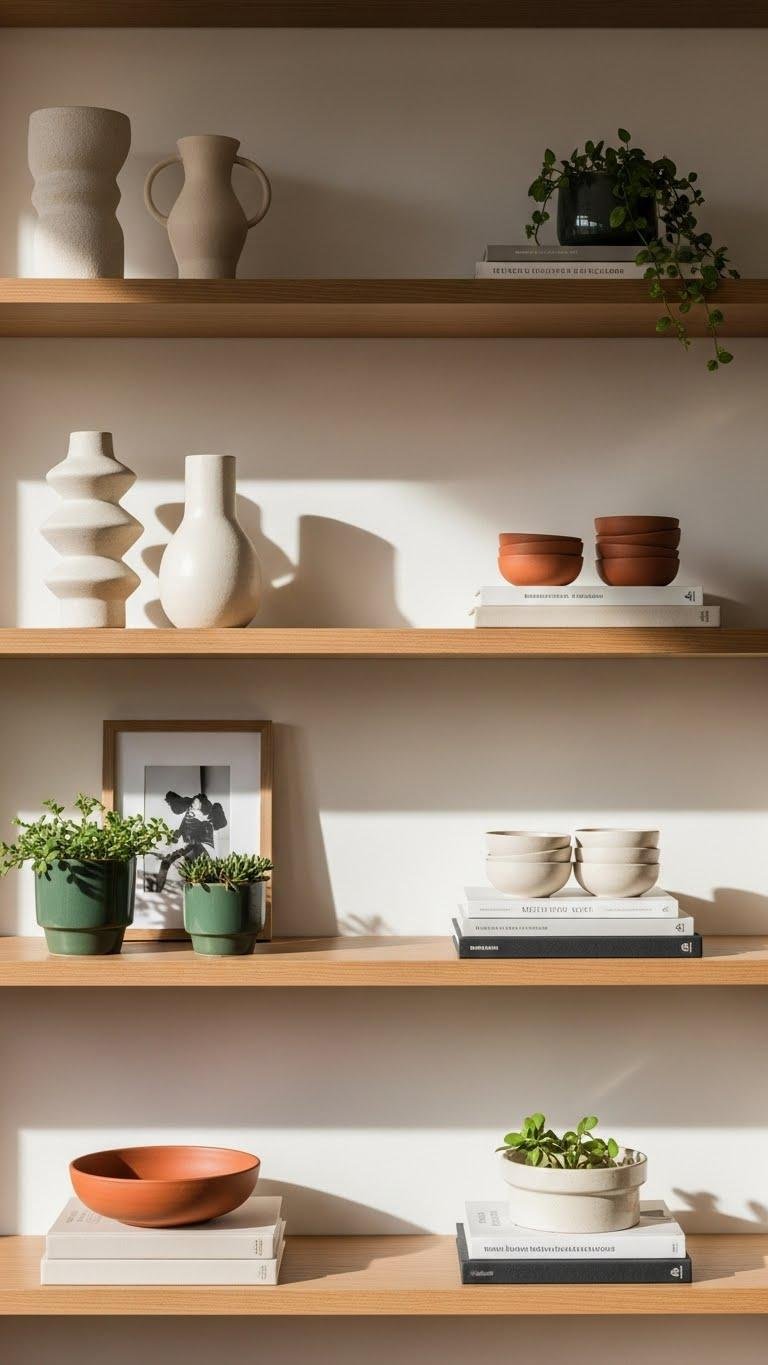
Vary how many groupings you place on each shelf to create rhythm and prevent visual monotony; alternate single standout pieces with clusters of two or three to let the eye rest and then find interest.
You’ll combine odd pairings and alternating heights to craft movement, deliberately spacing elements so each grouping breathes. Trust your instincts, edit ruthlessly, and keep compositions flexible for evolving displays.
Repeat Objects Diagonally Across Shelves
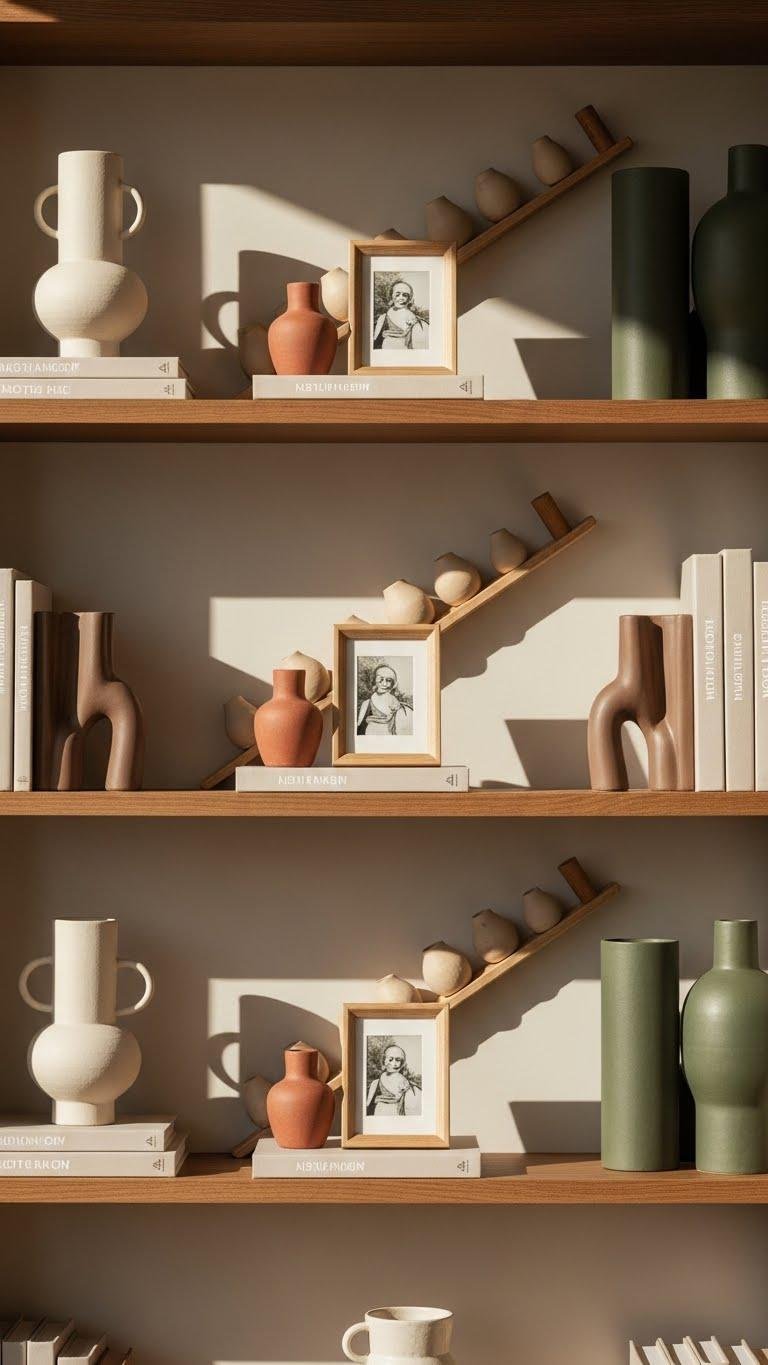
Often a subtle repetition will pull your whole shelf arrangement together, so place the same object type on a diagonal across shelves to guide the eye and create cohesion.
You’ll achieve diagonal balance by spacing items so they read as a single line without rigid symmetry. Embrace staggered repetition to keep movement lively; repeat shapes or textures, vary heights, and let negative space breathe for a liberated, curated look.
Echo Colors From Top to Bottom
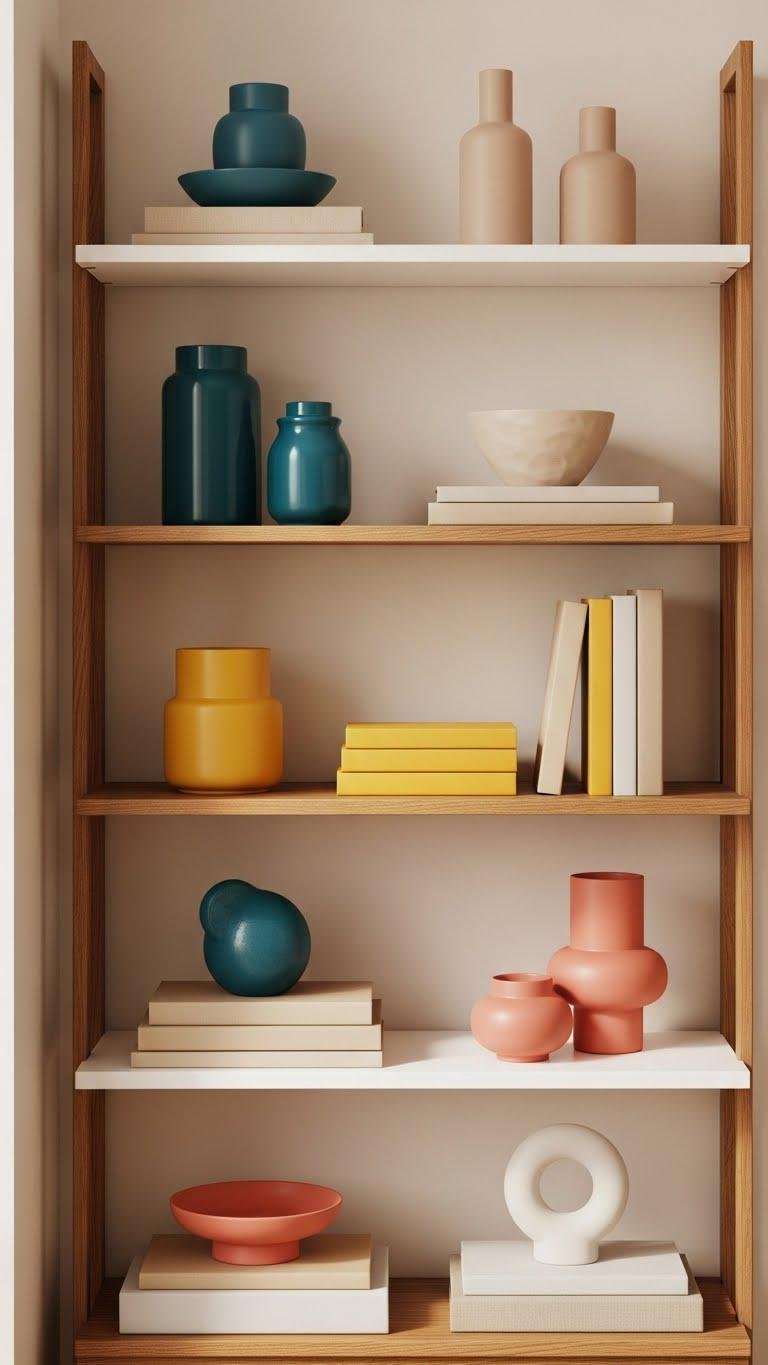
Start by choosing two or three key hues and carry them from top to bottom so your shelves read as a cohesive whole rather than separate rows. You’ll create deliberate color echoes: repeat accents, ceramics, and books in a controlled gradient repetition. Balance saturated pieces with neutrals, vary scale, and place unexpected pops low and high so the arrangement feels curated, intentional, and liberating rather than constrained.
Lean Framed Art Behind Decor

Placed casually behind vases or stacks of books, lean framed art gives your shelves instant depth and a collected look without fuss. You’ll choose minimalist frames and textured mats to anchor pieces without overpowering objects in front. Leaning frames create flexible layering, letting you rearrange freely while maintaining balance. Keep scale varied, sightlines clear, and negative space intentional for an effortless, curated display.
Combine Functional and Decorative Items
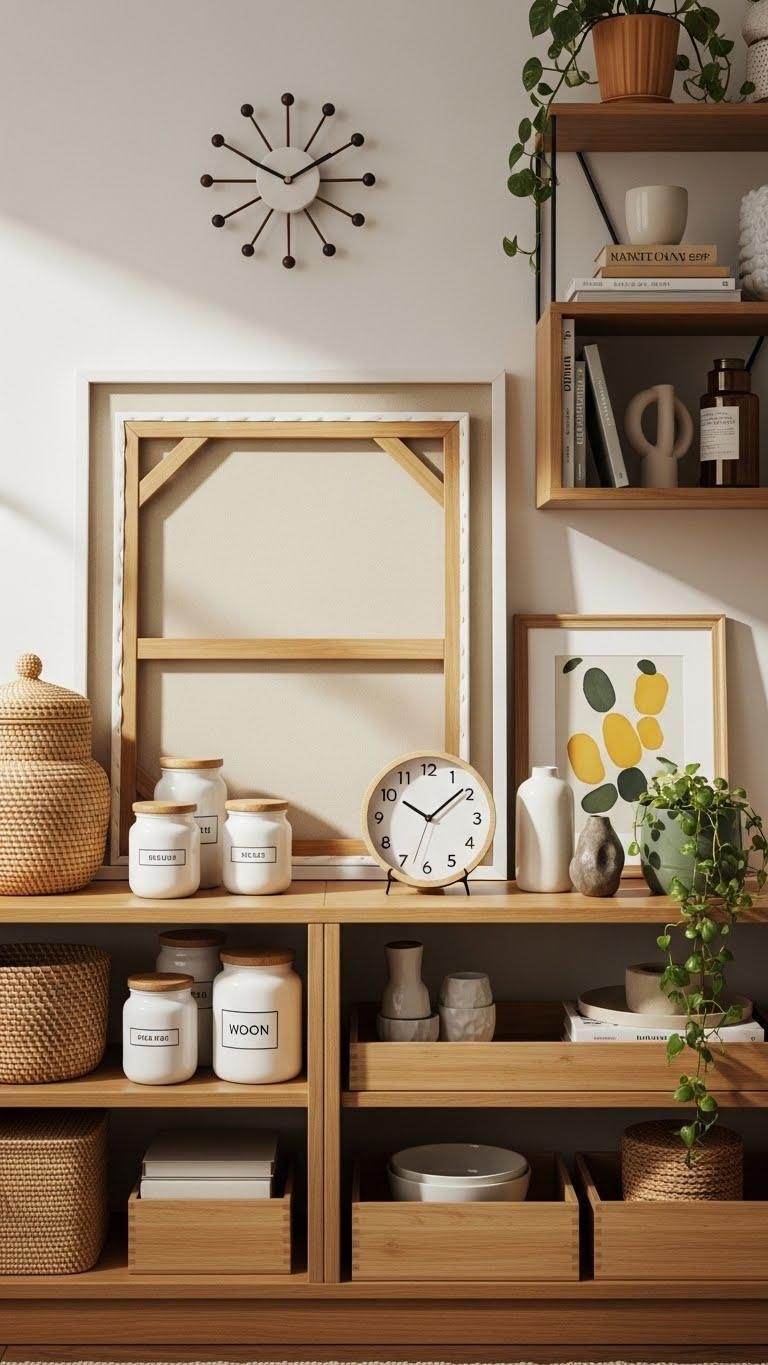
Leaning framed art sets the mood and establishes layers, so you can build on that foundation by mixing useful objects with decorative accents. Let functional pieces—stylish baskets, labeled jars, or a chic clock—serve utility aesthetics without sacrificing form. Tuck essentials into hidden storage like boxes or drawer trays, and alternate textures so every shelf feels intentional, liberated, and practical.
Balance Heavy Items Across Opposite Sides
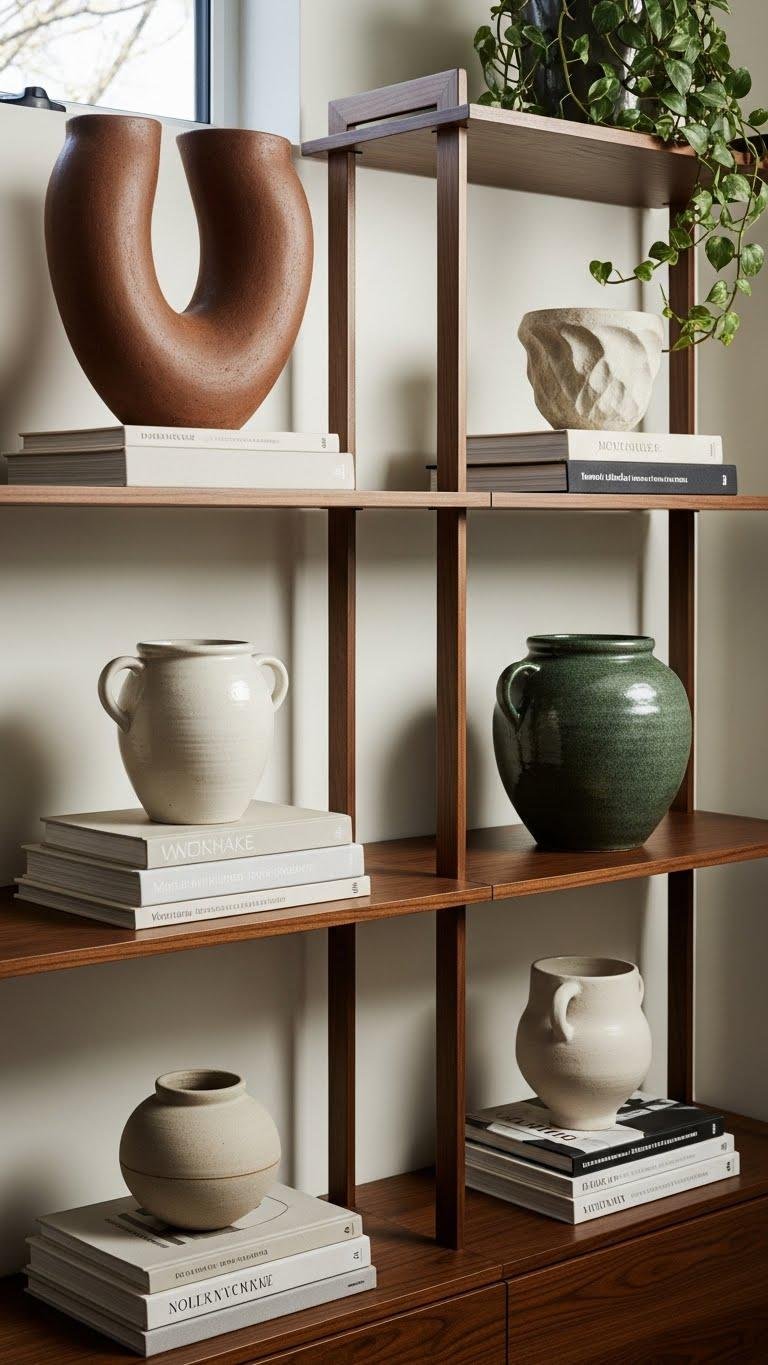
When you arrange shelves, counterbalance visually heavy pieces—like large sculptures, stacked books, or thick ceramic vases—by placing comparable-weight items on the opposite side or directly across adjacent tiers; this keeps the composition stable and your eye moving.
You’ll assess weight distribution, swap items, and adjust spacing until visual equilibrium feels effortless. Trust measured contrasts to give each shelf freedom and purpose.
Create Visual Triangles With Vases and Books
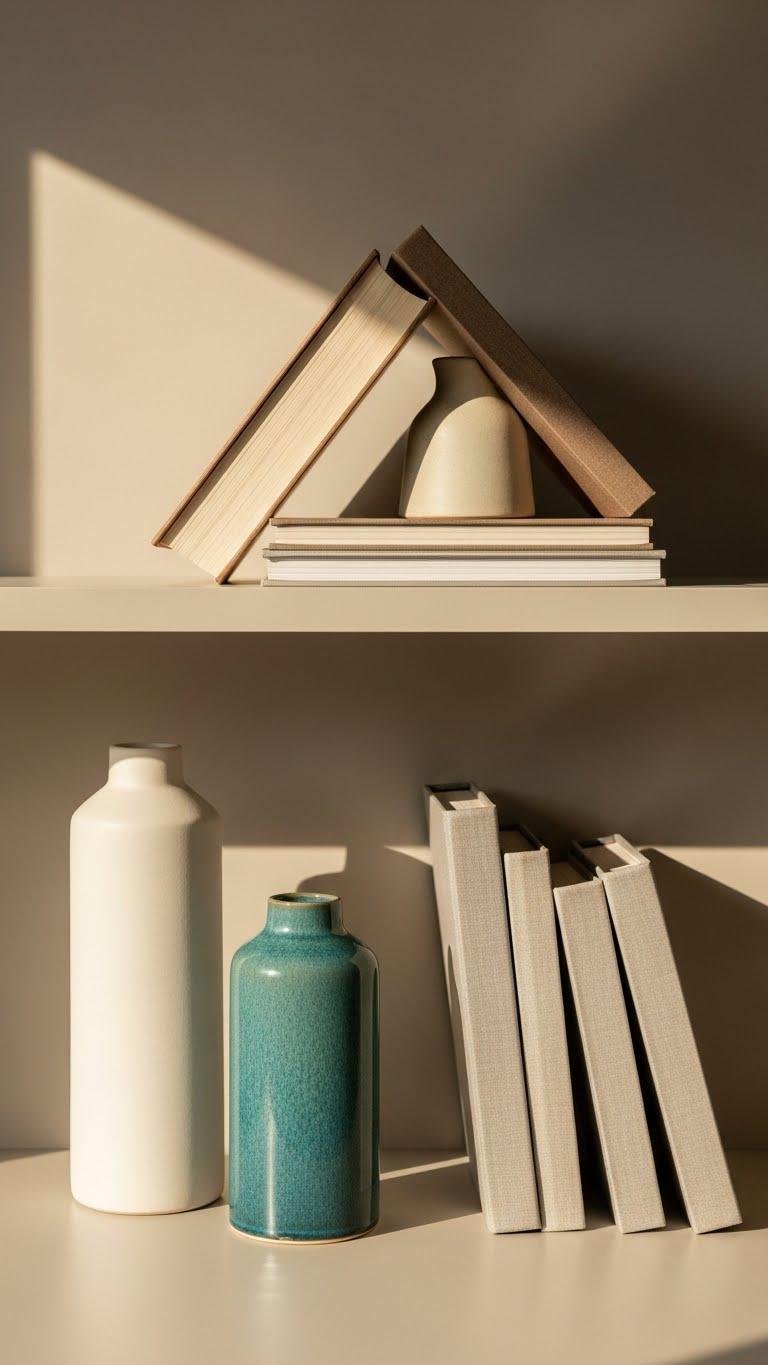
After you’ve balanced heavy pieces across shelves, start composing groups that guide the eye—visual triangles are one of the most effective tools for that. You’ll form one with an asymmetrical vase pairing, a stack of books and a tilted book vase to imply movement. Place varied heights and negative space deliberately so each point anchors the trio, keeping the arrangement airy and liberated.
Use Trays to Contain Small Collections
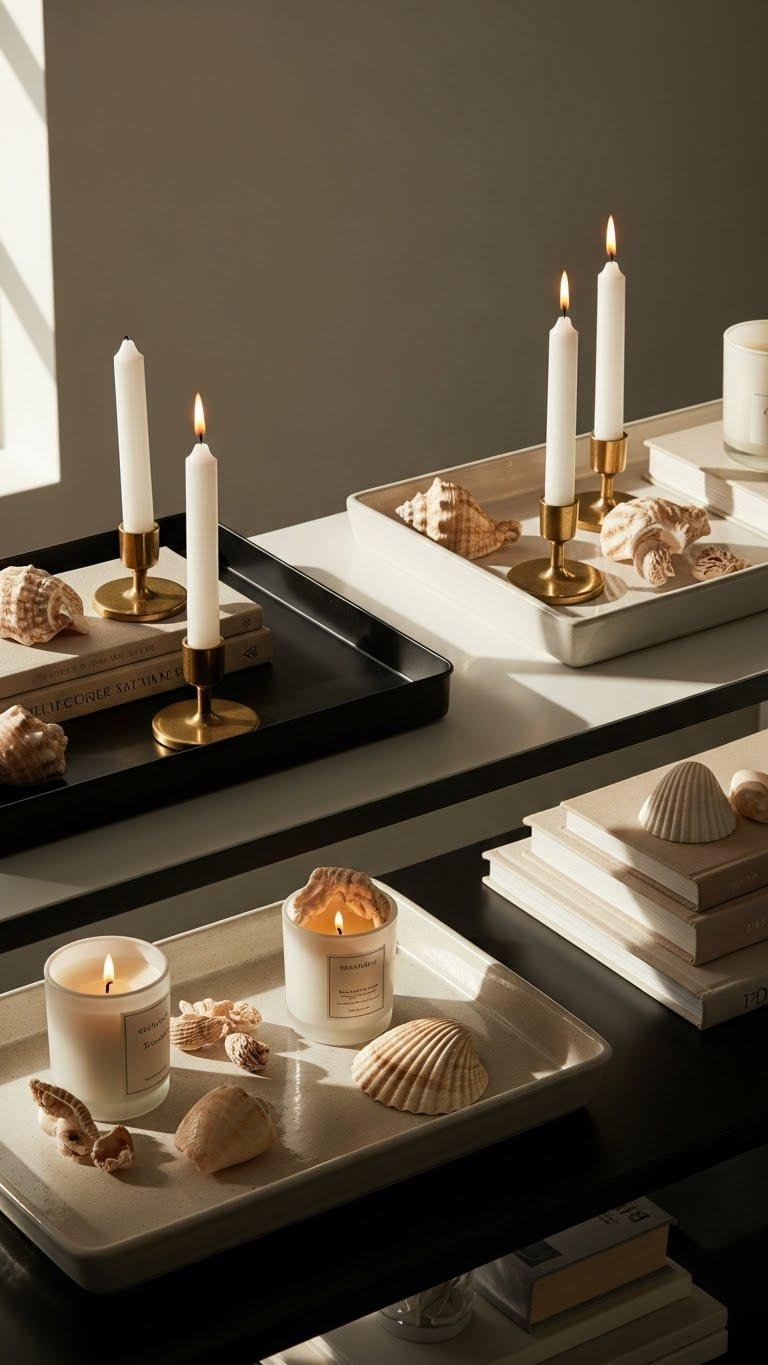
Corral small items with a low-profile tray to keep the shelf feeling curated rather than cluttered; trays give you instant boundaries so each tiny collection reads as intentional. Choose metal trays for sleek contrast or ceramic trays for softer display; you’ll group candles, shells, and small books with clarity. Rotate pieces, keep negative space, and let each tray define purpose without restricting your creative freedom.
Vary Textures Within a Consistent Palette
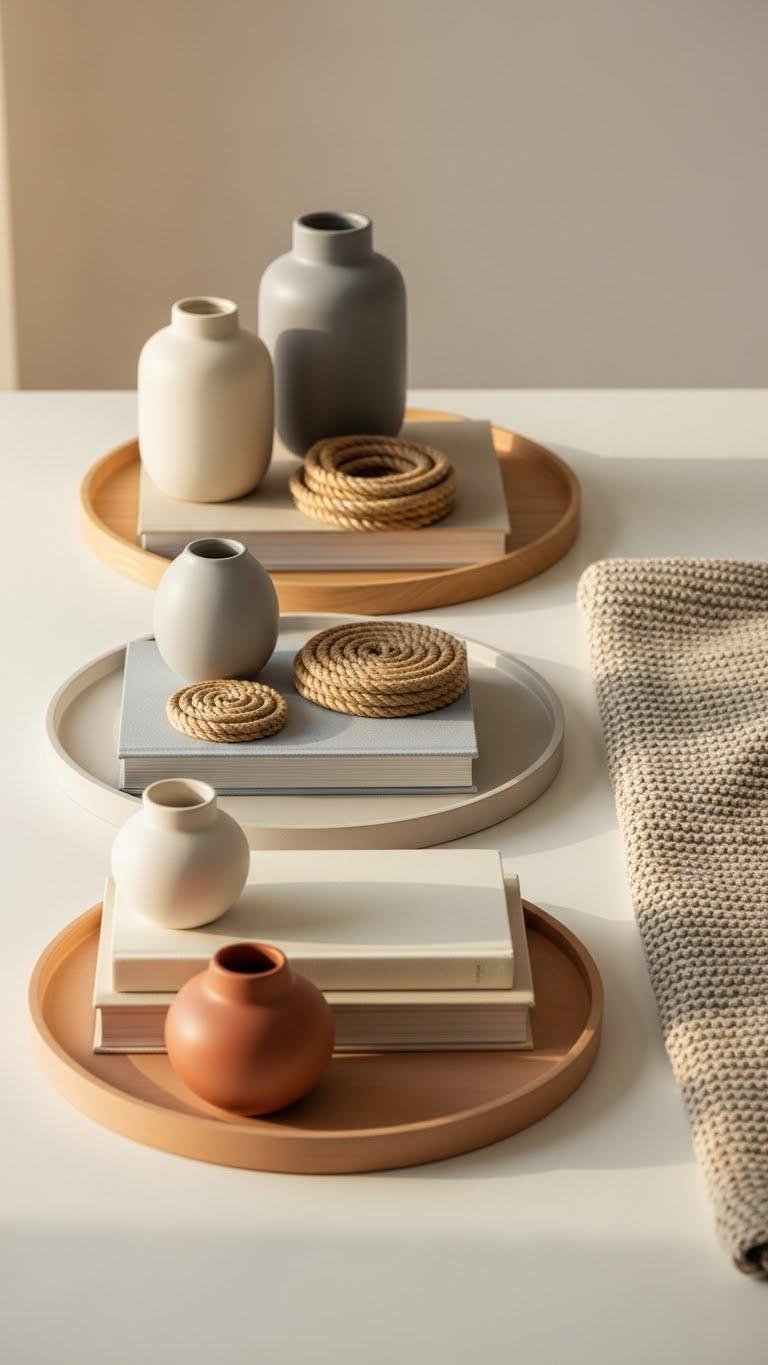
You’ve used trays to create neat islands; now think about how texture brings those islands to life while keeping the color story calm. Layer matte gloss contrasts—ceramic vases beside glossy books—and introduce natural wood, rope, and chunky knit textiles for warmth. You’ll balance tactile variety without clutter, choosing finishes that speak to freedom and restraint, intentional yet relaxed.
Leave Negative Space Around Feature Pieces
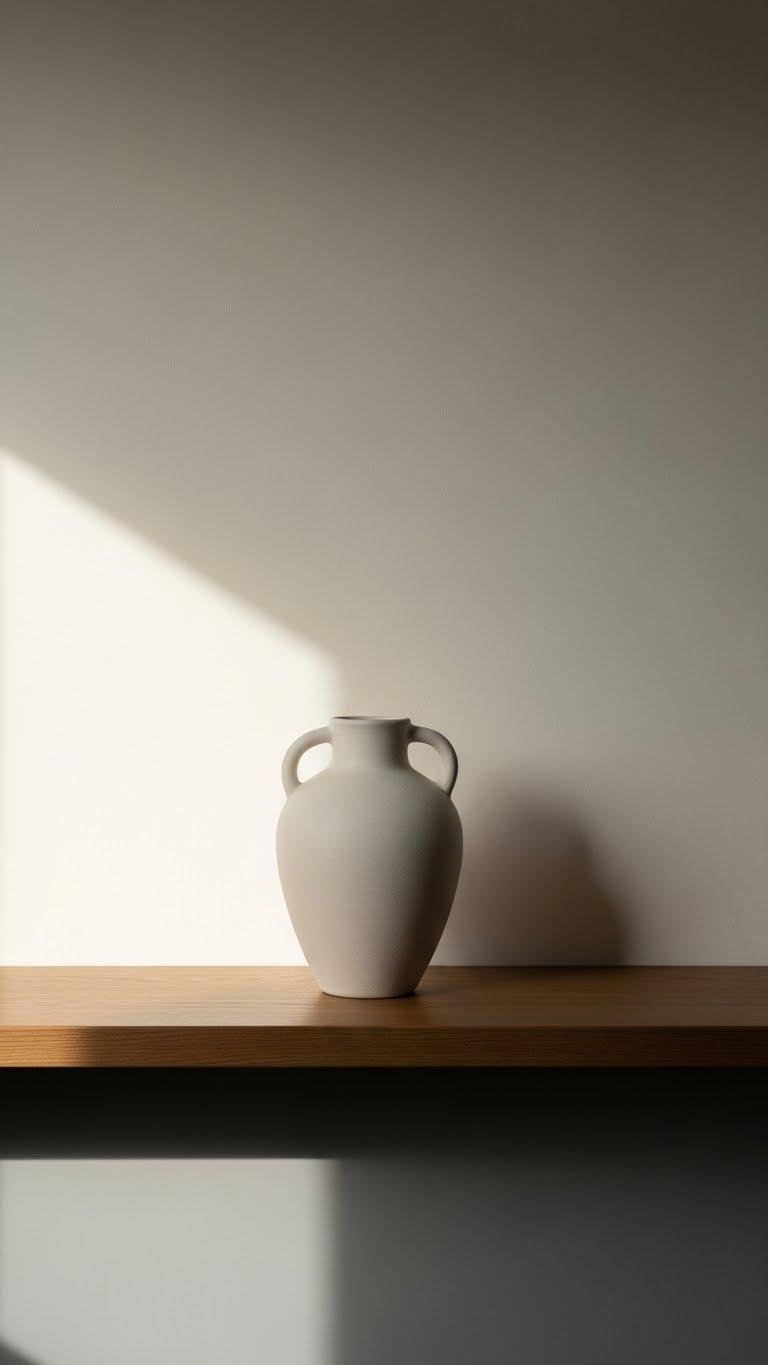
When you let a single piece breathe on the shelf, it immediately becomes the room’s punctuation mark—clear space around a vase, framed photo, or sculptural object sharpens its silhouette and draws the eye. You’ll employ negative breathing and intentional gaps to control rhythm, guiding focus without clutter.
Edit ruthlessly, keep surrounding items minimal, and let freedom show through purposeful emptiness.
Place Plants at Different Heights for Flow

Layering plants at different heights brings an effortless, curated rhythm to your shelf, guiding the eye along a deliberate path from low trailing foliage to a taller structural piece. You’ll balance texture and scale by combining hanging planters with staggered terrariums, placing mid-height pots and a single tall specimen. This creates flow, freedom to rearrange, and a confident, intentional composition.
Break up Uniformity With Odd-Number Groupings
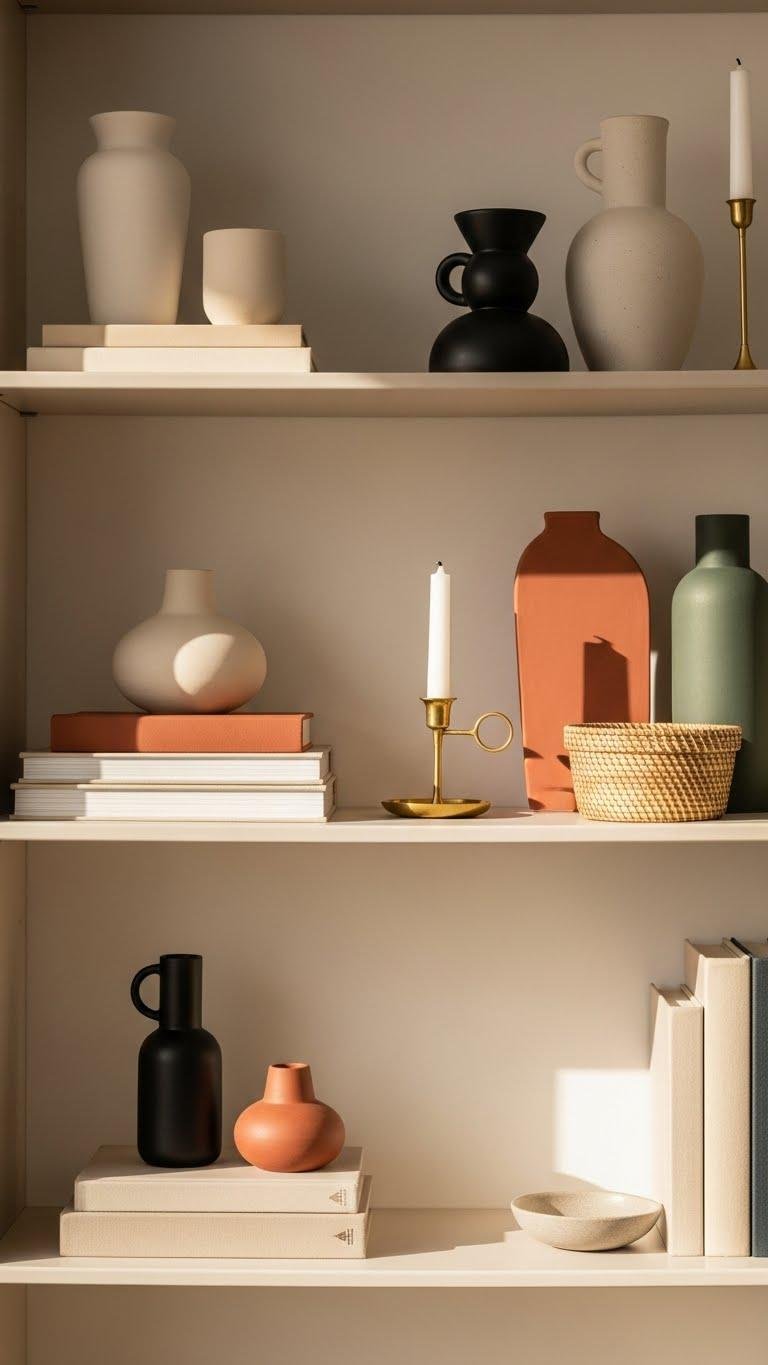
Use odd-number groupings to break up predictable symmetry and give your shelf an immediate sense of intention.
You’ll prefer asymmetrical clusters that feel deliberate, not accidental. Arrange odd count vignettes—three or five objects—with varied scale and texture to create rhythm.
Keep negative space intentional, align focal pieces off-center, and trust visual imbalance to feel liberated and curated rather than chaotic.
Use Books as Risers for Sculptural Objects
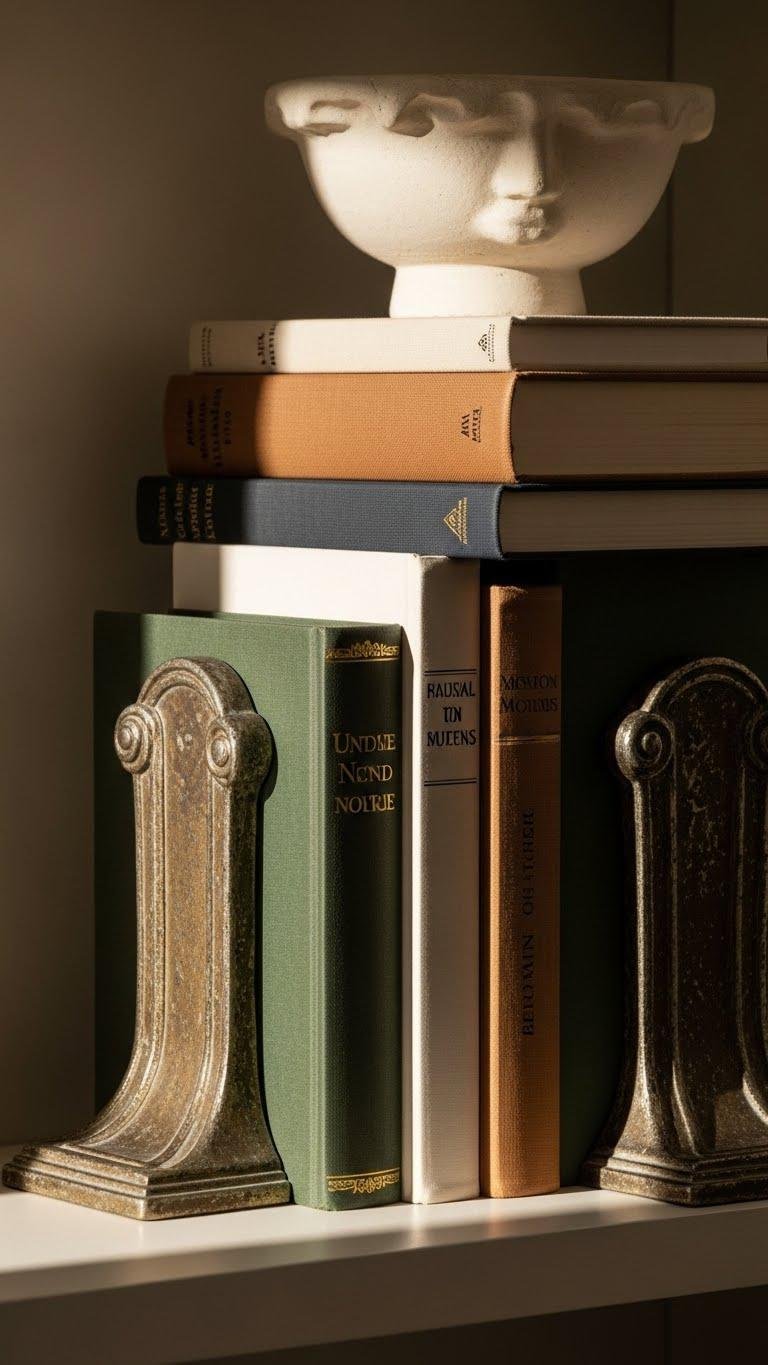
Stack a small pile of books to lift a sculptural object and instantly create hierarchy on the shelf—you’ll give the eye a clear place to land while adding height without extra hardware. Use books as sculptural pedestals, pairing varied sizes and textures. Anchor them with antique bookends for stability and character, then adjust spacing so each elevated piece reads intentional, grounded, and free.
Distribute Large Items Across Multiple Shelves
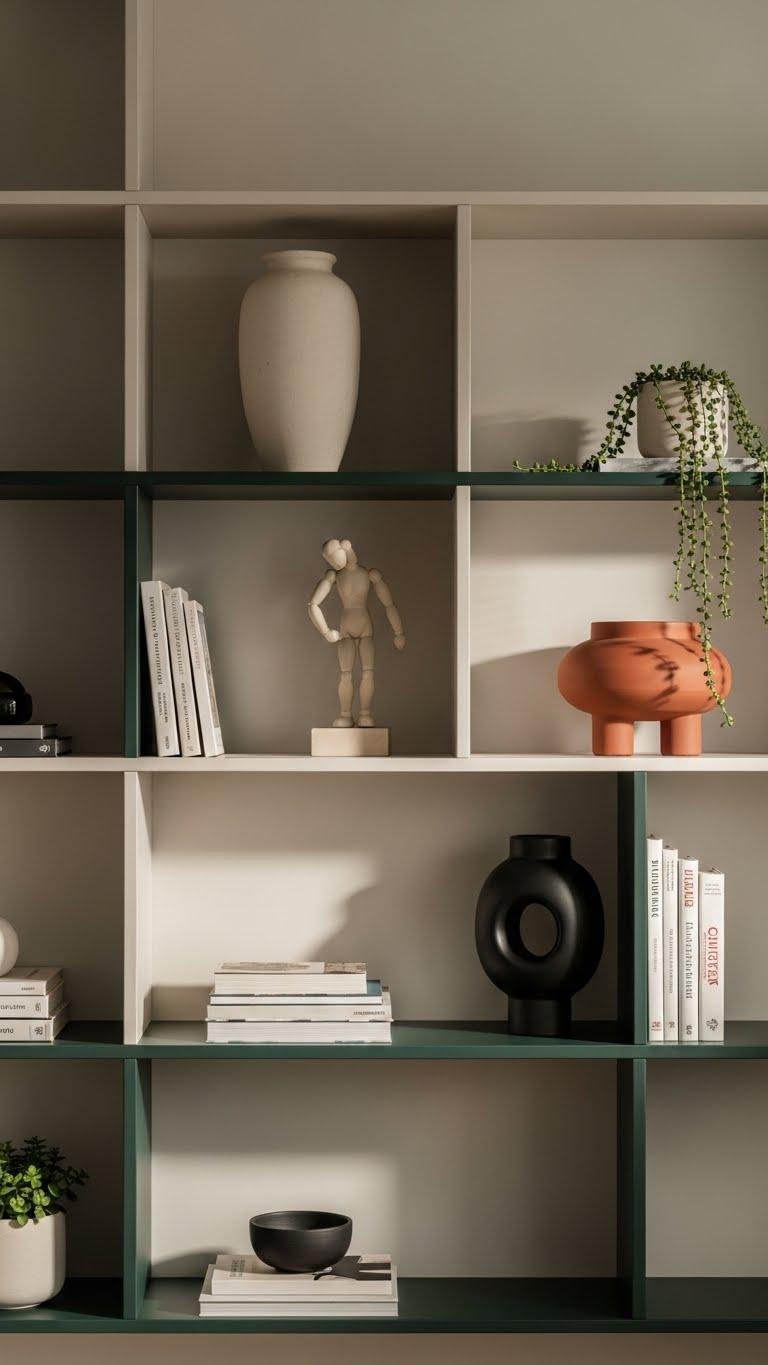
Break up visual weight by spreading big pieces across several shelves so your eye moves through the display rather than stopping at one heavy cluster.
You’ll place a large vase here, a sculpture there, calibrating color balance and shelf spacing to keep momentum.
Mix scale thoughtfully, leave breathing room, and trust your instincts — freedom to edit lets the arrangement feel intentional and effortless.
Alternate Vertical and Horizontal Book Stacks
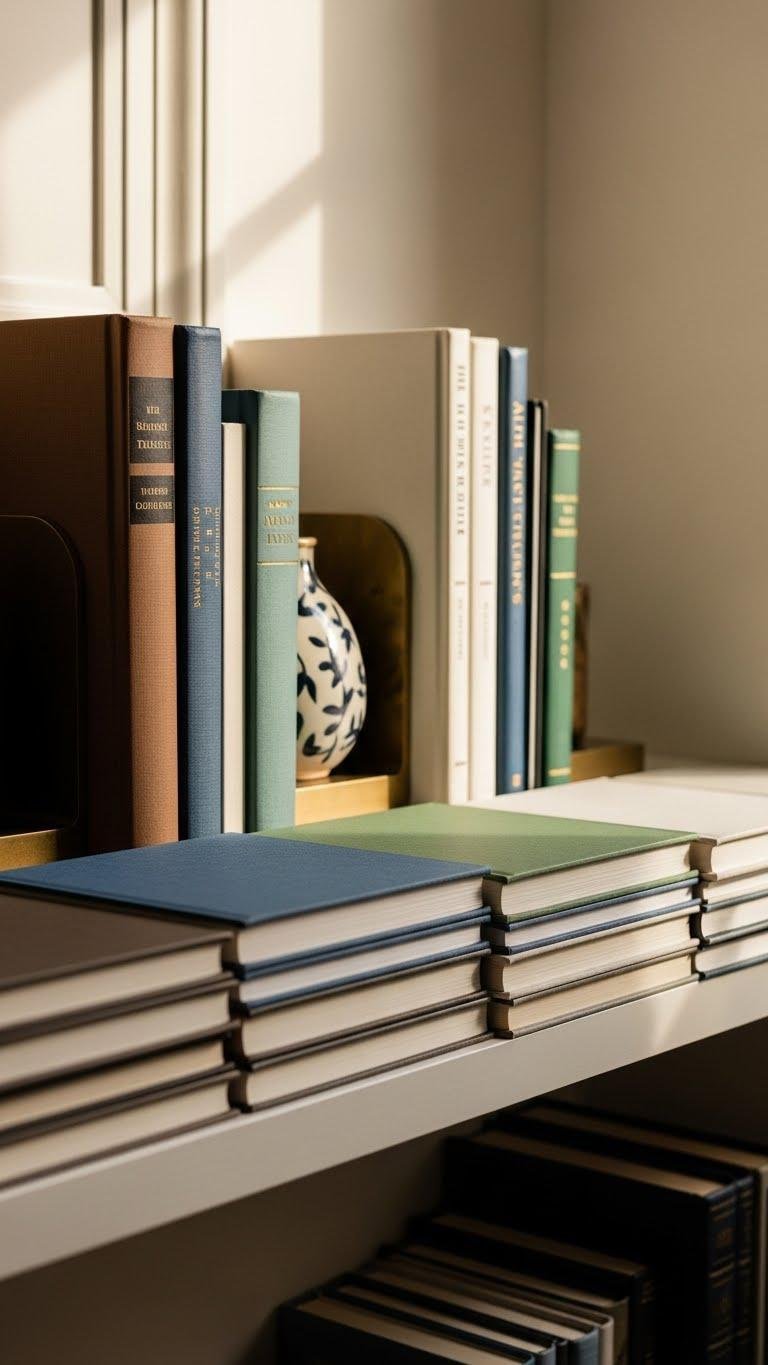
Mix upright and laid-flat books to create rhythm and control scale across your shelves. You’ll alternate vertical symmetry with horizontal mass, using staggered spines to break monotony and guide sightlines.
Place taller upright groups beside low stacks, anchoring with a decorative object when needed. This deliberate pattern keeps the collection airy, intentional, and easy to rearrange as your taste evolves.
Step Back and Adjust for Natural Eye Movement

When you step back from the shelf, you’ll quickly see how your eye naturally travels — whether it hesitates on a heavy cluster or glides along a row of aligned spines — and you can use that information to fine-tune balance and flow.
Check viewing distance to read true proportions, observe gaze patterns, then shift objects subtly so sightlines feel liberated and intentional.
Layer Objects to Add Depth and Dimension
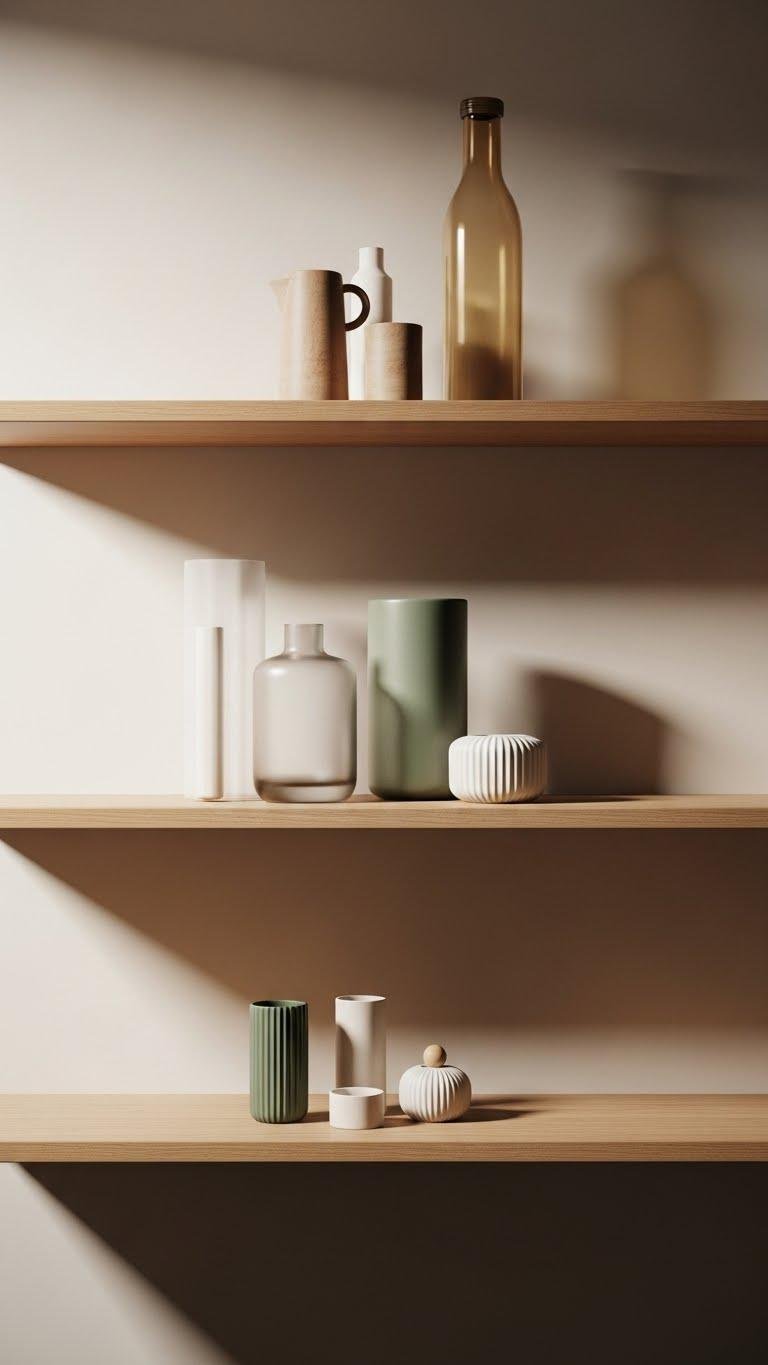
Start by arranging pieces at varying depths so each layer reads clearly from eye level to the front edge of the shelf. You’ll place taller, grounded pieces at the rear, mid-height objects slightly forward, and small accents at the front. Use shadow play and translucent layers to create soft separations and breath between items. Aim for intentional spacing that feels effortless and liberating.
Edit Ruthlessly to Maintain a Curated Look
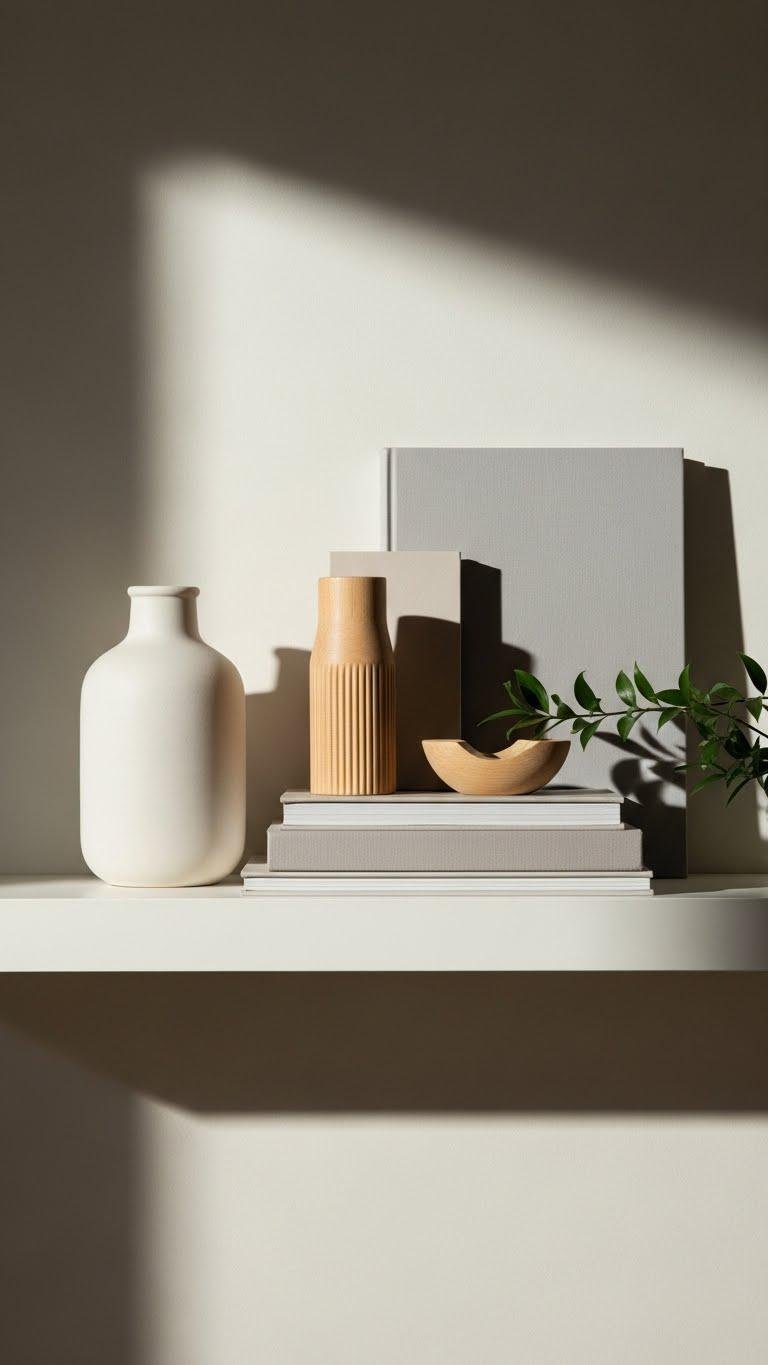
Though it might feel counterintuitive, you should remove anything that doesn’t contribute to the story you’re telling—leave only pieces that serve shape, color, texture, or meaning. Edit ruthlessly: practice minimalist pruning, limit duplicate forms, and favor negative space. Rotate items with seasonal rotation to refresh mood without clutter. You’ll create a restrained, intentional shelf that reflects choice, calm, and creative freedom.